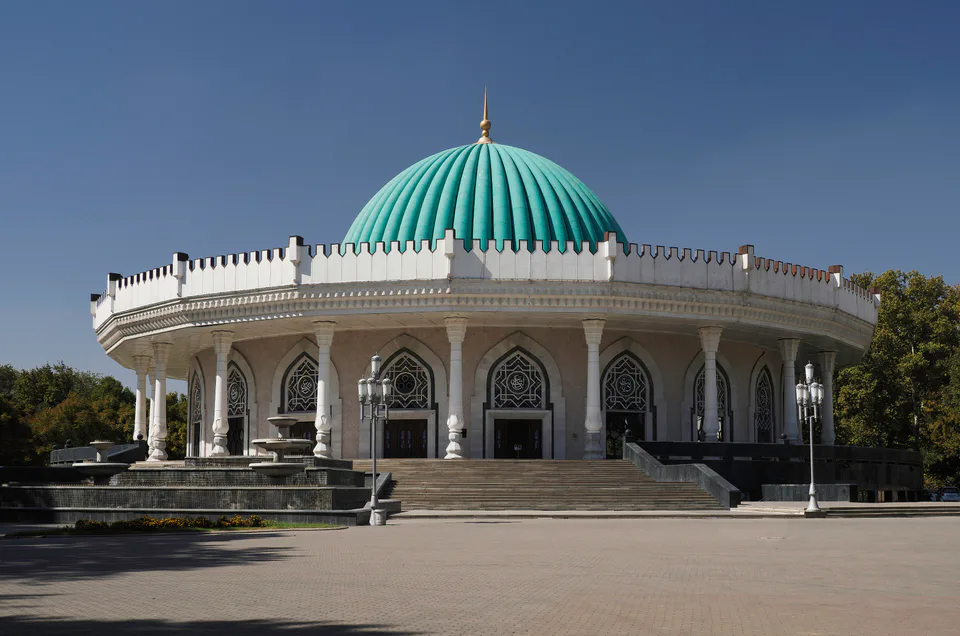
Museum · Yunusabad District
Amir Timur Museum
The age of Tamerlane under a blue dome
Museum · Yunusabad District
Founded in 1876, the museum traces history from the Stone Age to today, with the Fayaz Tepe Buddha and a Saka cauldron; its modernist building joined the UNESCO list in 2026.
The museum dates its founding to 12 July 1876, when Russian scholars set up the People's Museum of Turkestan — the oldest museum in Tashkent and in all of Central Asia. It helped launch museums in Samarkand (1896) and Fergana (1899) and prepared displays for exhibitions in Paris (1900) and Milan (1906).
In 1919 it was split into a Museum of Nature and a State Museum of Turkestan. After many changes of name and address, the history museum moved into the former Lenin Museum in the early 1990s. It closed for renovation on 4 June 2024 and reopened on 24 July 2026.
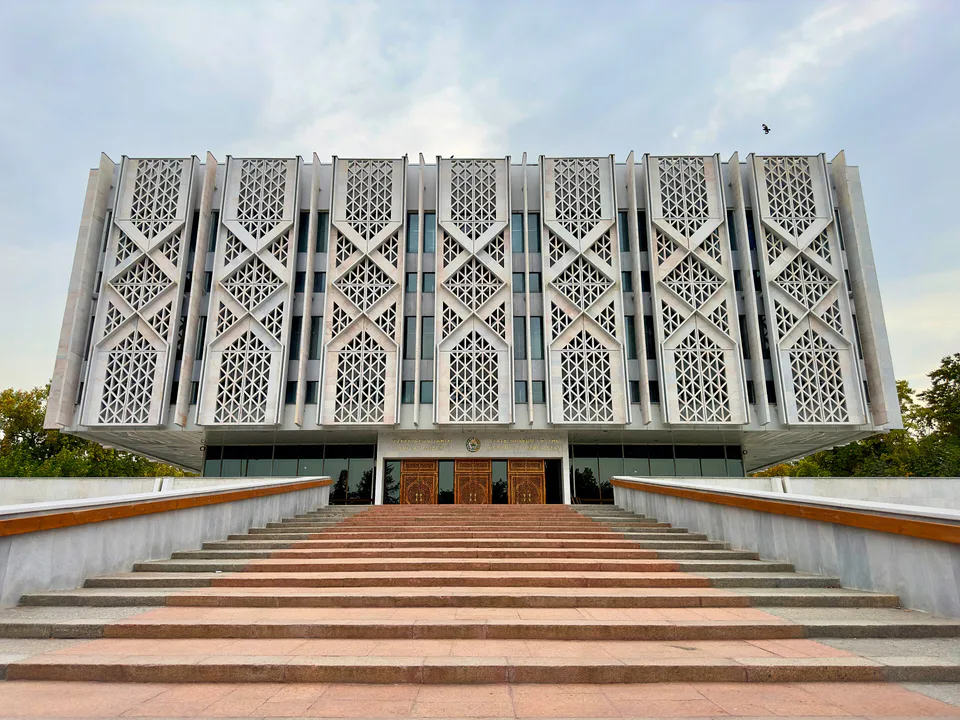
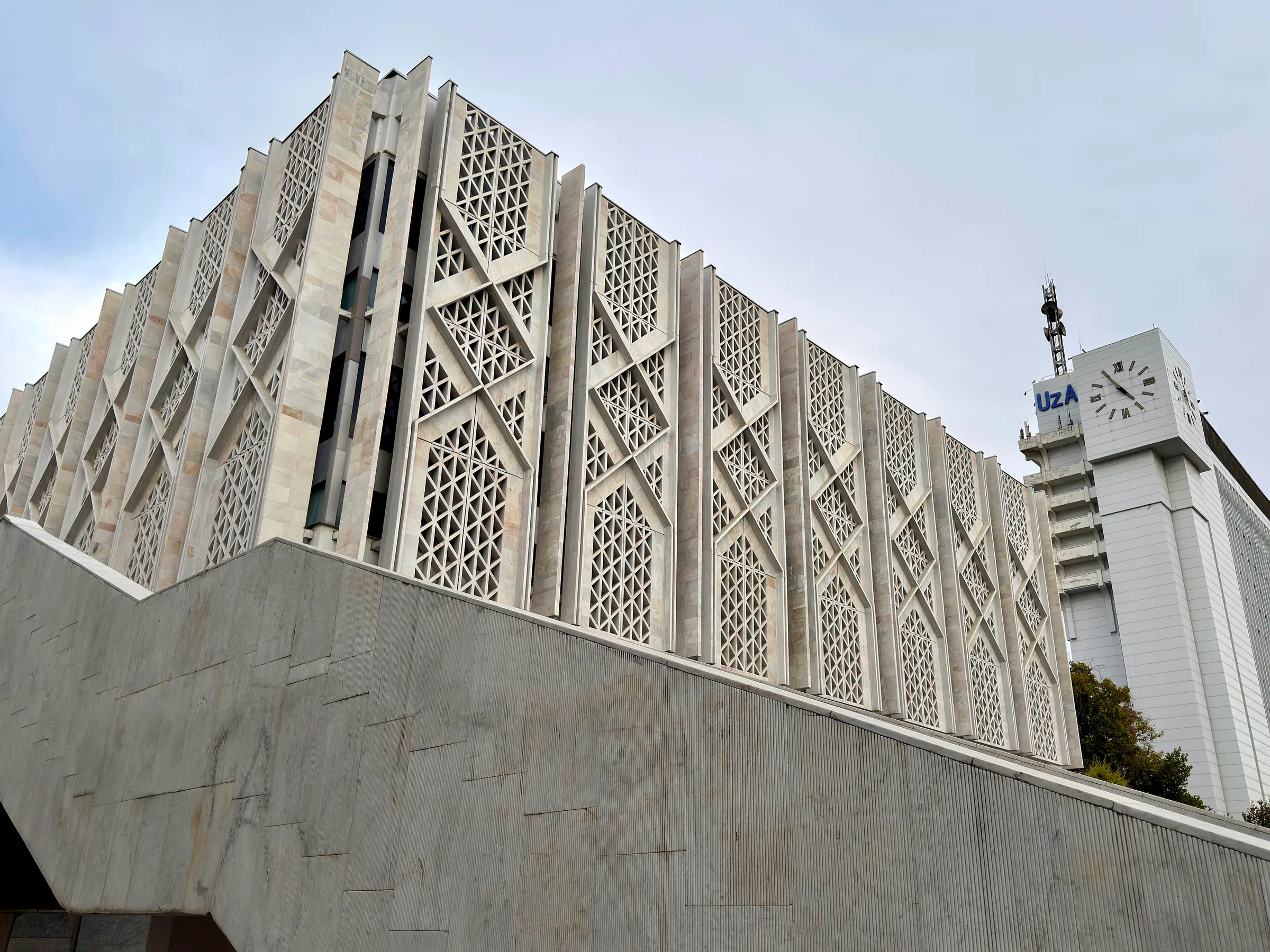
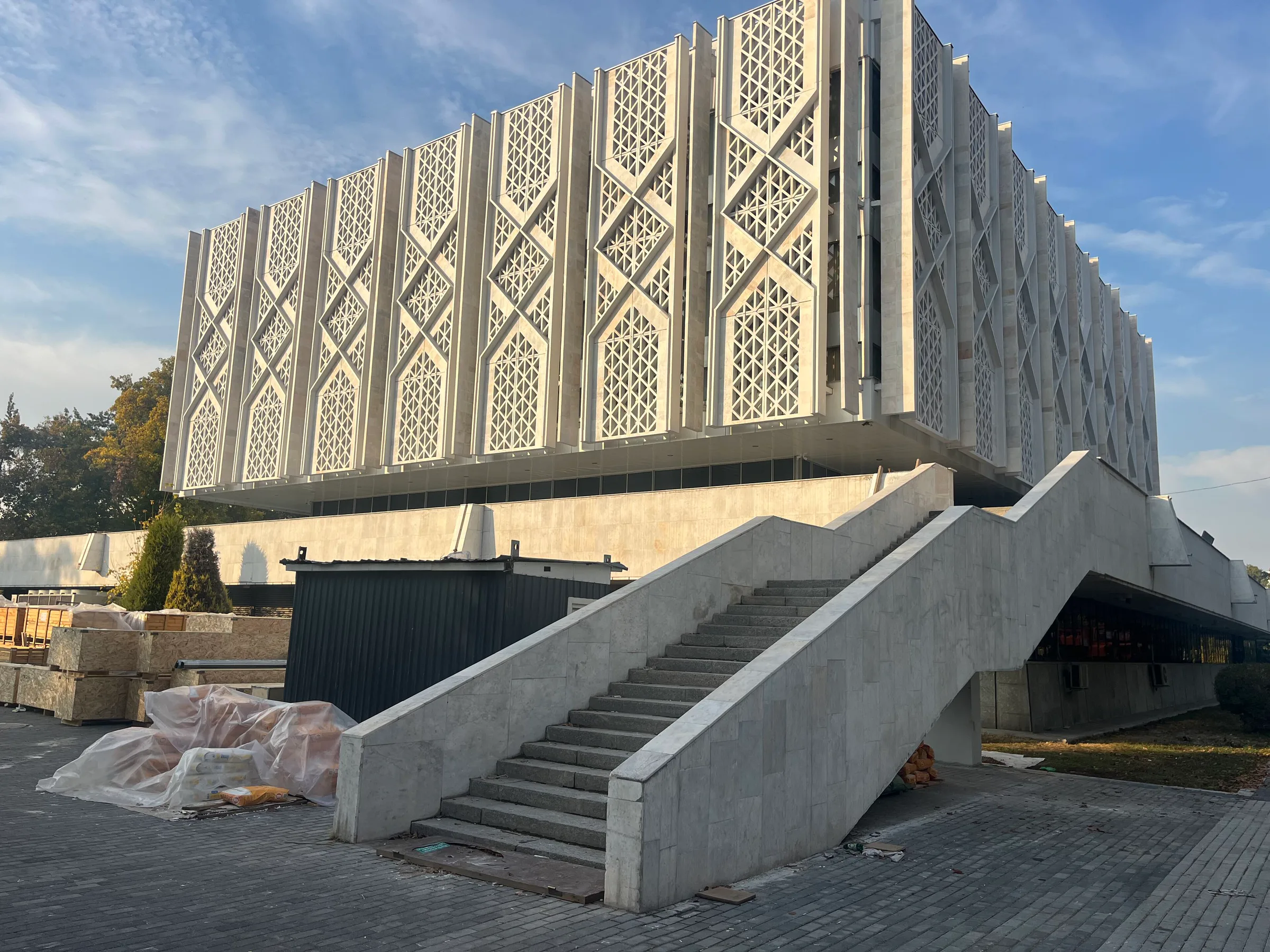
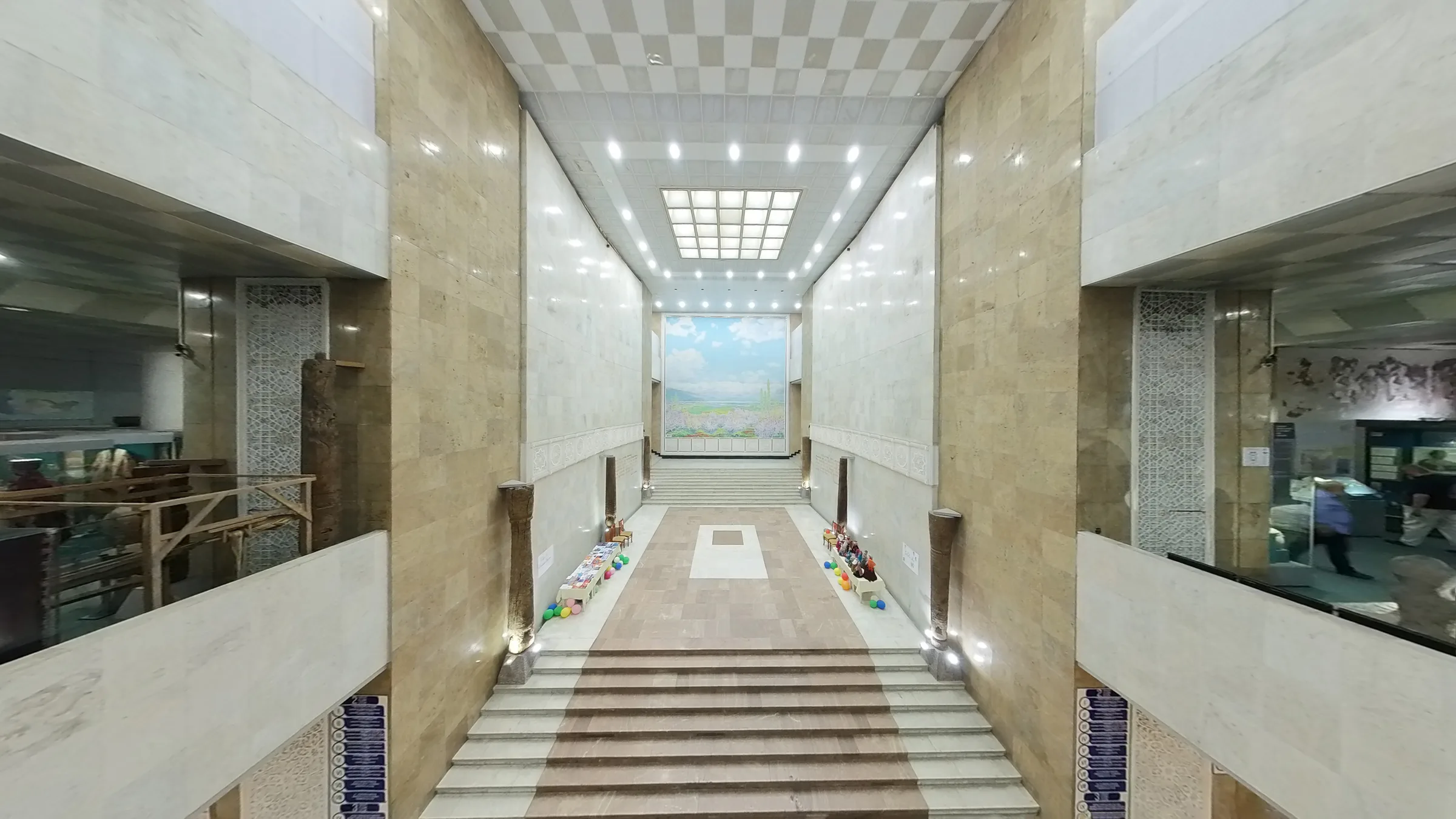
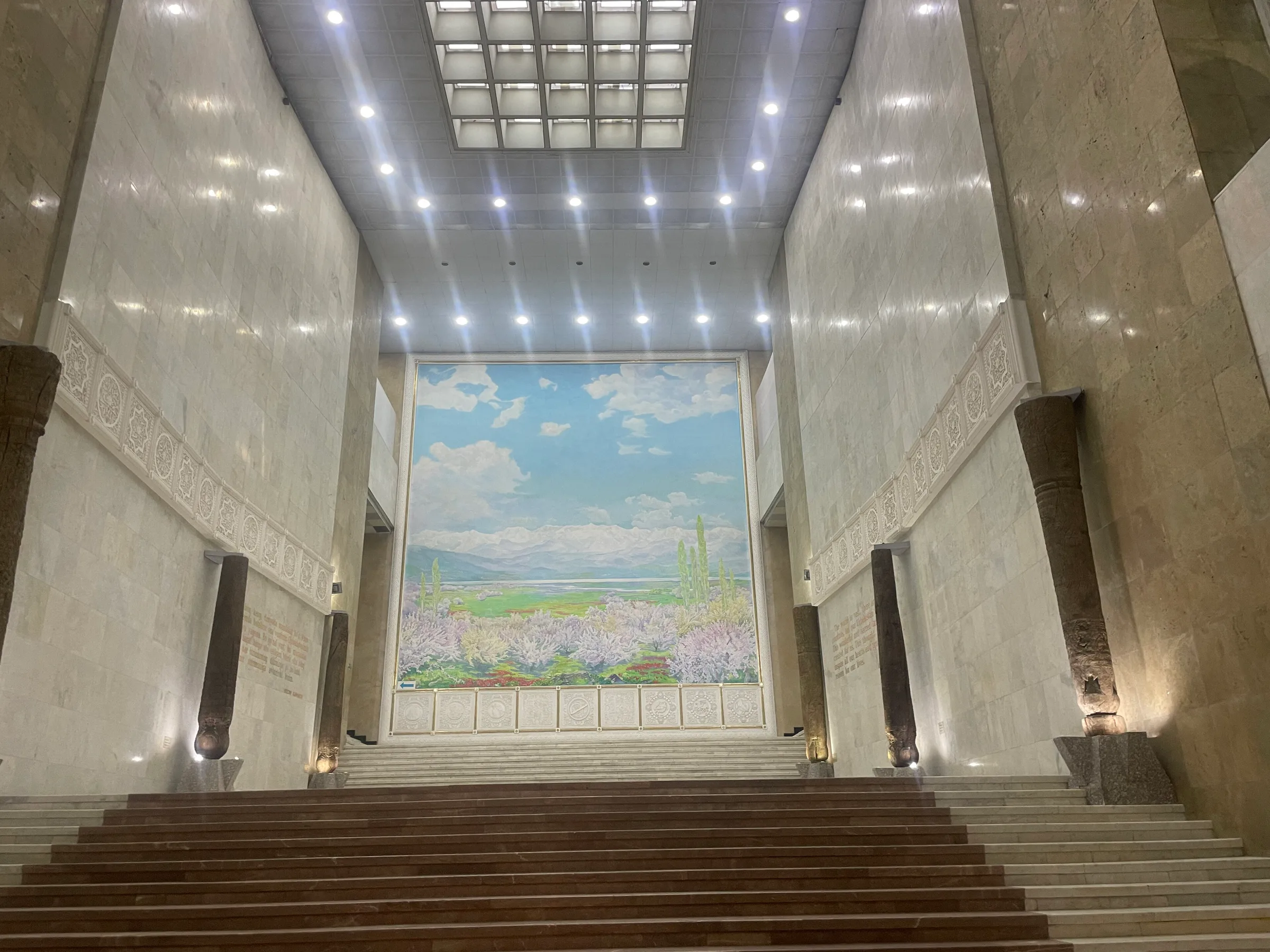
The building was completed in 1970 as Tashkent's Lenin Museum, designed by architects Y. Rozanov and V. Shestopalov. Its basic form is a cube — a symbol of eternity in Eastern architecture — wrapped in geometric sun screens faced with pinkish-white marble. The blend of abstract form and ornament made it an emblem of Soviet Tashkent, and in July 2026 it was inscribed on the UNESCO World Heritage List as part of 'Tashkent Modernist Architecture'.
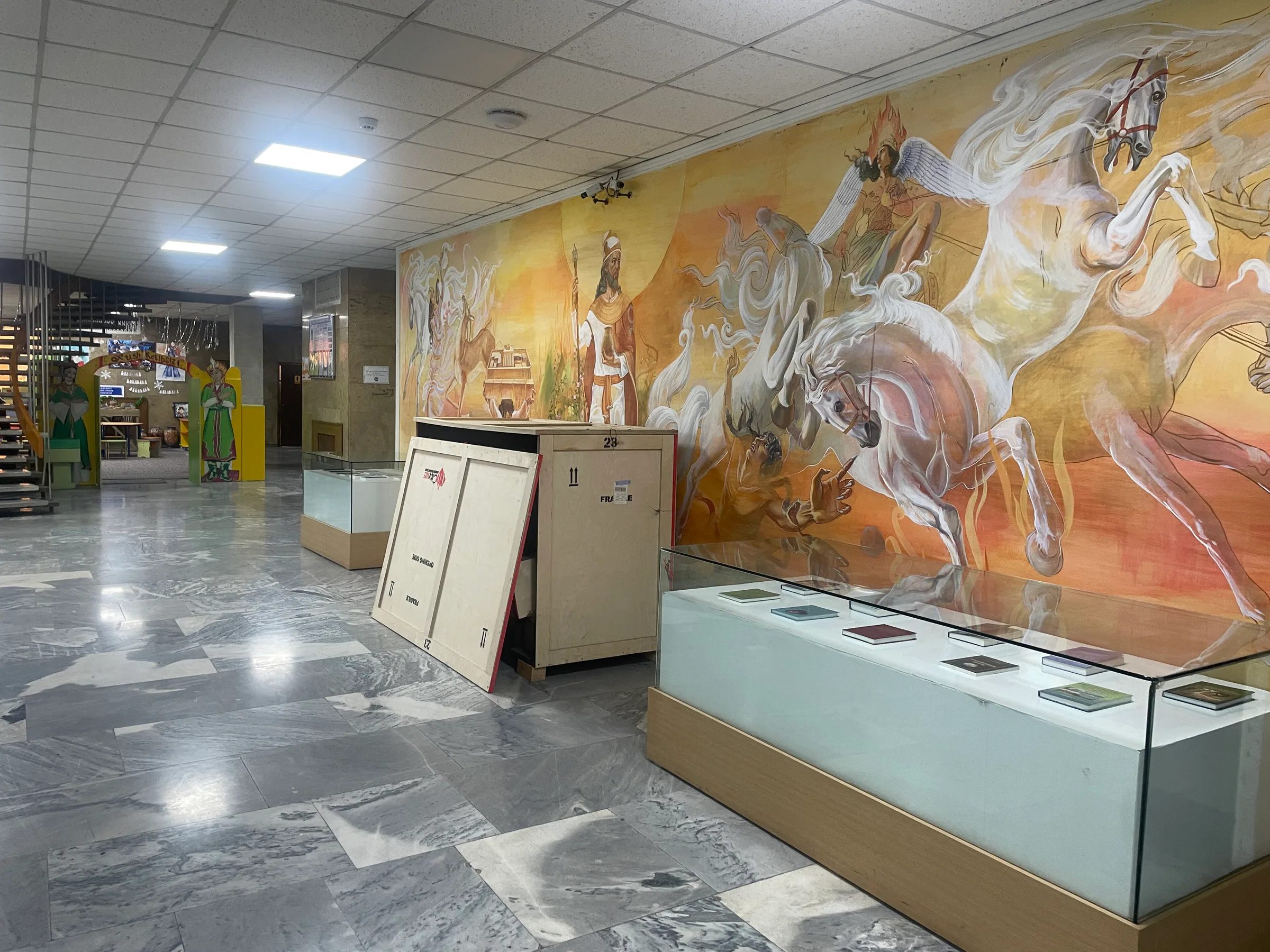
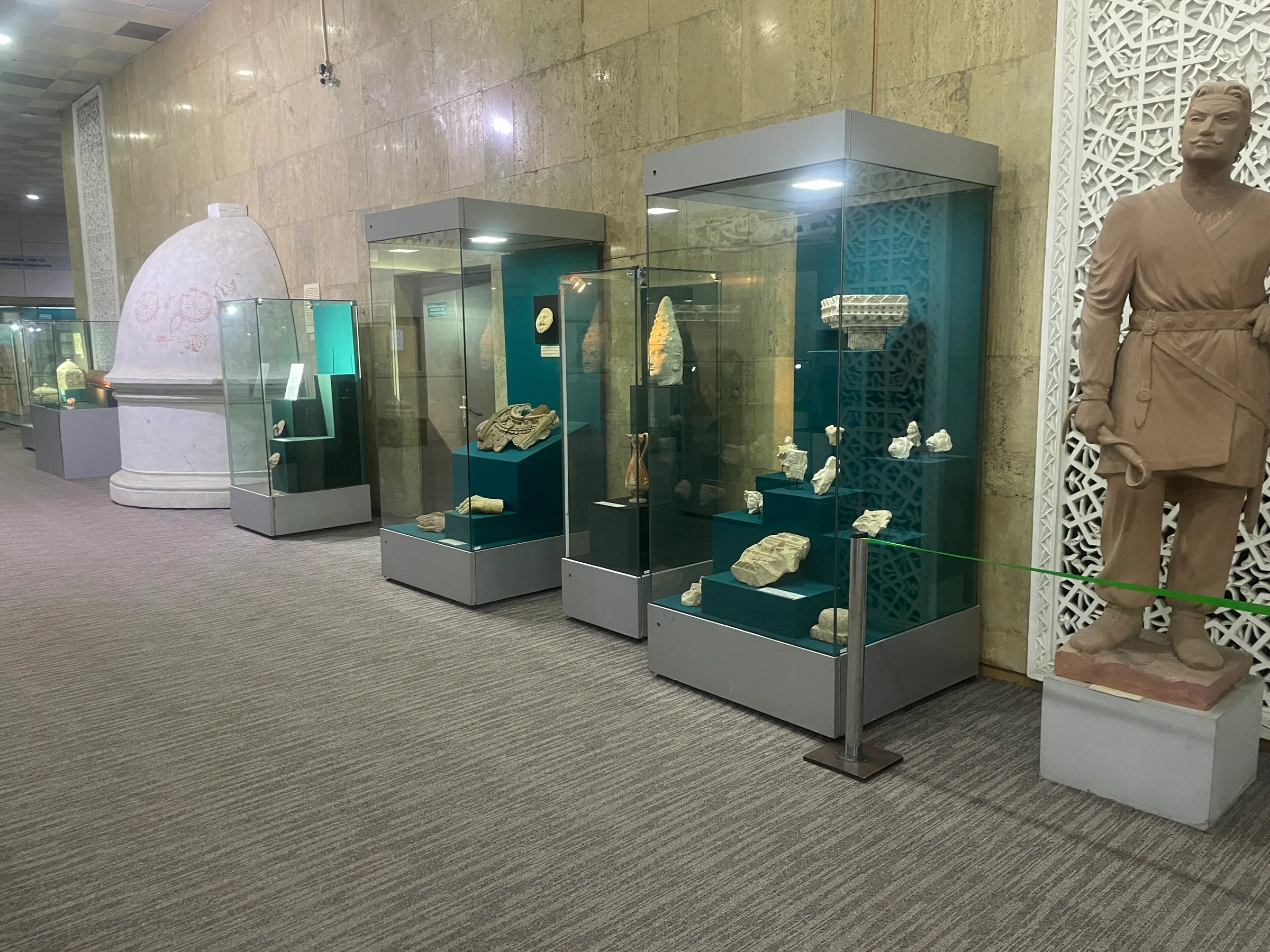
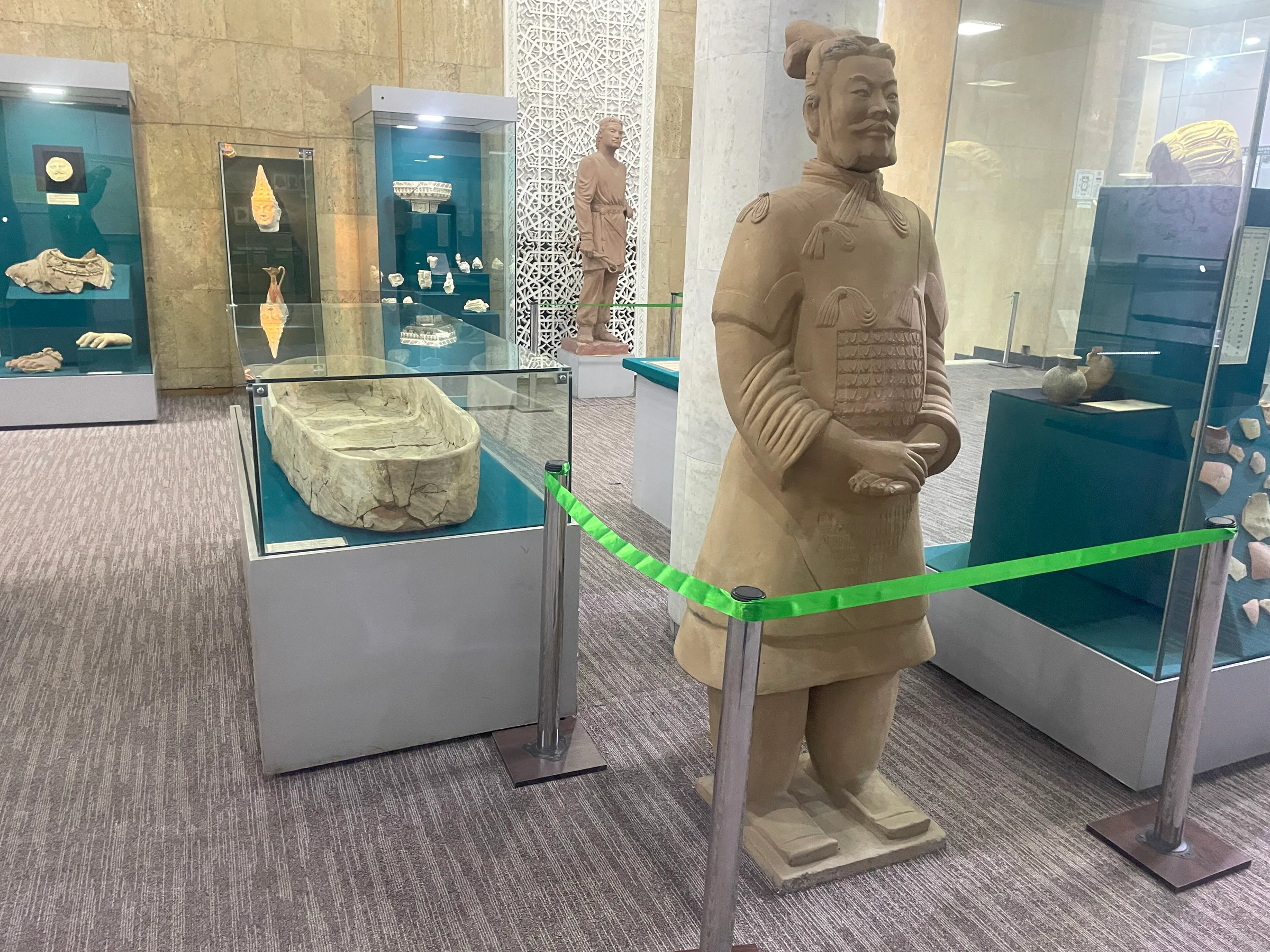
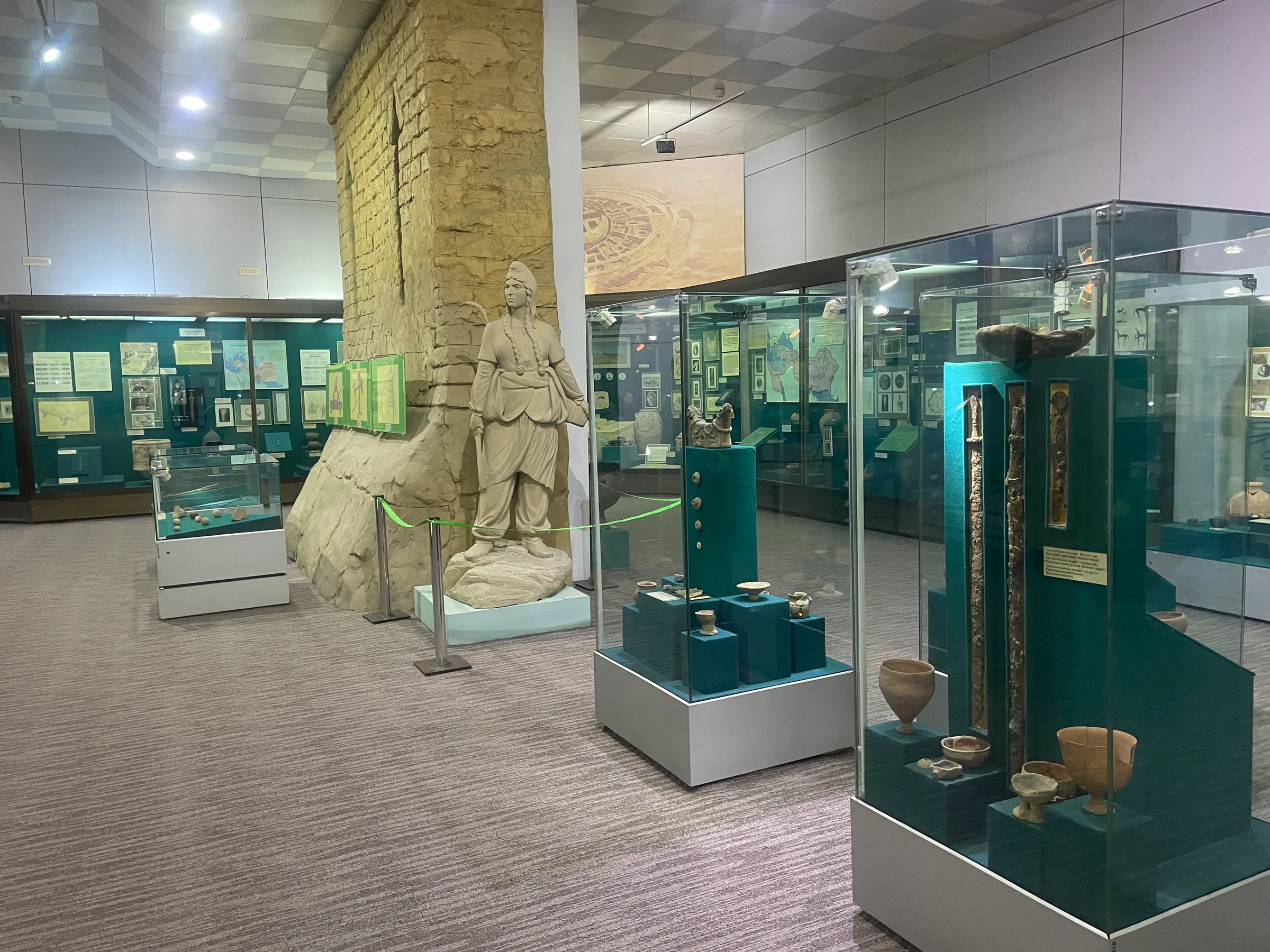
The museum holds more than 250,000 objects: archaeological finds, ancient ceramics and textiles, a large coin collection, manuscripts, documents and photographs, with archaeology, ethnography and numismatics the strongest sections. The displays run from Stone Age cave cultures through the first states and the Timurid era to modern times.
Star pieces include a beautifully preserved alabaster Buddha relief (1st century) from Fayaz Tepe near Termez and a Saka bronze cauldron decorated with animal figures (5th–4th centuries BC). The Islamic section shows calligraphy and royal edicts from the Timurids to the last emirs of Bukhara, and the ethnographic halls display costumes and crafts from across the country.
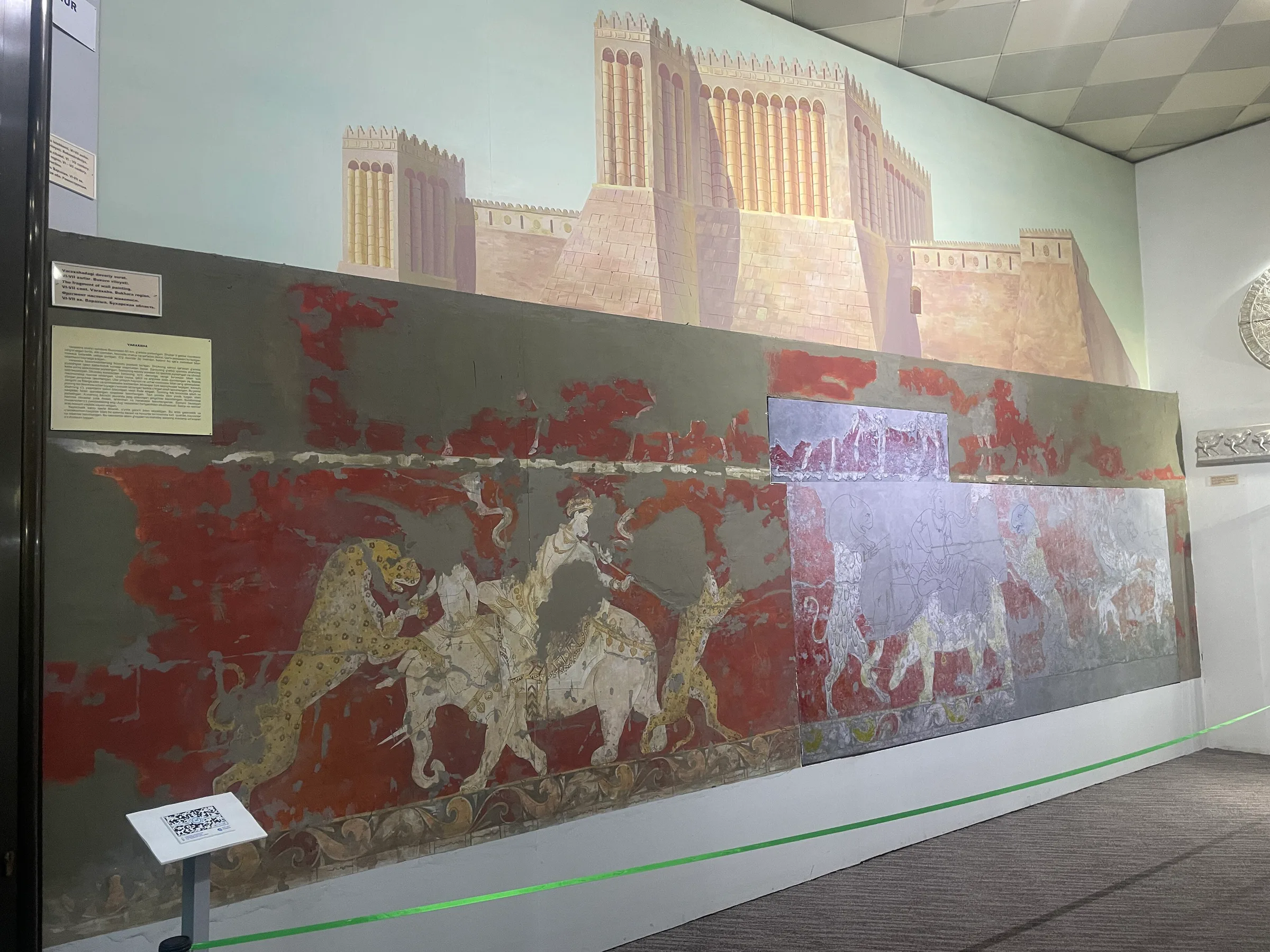
The coin room covers Graeco-Bactrian, Kushan, ancient Khorezmian, Nakhshab, Bukharan and Chach issues as well as Samanid, Karakhanid, Timurid and khanate coinage, some showing local rulers' portraits, others clan tamgas. The archaeology galleries add ceramics, stone, clay and ganch sculpture and wall paintings from Afrasiab, Koktepa, Khalchayan, Dalverzintepa and Termez. The cubic building holds 20 halls with 3,200 square metres of exhibition space.
Museum · Yunusabad District
The age of Tamerlane under a blue dome
Modern · Yunusabad District
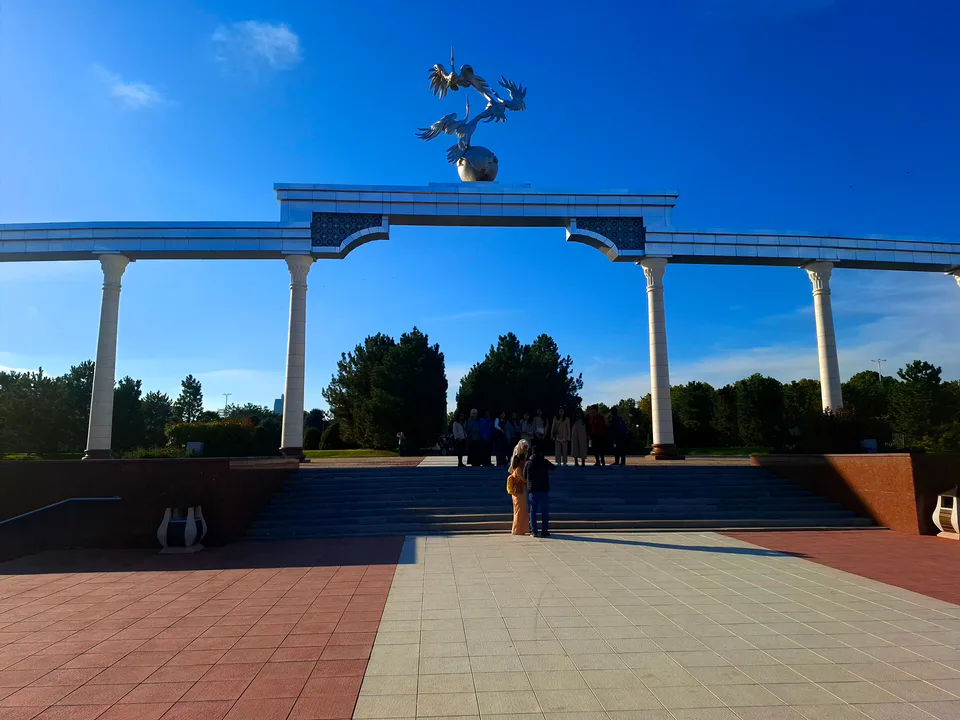
From Cathedral Square to Independence Square
Culture & arts · Yakkasaray District
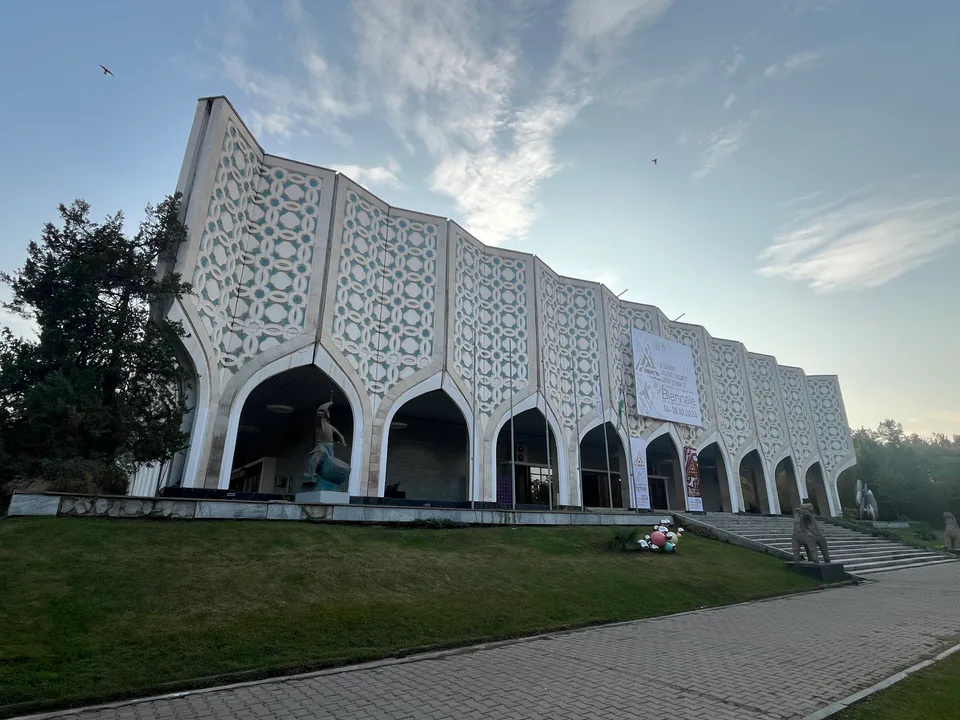
A gallery wrapped in peshtaq-style arches
Museum · Almazar District
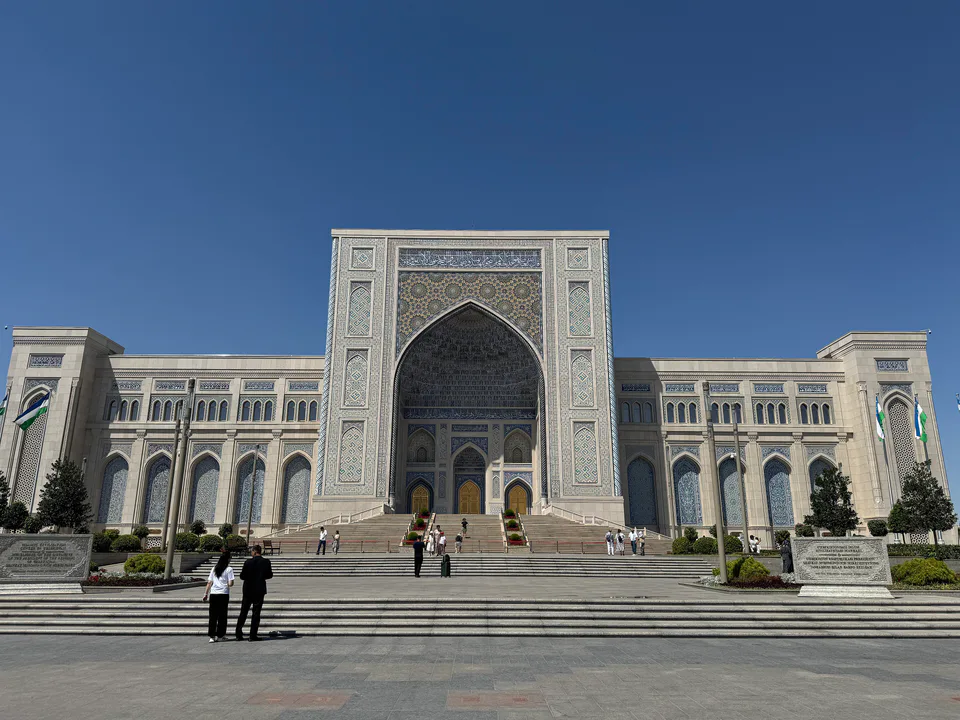
The new home of the Uthman Quran
Culture & arts · Yunusabad District
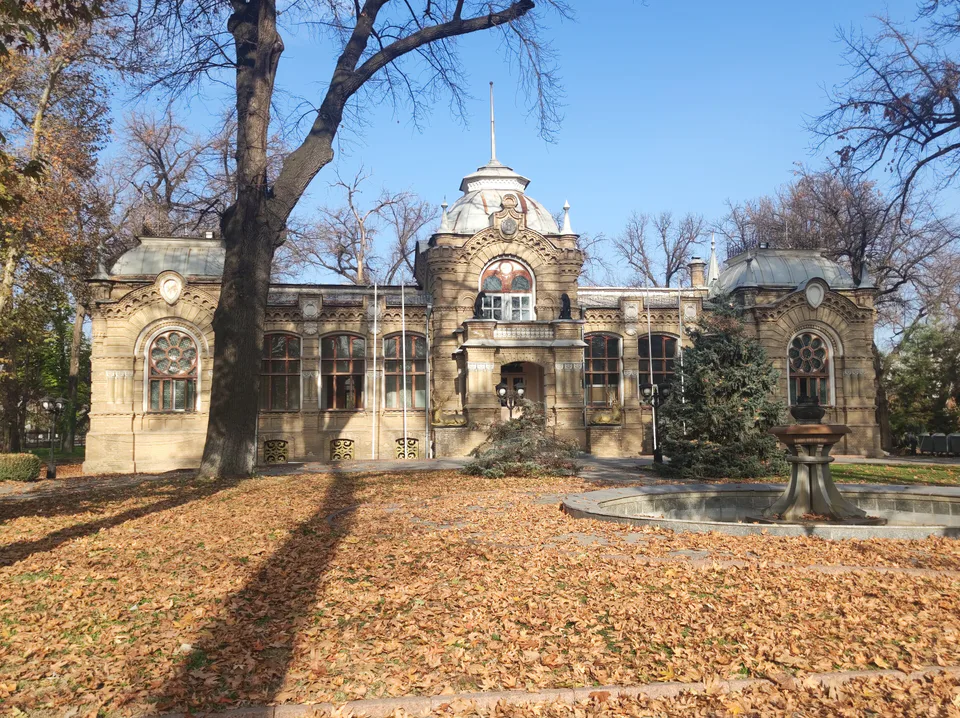
The Tashkent home of an exiled grand duke
Culture & arts · Mirabad District
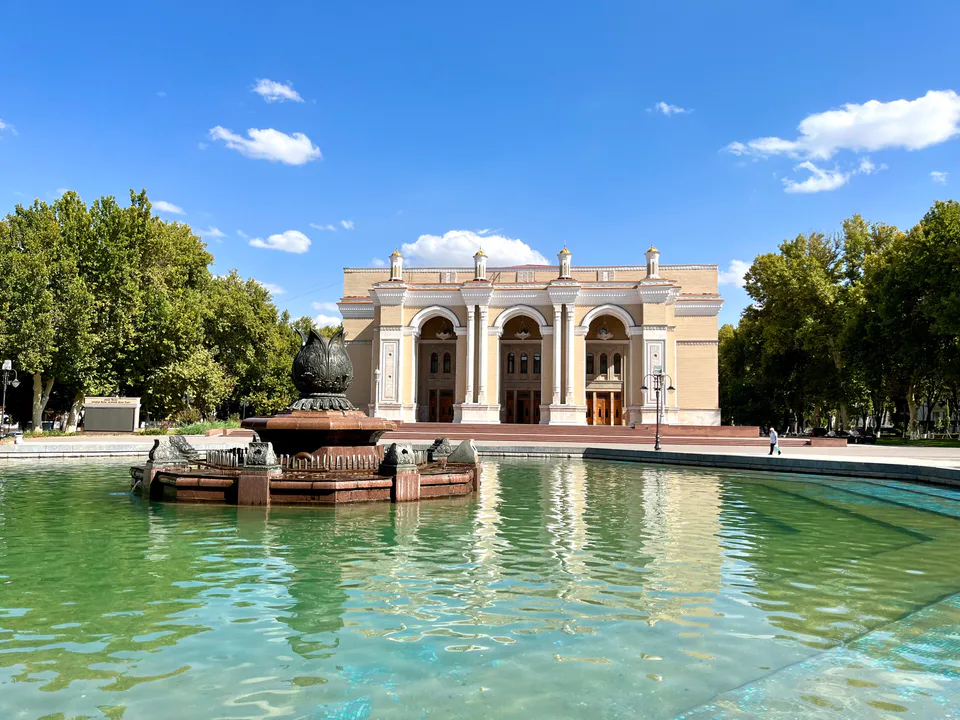
Shchusev's design, craftsmen from six regions
Modern · Yakkasaray District
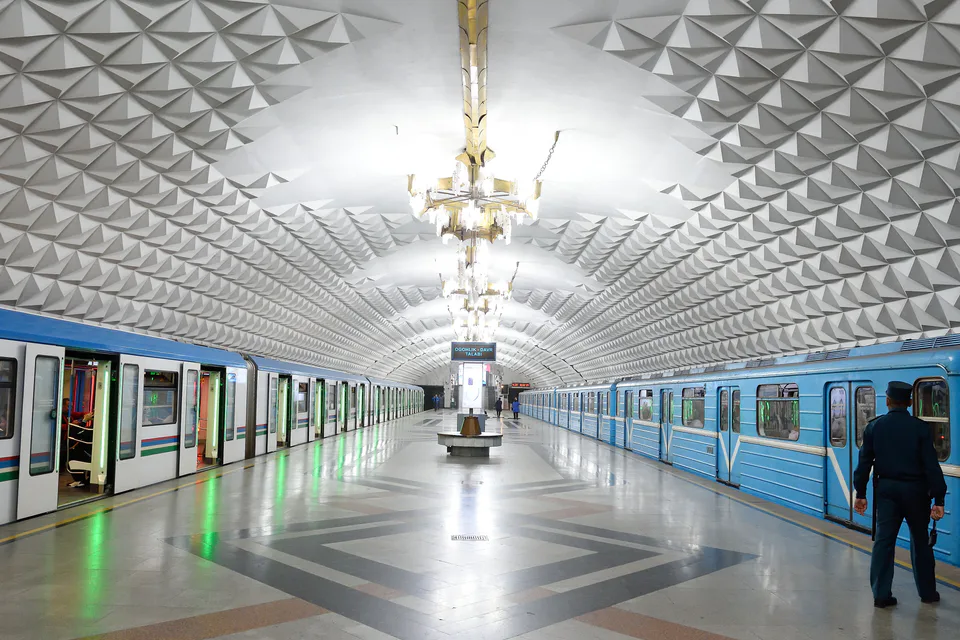
Central Asia's first underground
Park & garden · Yunusabad District
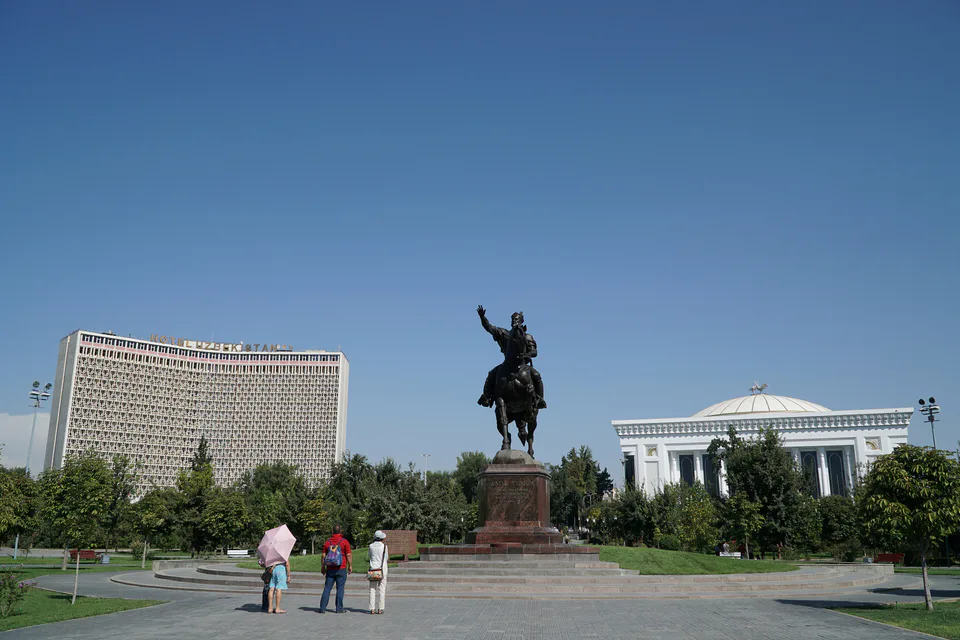
The heart of Tashkent's new town
Modern · Mirabad District
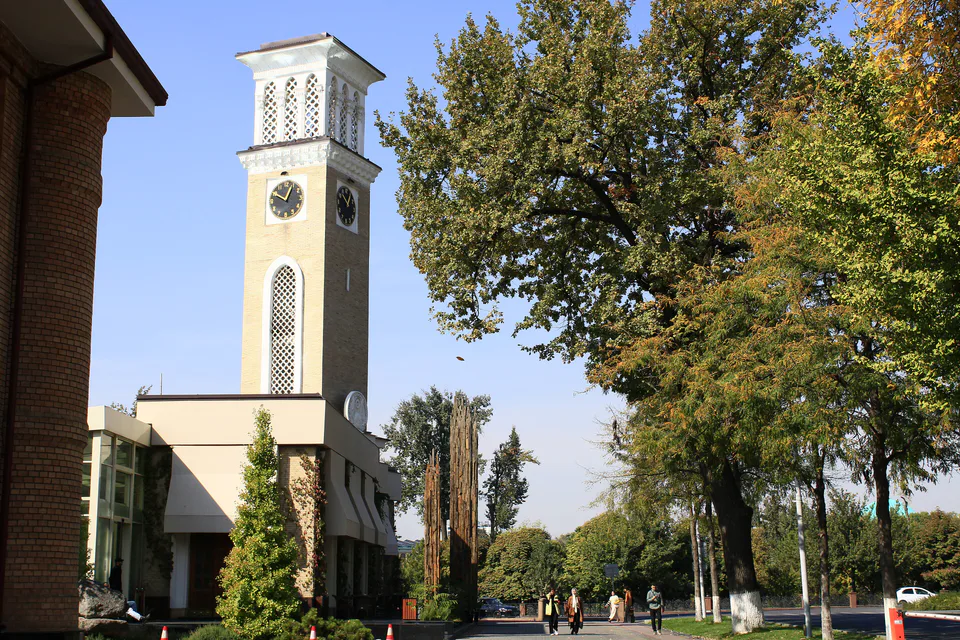
Keeping the city's time since 1947
Culture & arts · Shaykhantahur District
One of the USSR's first independent theatres