Dish · Nationwide
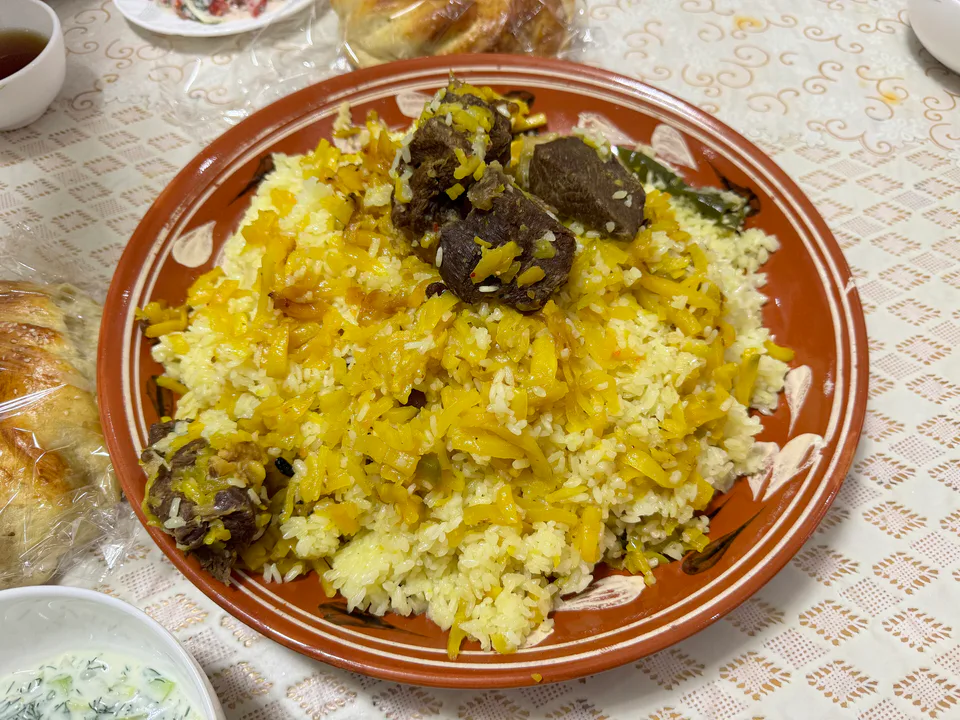
Plov (osh)
The centrepiece of any Uzbek meal: meat, onions and yellow carrots are cooked into a rich base in a kazan, then rice is steamed on top. UNESCO-listed since 2016.
Dish · Nationwide
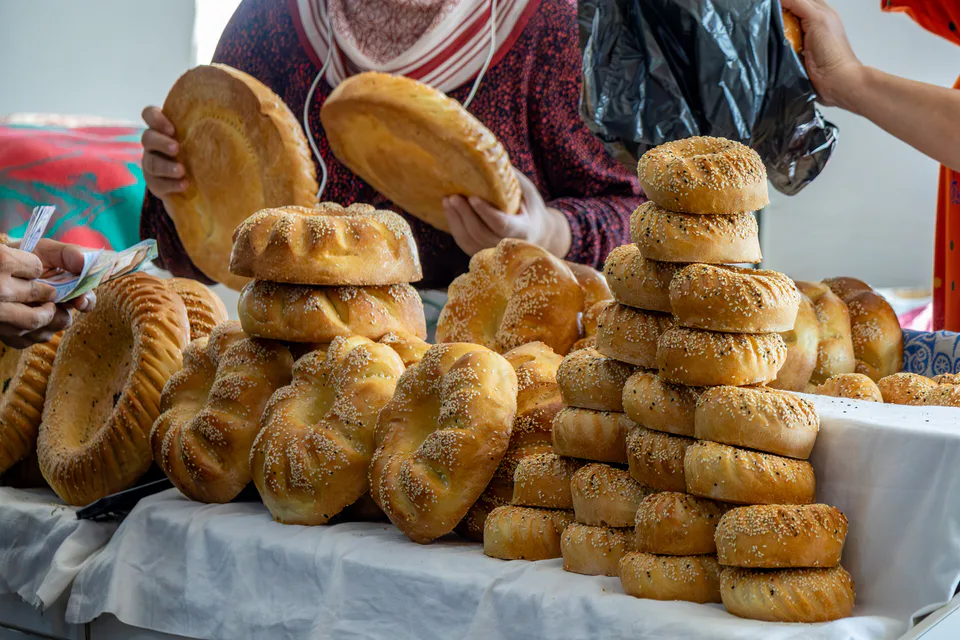
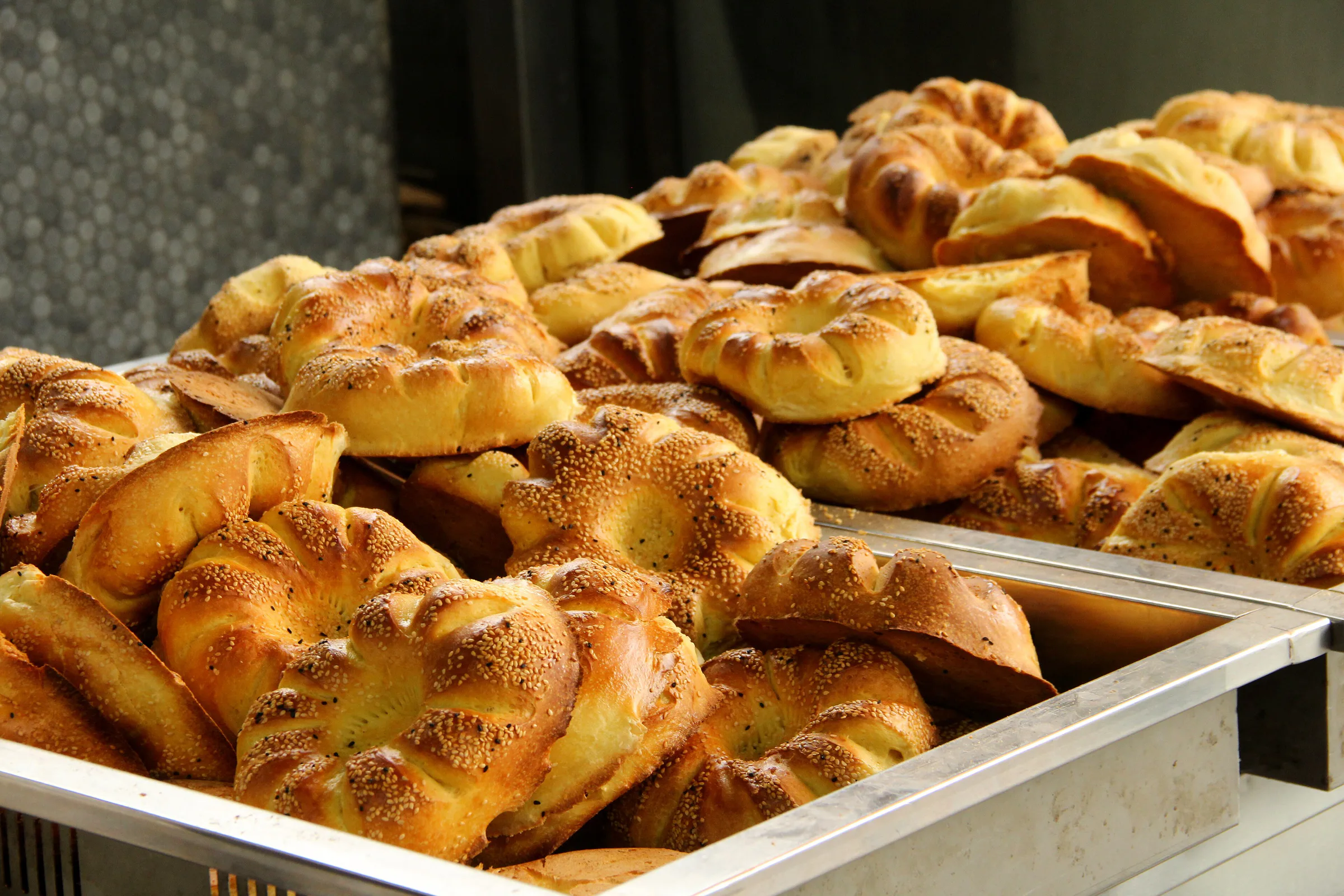
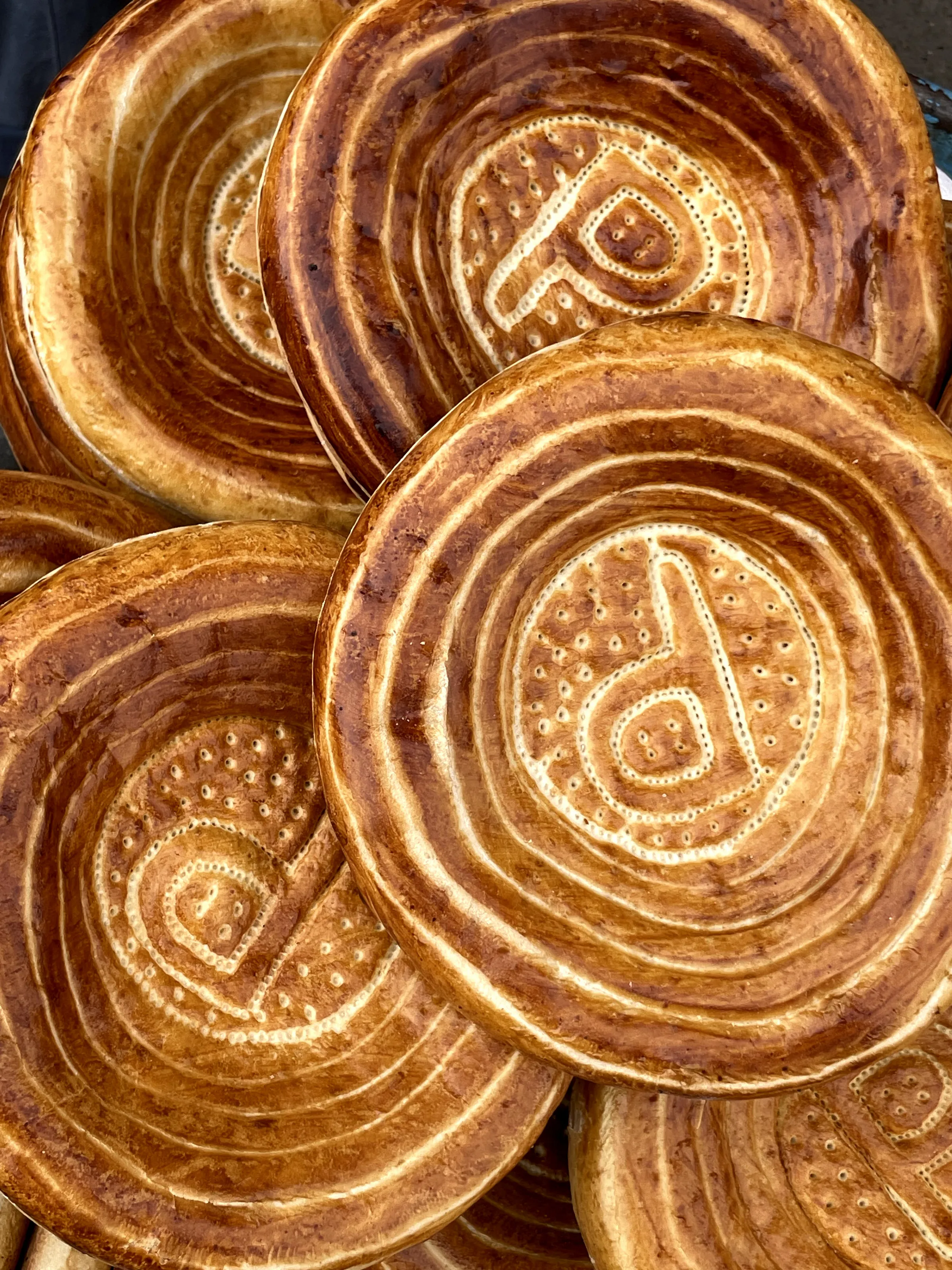
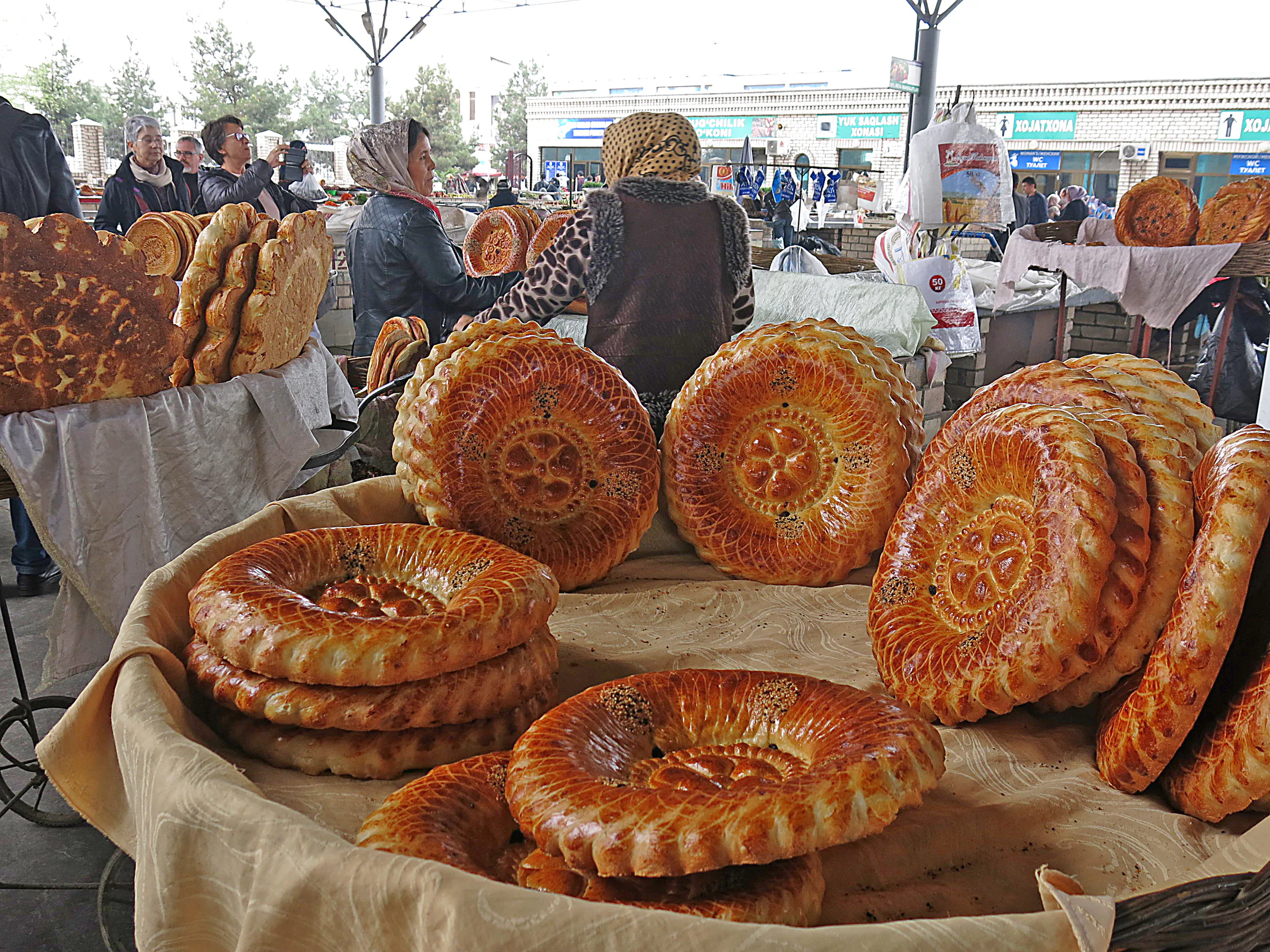
Round tandoor bread heads every Uzbek table: obi non, gijda, patir, shirmoy — and each region’s own loaves.
Uzbek bakers divide bread by method into four main types: obi non, gijda, patir and shirmoy (lochira is sometimes counted separately). Obi non — ‘water bread’ — is made from flour, leaven and salt. Gijda dough is stiffer and kneaded longer, giving a thicker loaf. Patir is enriched with butter, sheep fat, cracklings or onion, while shirmoy is raised with a special starter made from a decoction of chickpeas and anise.
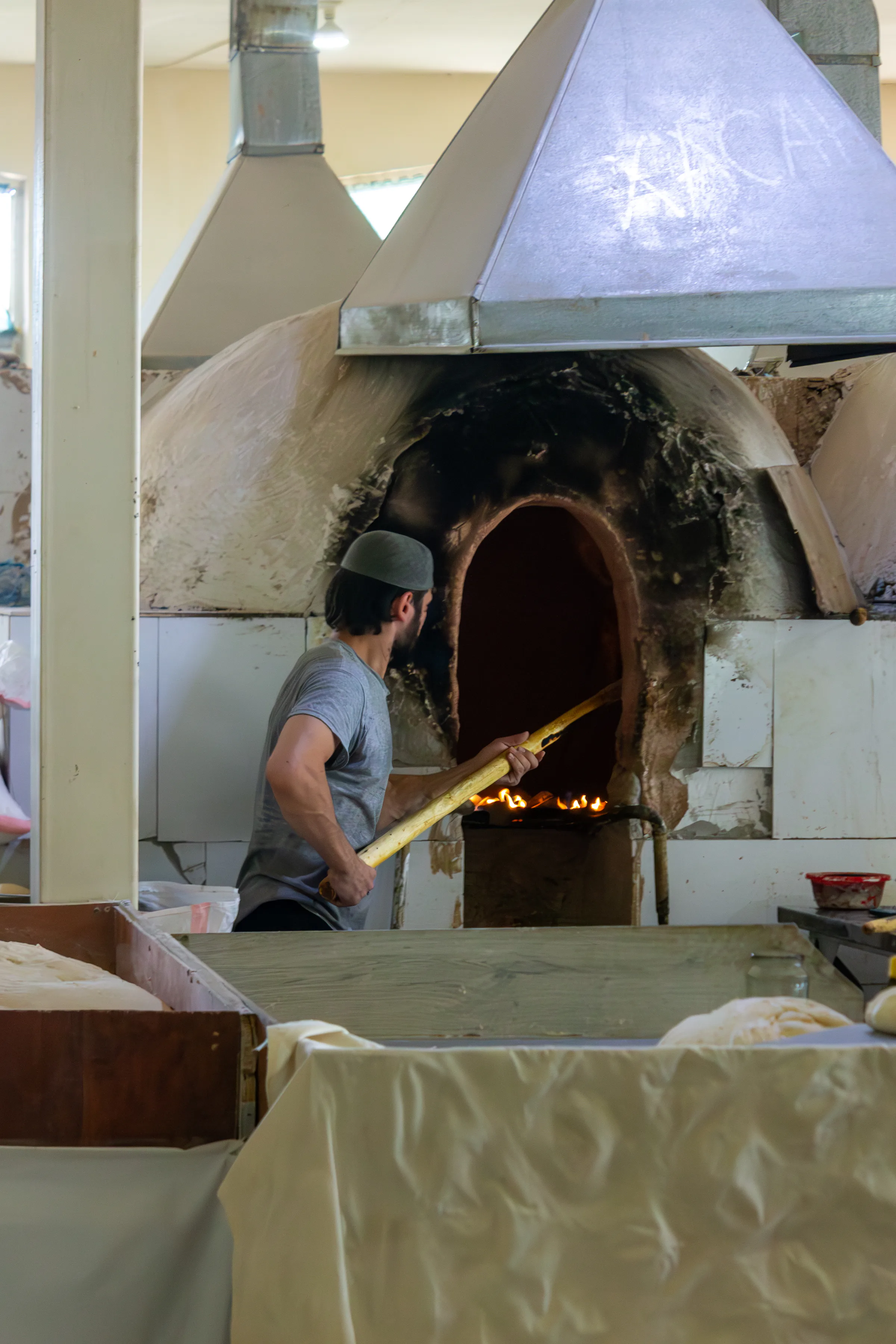
Before a loaf is slapped onto the tandoor wall its underside is moistened with salted water, and the top is sprinkled with water as it bakes. The centre is pricked with a chekich, a stamp of nails that makes the pattern and stops the middle from puffing up.
Bread is sacred in an Uzbek home: it is torn by hand, never cut with a knife, and never placed upside down, and a meal begins with breaking the bread. An old custom still survives of letting someone about to travel bite a loaf, which is then kept until they return.
Every region is proud of its bread: Samarkand non, Tashkent patir, the layered and Kashgar-style patirs of the Fergana Valley, and Khorezm’s huge loaves up to half a metre across. Bakeries and bazaars sell it fresh from early morning.
Dish · Nationwide
The centrepiece of any Uzbek meal: meat, onions and yellow carrots are cooked into a rich base in a kazan, then rice is steamed on top. UNESCO-listed since 2016.
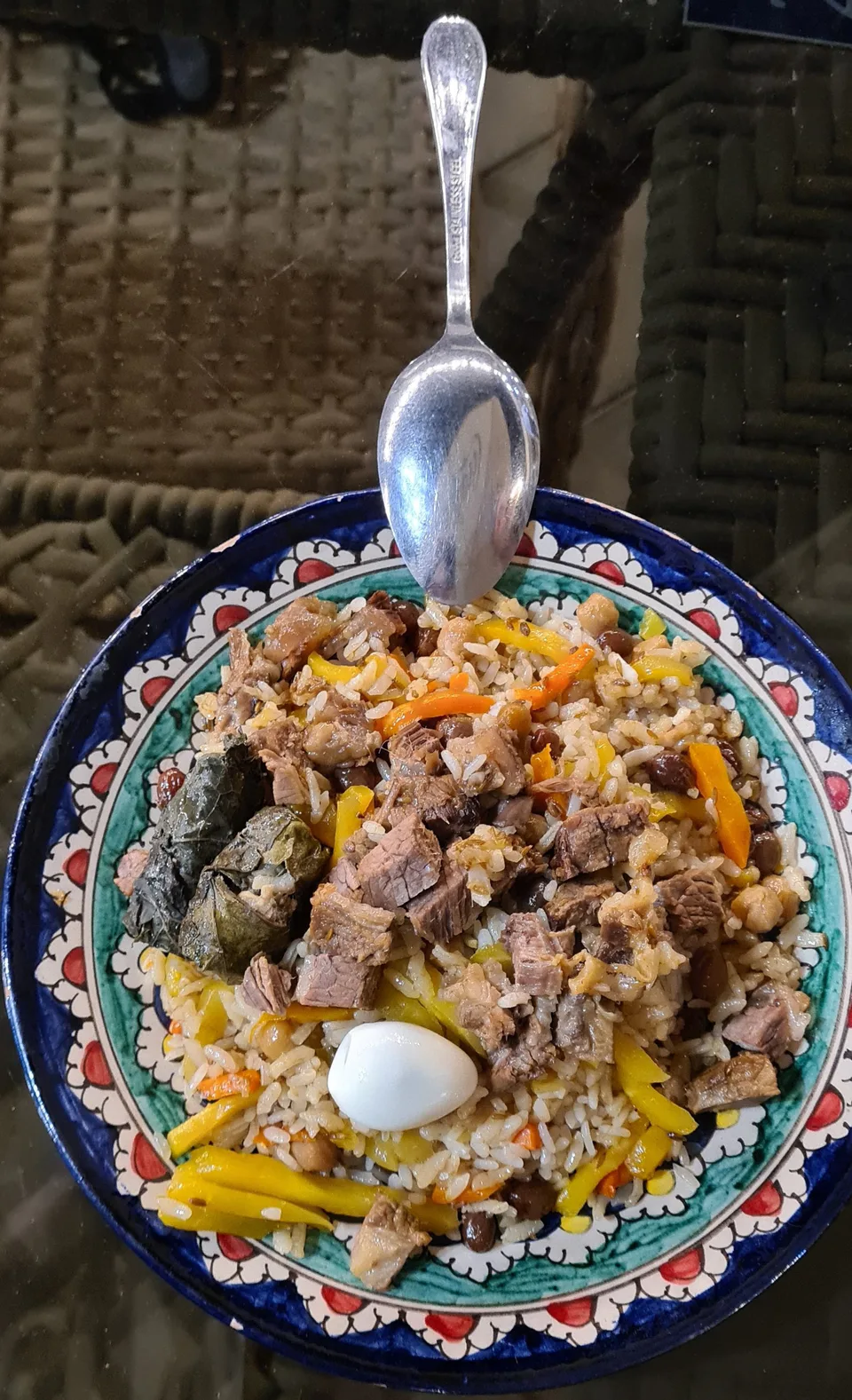
Dish · Tashkent (city), Tashkent Region
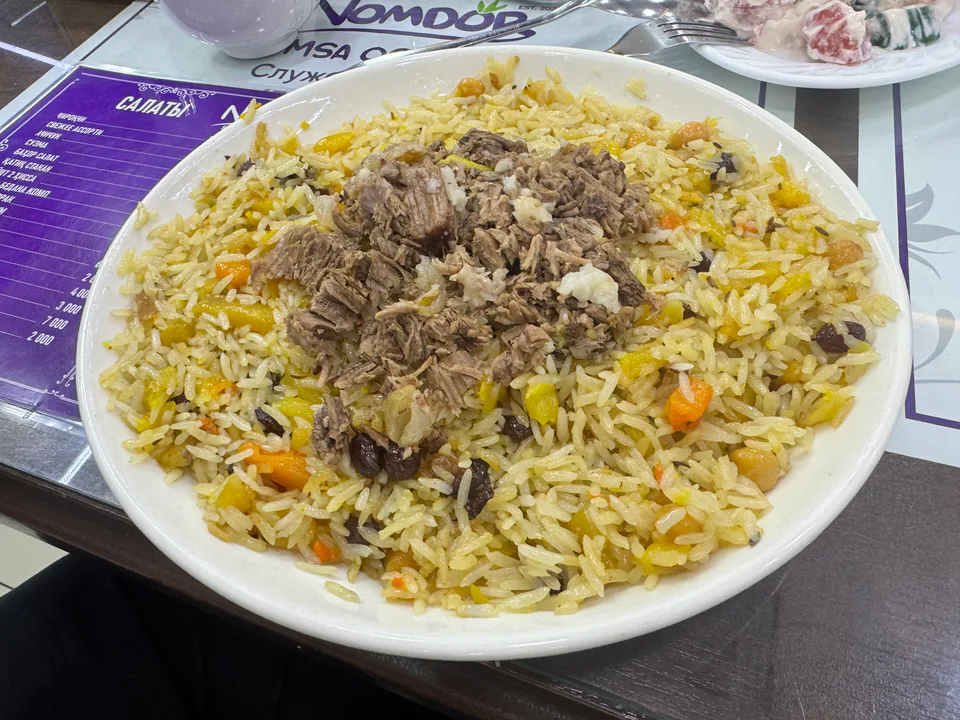
The capital’s style of plov: everything is fried first and the rice is mixed into the base; wedding plov adds kazy sausage, chickpeas, raisins and sometimes quail eggs.
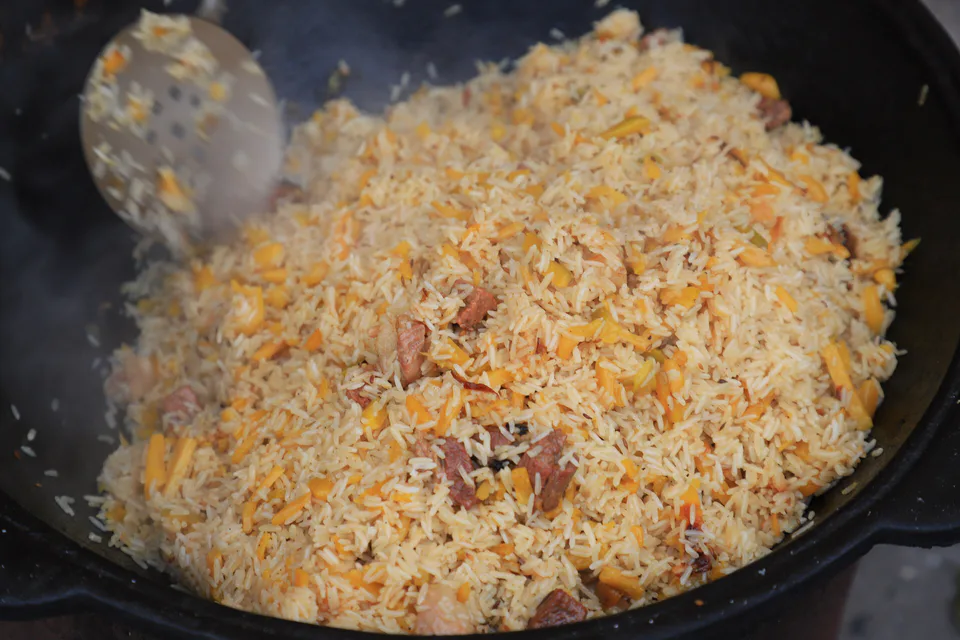
Dish · Samarkand
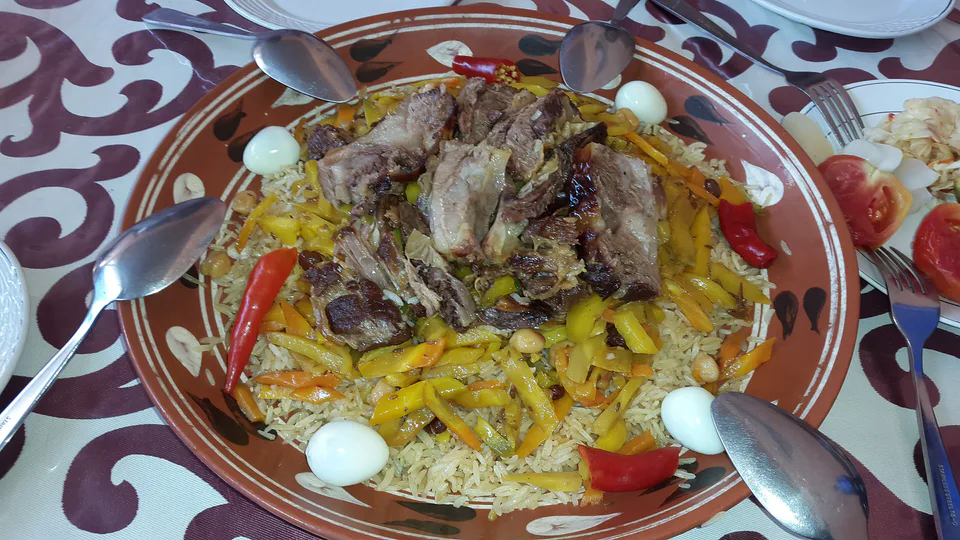
A layered plov in which nothing is stirred: the rice stays pale, and the carrots and meat are served on top of it.
Dish · Bukhara
Bukhara’s own plovs: oshi sofi, made with separately boiled and drained rice, and plov cooked with mung beans.
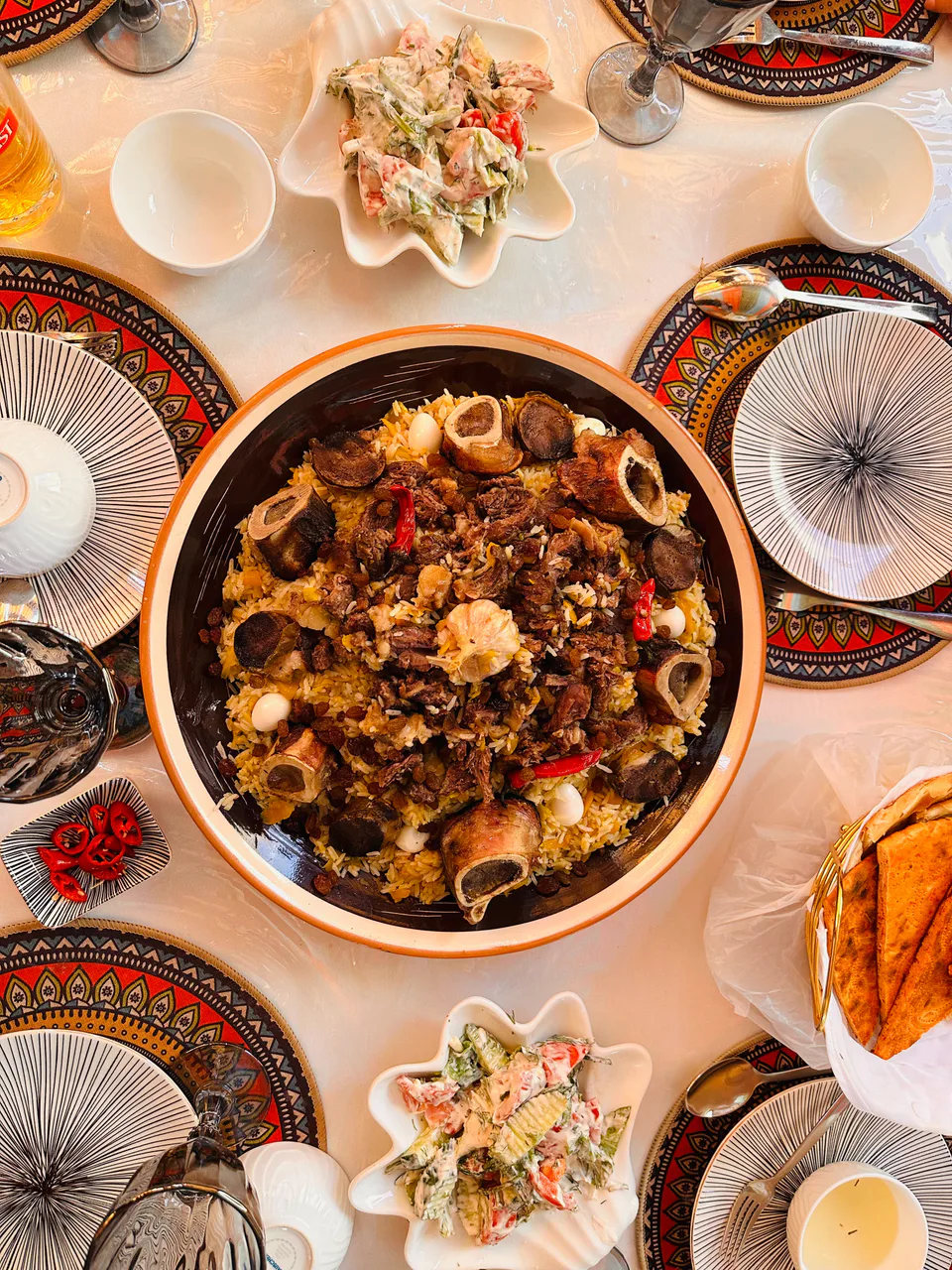
Dish · Fergana, Andijan +1
The dark plov of the Fergana Valley: a bone, meat, onions and carrots are fried long and hard until the zirvak turns deep brown.
Dish · Khorezm
Khorezm’s plov tradition, including suzma palov, in which the rice is boiled separately and drained before it meets the zirvak.
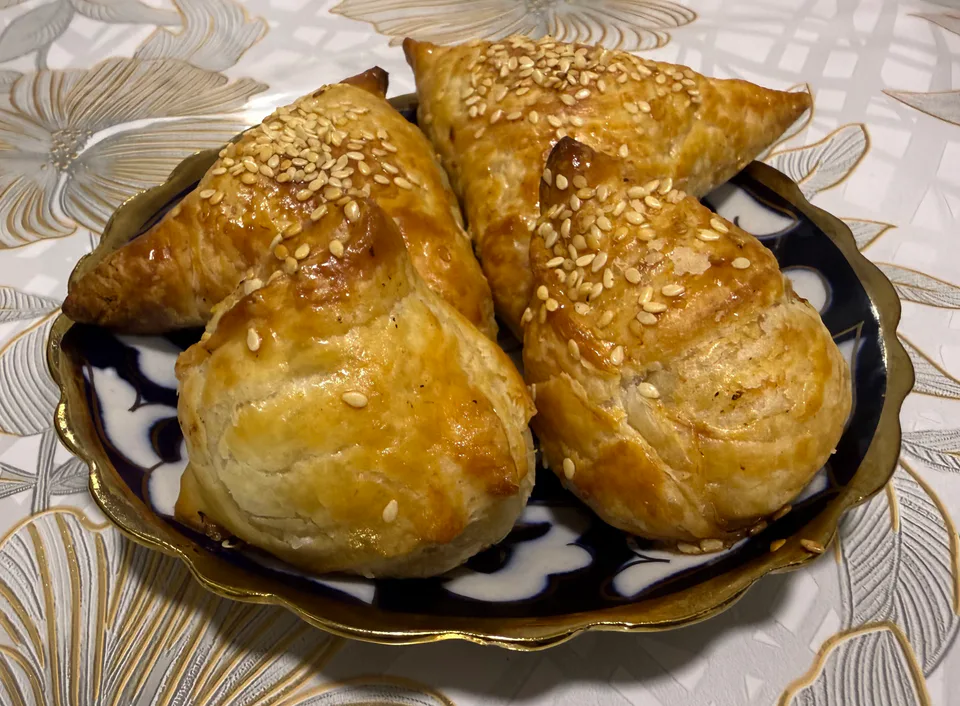
Dish · Nationwide
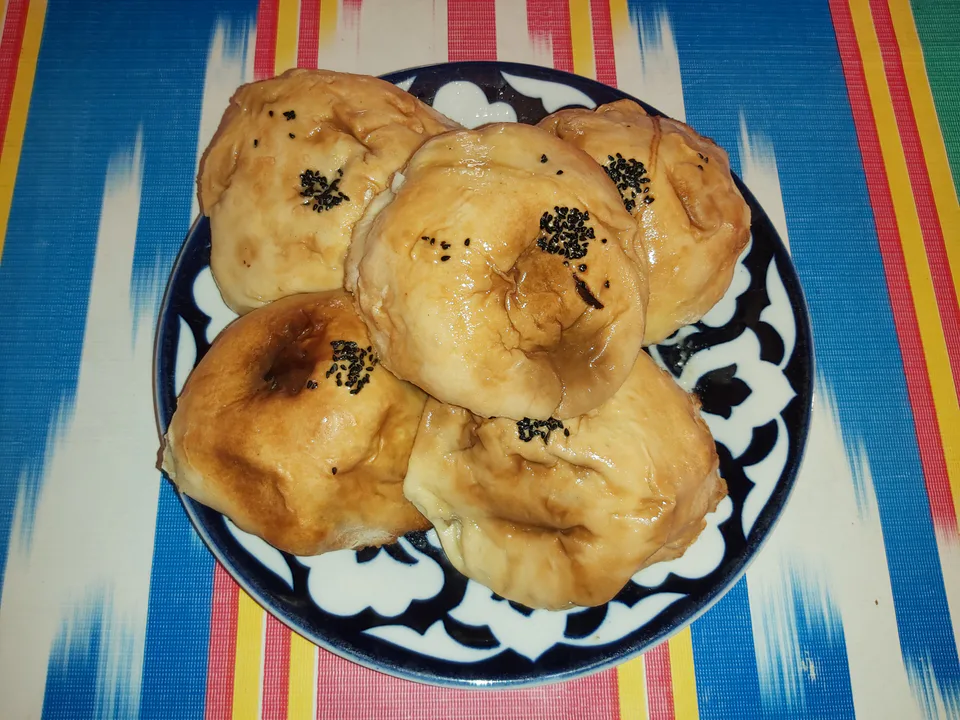
Flaky pastries baked on the inner wall of a tandoor, filled with hand-chopped lamb, tail fat and onion — or wild greens in spring and pumpkin in autumn.
Dish · Jizzakh
Jizzakh’s culinary calling card: a large dome-shaped samsa made from three layers of dough, packed with lamb and tail fat and dipped in sunflower oil.
Dish · Nationwide
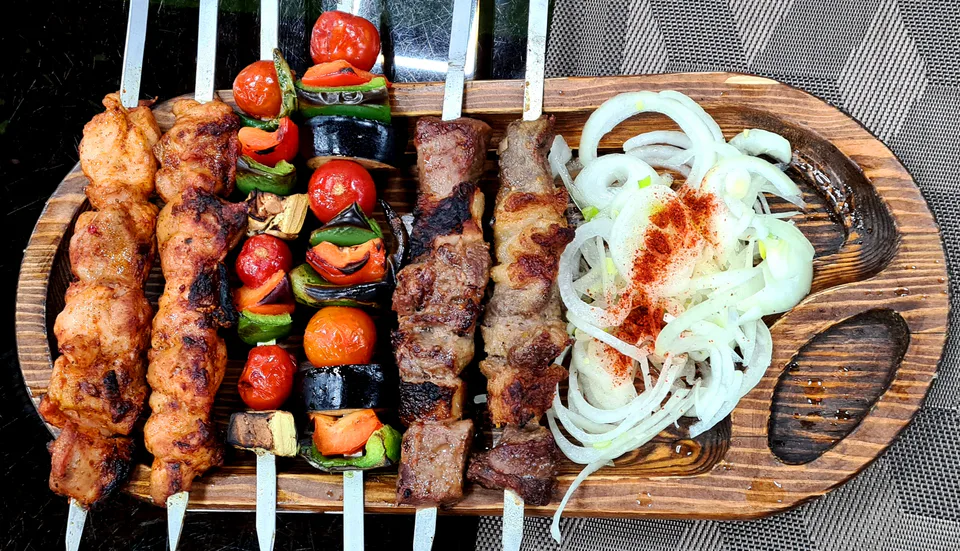
Skewered meat grilled over embers — lamb, beef, meat with tail fat, liver, minced qiyma (lula) kabob — served with onion, vinegar and hot bread.
Dish · Bukhara
The famous minced-meat kebab of Gijduvan in Bukhara Region: the meat is minced twice, frozen, chopped and pressed onto skewers.