Craft · Fergana
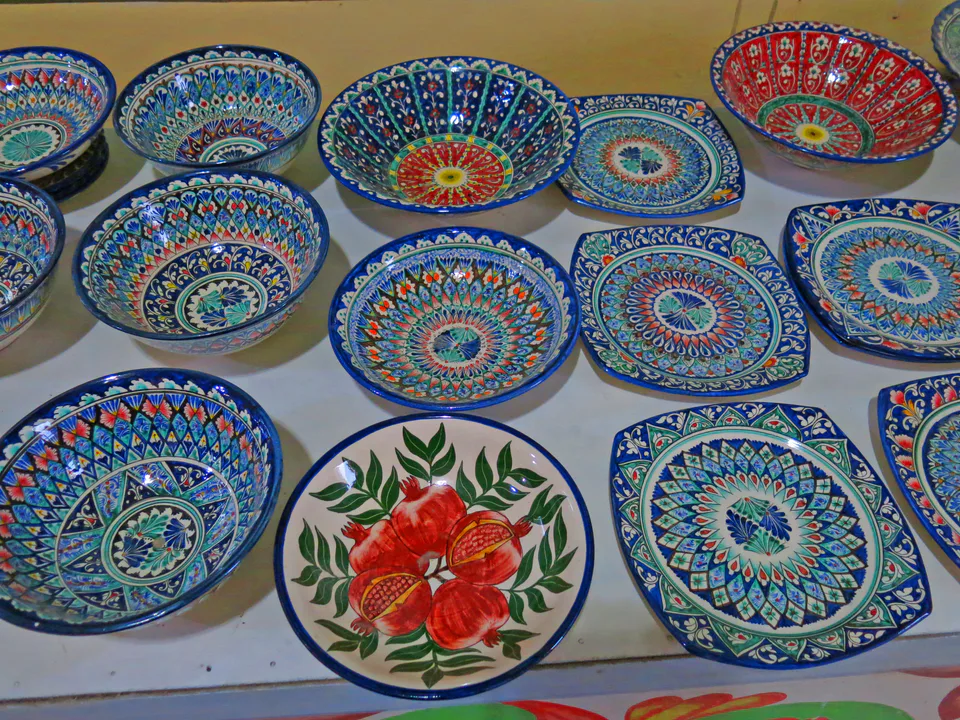
Rishtan ceramics
The blue and turquoise pottery of Rishtan in the Fergana Valley, famed for its ishkor glaze made from plant ash and its local red clay.
Craft · Nationwide
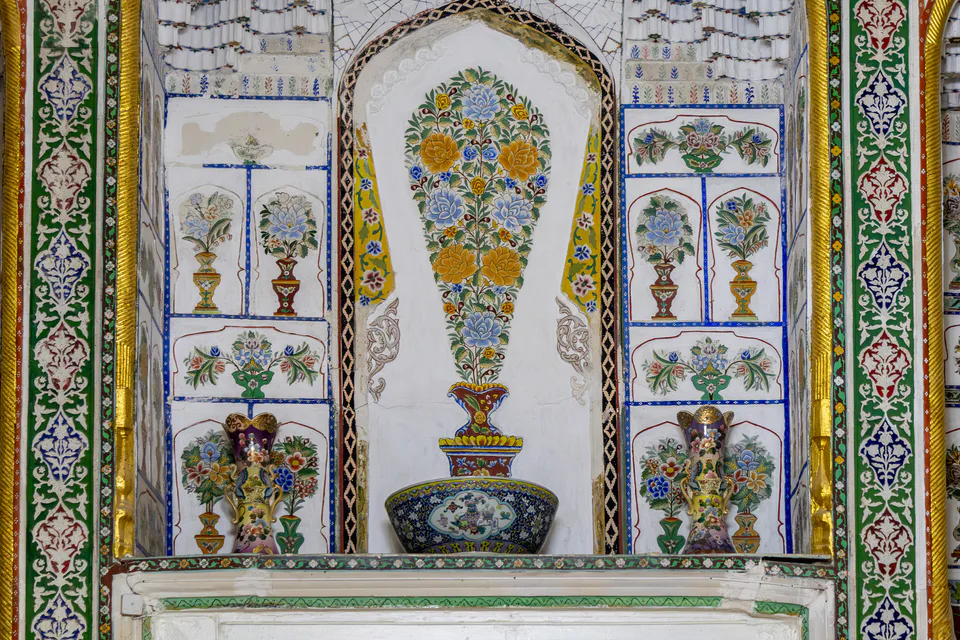
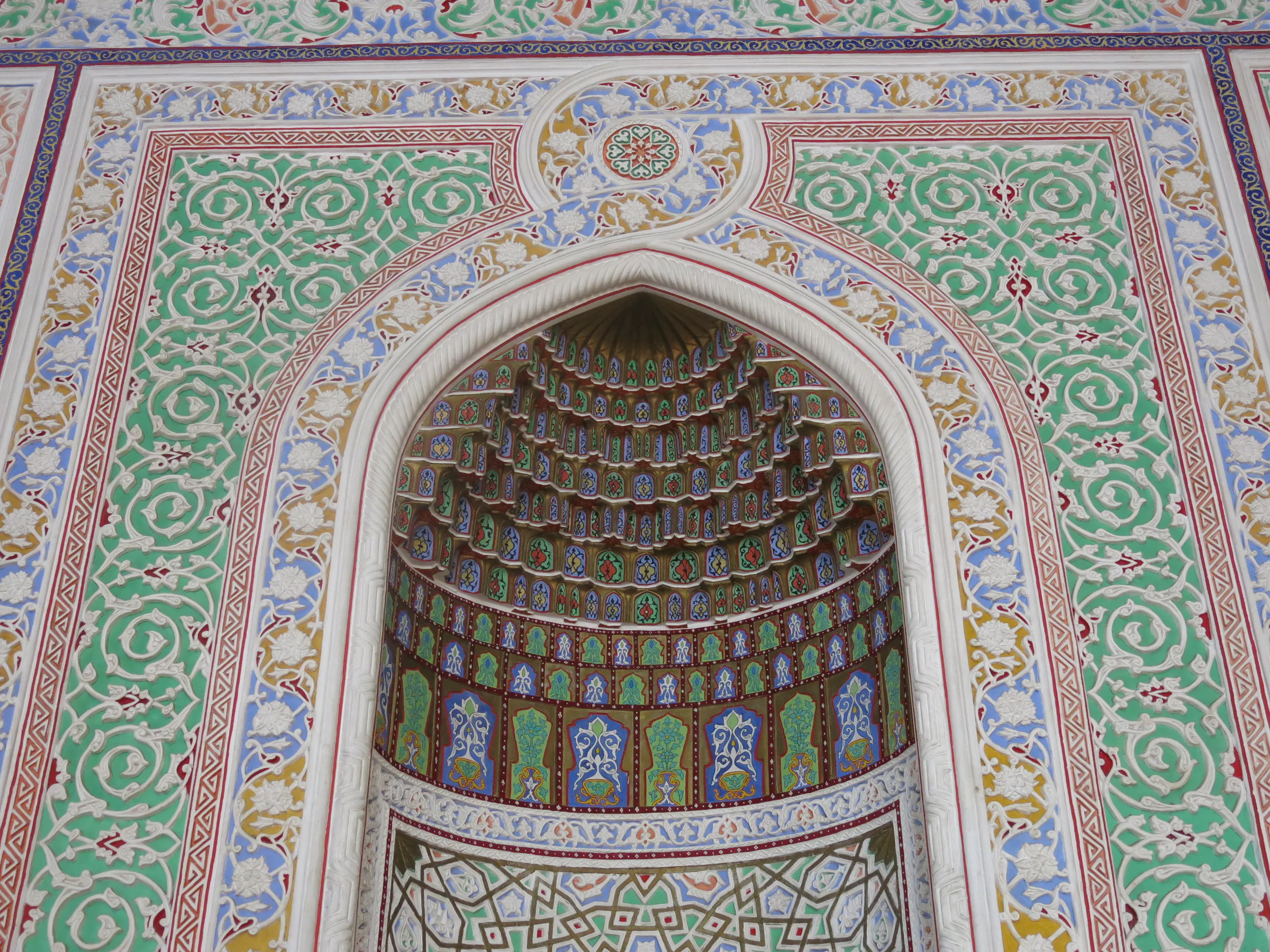
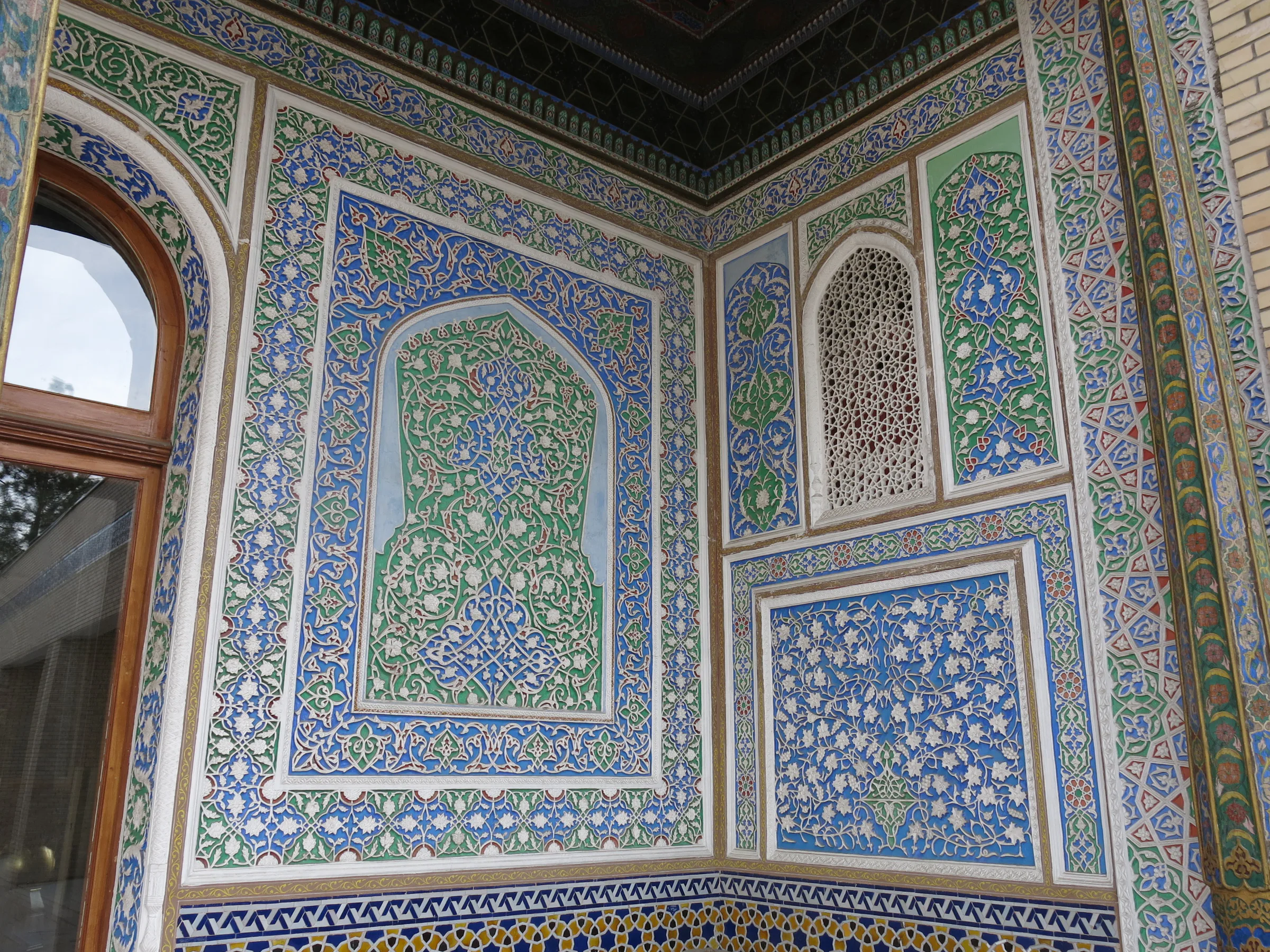
Carving in ganch, a mix of gypsum and clay — from the interiors of palaces and mosques to today’s wedding halls.
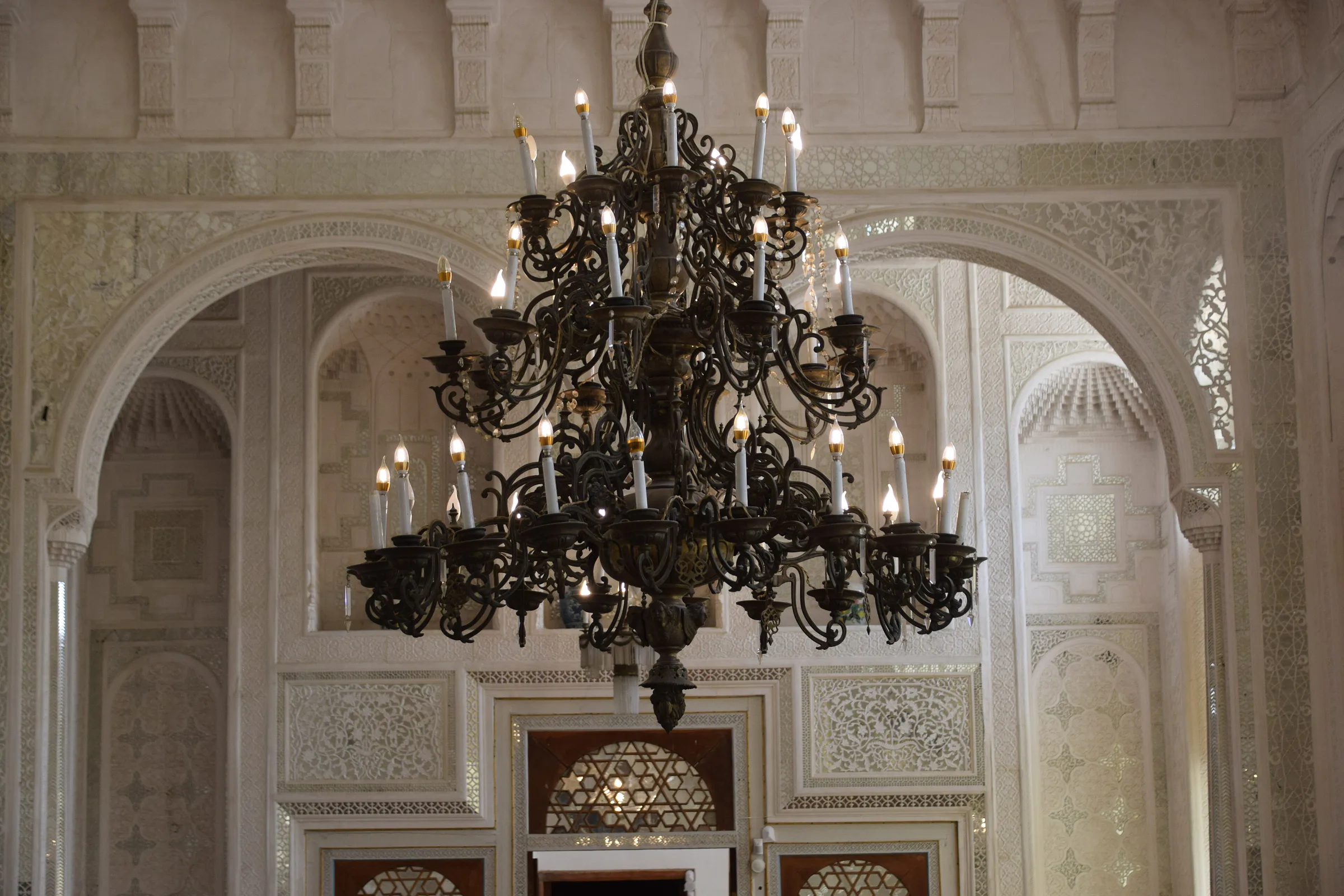
Ganch is a creamy-white building material made by firing a natural mixture of gypsum (40–70 per cent) and clay. It sets more slowly than alabaster, so it can be plastered onto a wall or ceiling and carved at leisure. It dislikes damp and is used mostly indoors, with the finest grade, gul ganch, reserved for decoration.
There are two techniques. In o‘ymakori the wall is plastered and the pattern carved in place; in qolipaki the ornament is cast in advance on ganch panels and fixed to the wall, allowing a design to be repeated many times. Mineral pigments make coloured work possible, sometimes over a mirrored ground.
The leading craftsmen of the day, Usta Shirin Murodov among them, worked on the emirs’ summer palace of Sitorai Mohi-Xosa in Bukhara (its new part built in 1912–1920), whose Eastern-style interiors are now a museum of decorative arts. The decoration of Tashkent’s Alisher Navoi Theatre (1947) brings together Bukhara-school carved ganch and the styles of masters from Tashkent, Khiva, Samarkand, Fergana and Termez, so one building lets you compare several schools. Today ganch carvers restore monuments and decorate new mosques, wedding halls and homes.
Craft · Fergana
The blue and turquoise pottery of Rishtan in the Fergana Valley, famed for its ishkor glaze made from plant ash and its local red clay.
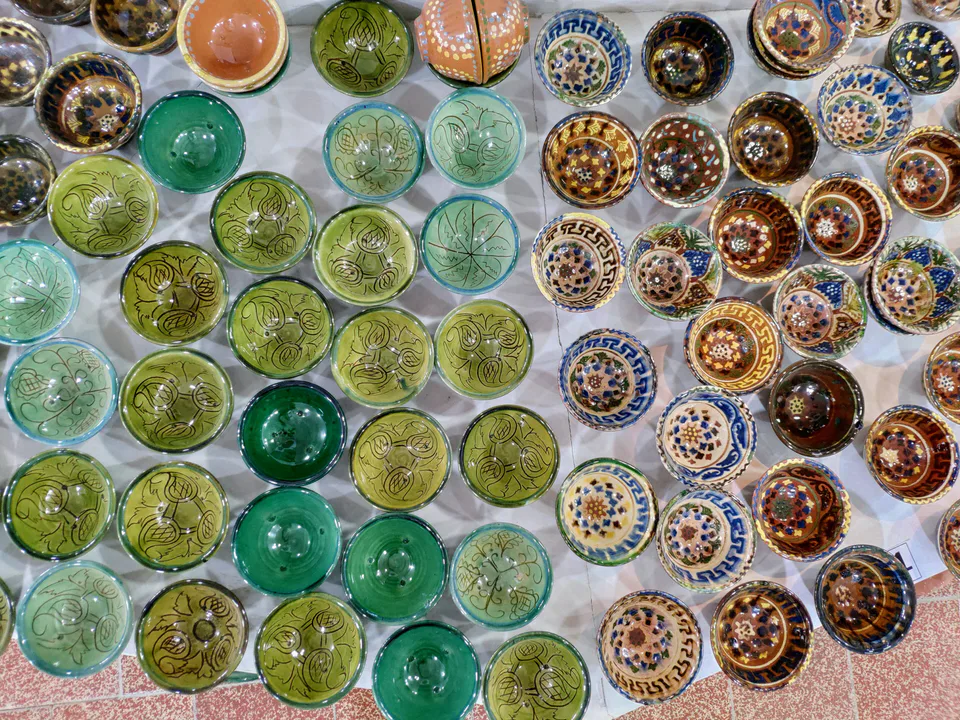
Craft · Bukhara
Pottery from Gijduvan near Bukhara, glazed in browns, yellows and greens — the best-known centre of the Bukhara–Samarkand school.
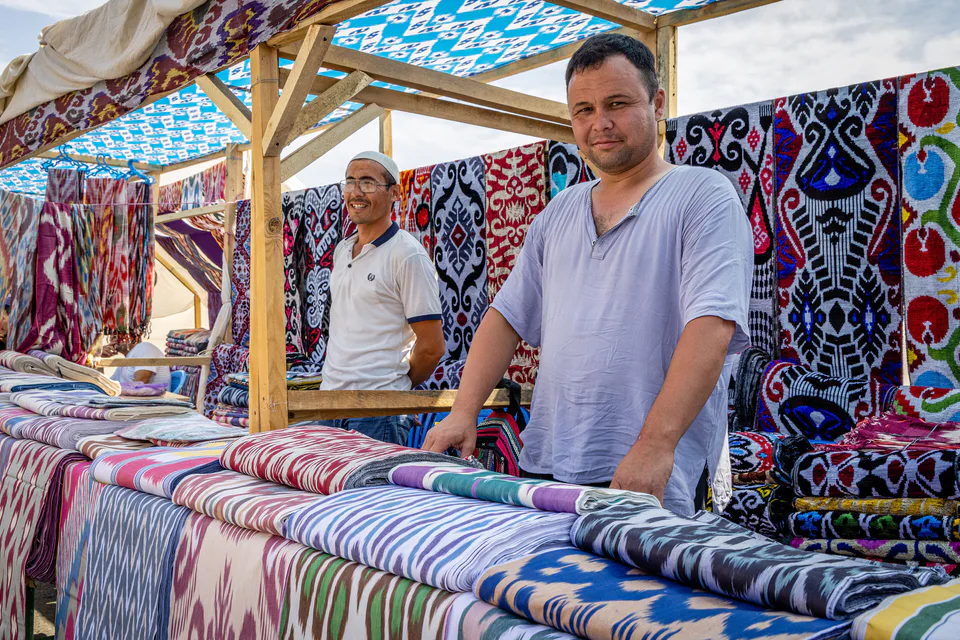
Craft · Fergana
Margilan’s ikat silks: pure-silk atlas and half-silk adras. UNESCO recognises the town’s work to safeguard them as a model practice.
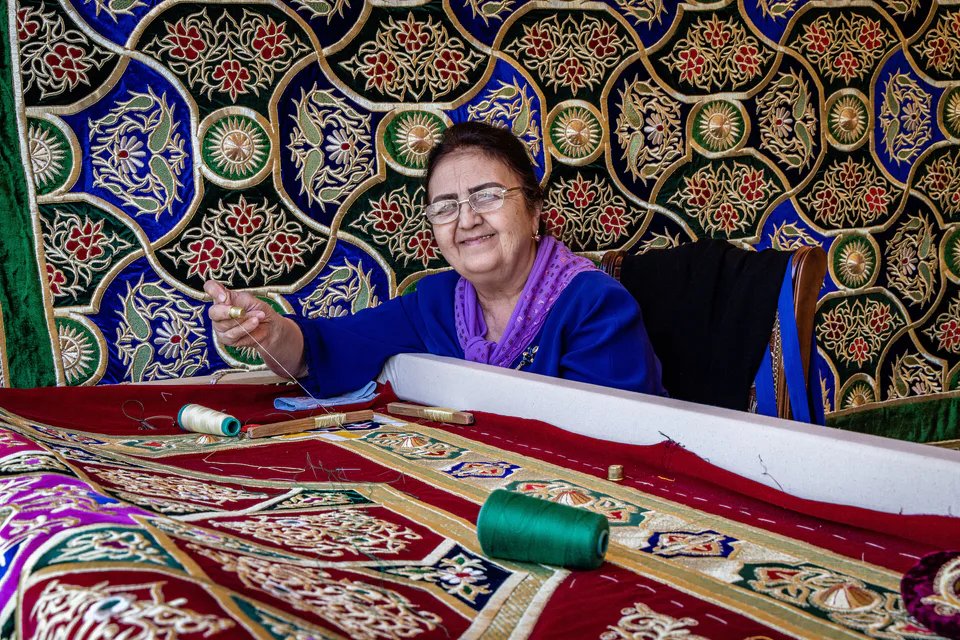
Craft · Bukhara
Embroidery in gold and silver thread on velvet and silk — the art of the Bukhara emirs’ court and still the city’s most precious craft.
Craft · Khorezm
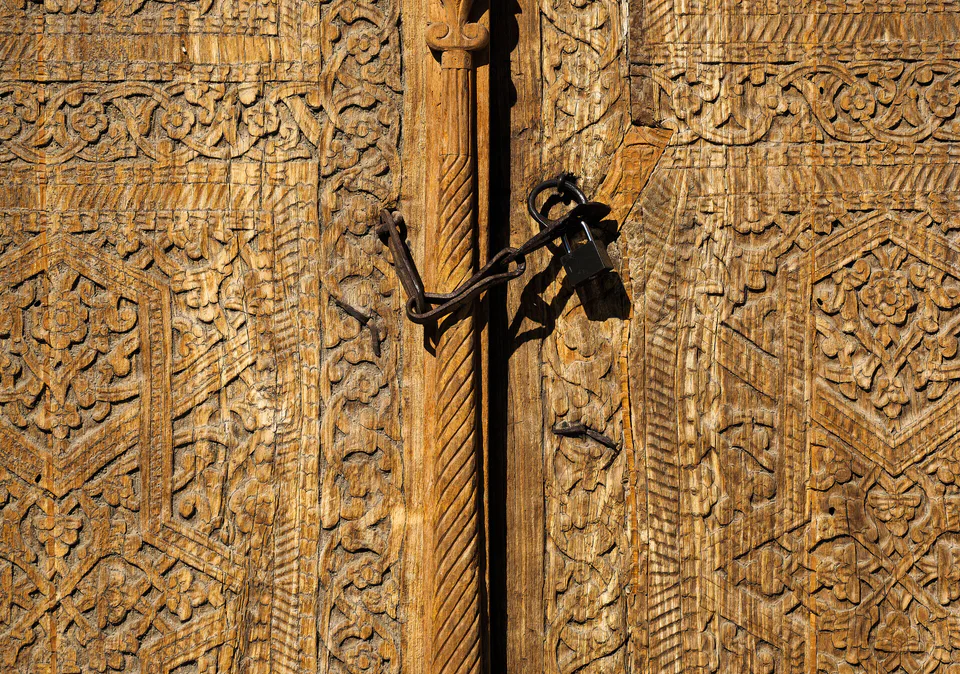
The carved doors and columns of Itchan Kala: Khiva’s carvers never paint the wood, finishing it only with natural oil; the Juma Mosque alone has more than 200 columns.
Craft · Namangan
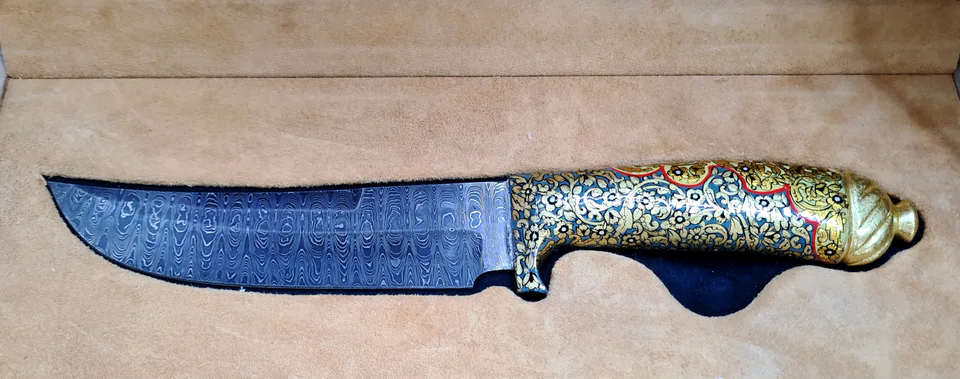
Hand-forged knives from Chust in Namangan Region: a blade with a slightly upturned tip, the maker’s stamped ‘signature’ and a decorated sheath.
Craft · Namangan
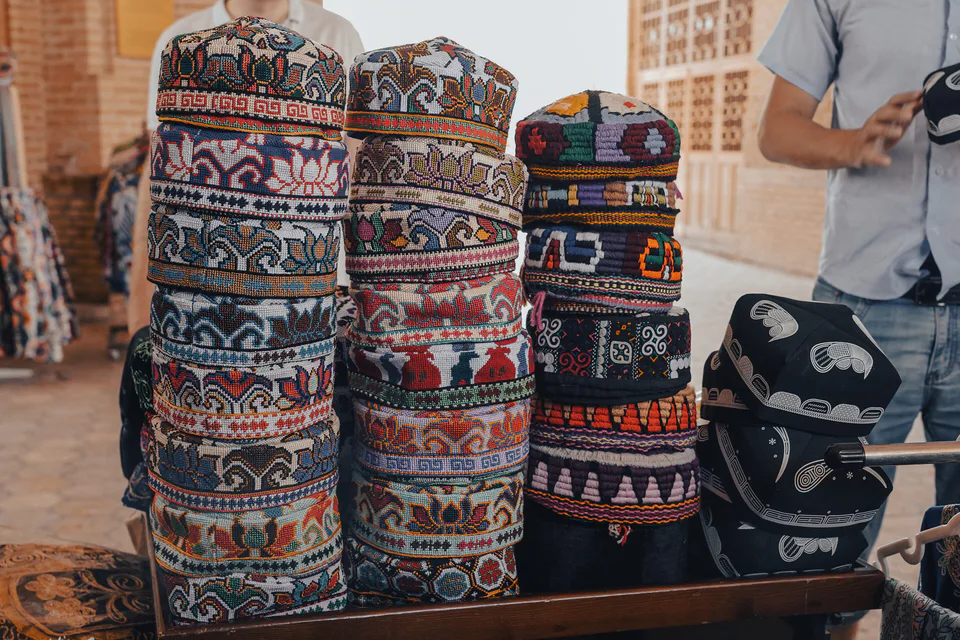
The four-sided Chust skullcap, with white pepper-pod motifs on dark green, is the best-known emblem of Uzbek dress — and every oasis has its own doppi.
Craft · Samarkand
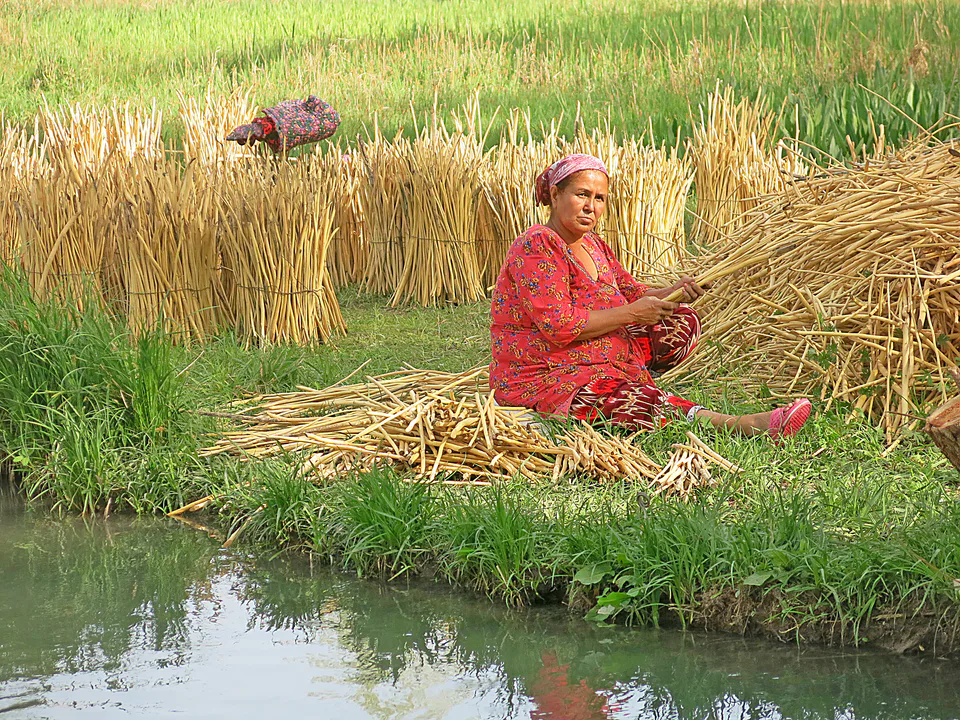
Paper made from mulberry bark — the finest writing material of the 9th–10th-century Islamic world, revived at Konigil at the end of the 20th century.
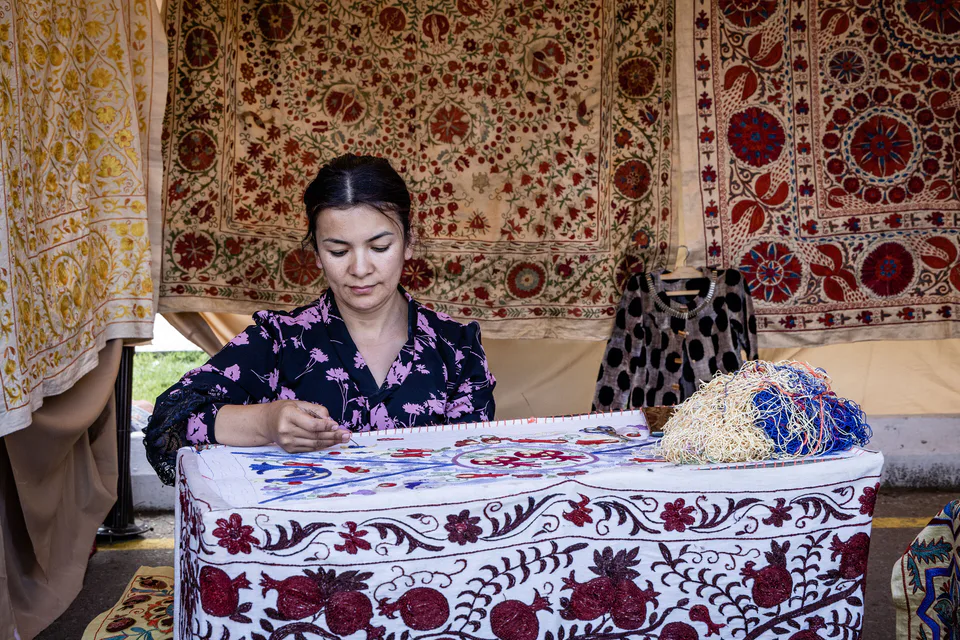
Craft · Bukhara
Large hand-embroidered hangings called suzani; the Bukhara school is known for fine designs covering almost the whole cloth in reds and greens on a pale ground.
Craft · Navoiy
Embroideries from Nurata in Navoiy Region: realistic sprays of carnations, irises, cotton flowers and cherries on a pale ground around a central eight-pointed star.