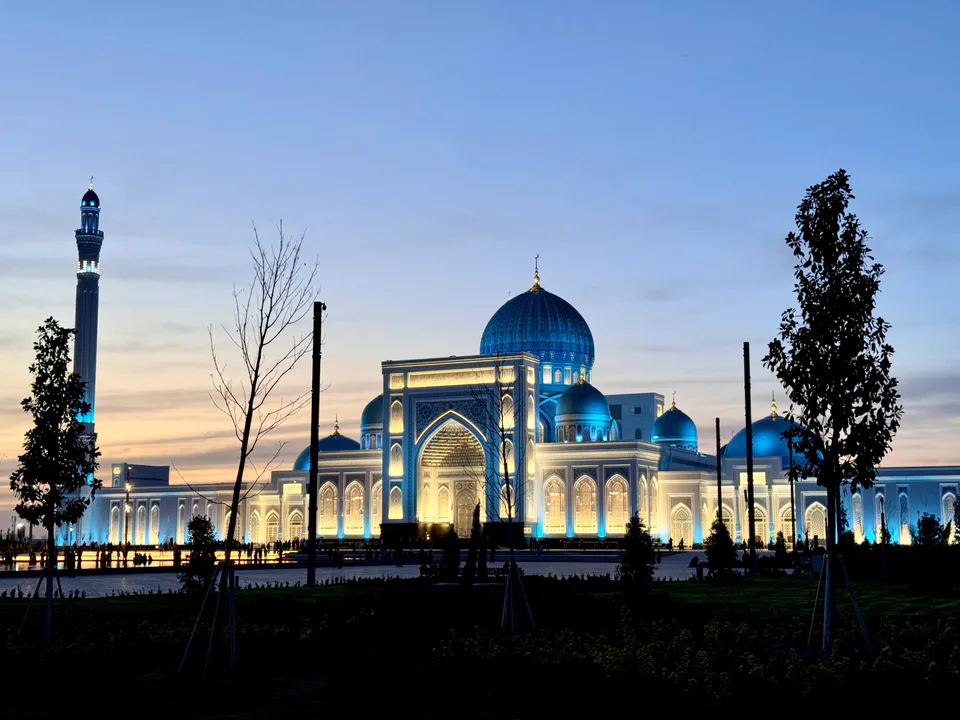
Pilgrimage site · Payariq District
Imam al-Bukhari Memorial Complex
Resting place of Islam's foremost hadith scholar
Archaeology · Payariq District
Ruins of an Iron Age city (9th–4th centuries BC) 30 km north of Samarkand, where in 2000 archaeologists uncovered the gold-laden grave of a “nomad princess”.
Koktepa lies in Payariq District between the villages of Batrak and Shamat, beside an old bed of the Bulungursay; locals call the mound Sayiltepa. It is a square city of about 23 hectares whose walls and four gateways are still traceable, while an outer rampart enclosed nearly 100 hectares. Some scholars identify it with Gabae, a city named by classical authors. The mound has been known since the 1970s, but only in the 1990s did researchers realise that its lowest layers date from the early Iron Age.
A joint Uzbek-French expedition has excavated here since 1993. The city went through three phases: an early Iron Age settlement with hand-made painted pottery; an urban phase with a temple on a raised platform and a ruler's palace; and a Hellenistic layer following Alexander's campaigns, after which the site was abandoned.
In 2000 the team opened the rich grave of a woman aged 25–35. Her dress was hemmed with 345 gold appliqués, her headdress sewn with glass beads and her belt set with turquoise-inlaid gold plaques, while a Han-dynasty Chinese mirror dated the burial to the 1st century BC or AD.
Pilgrimage site · Payariq District
Resting place of Islam's foremost hadith scholar
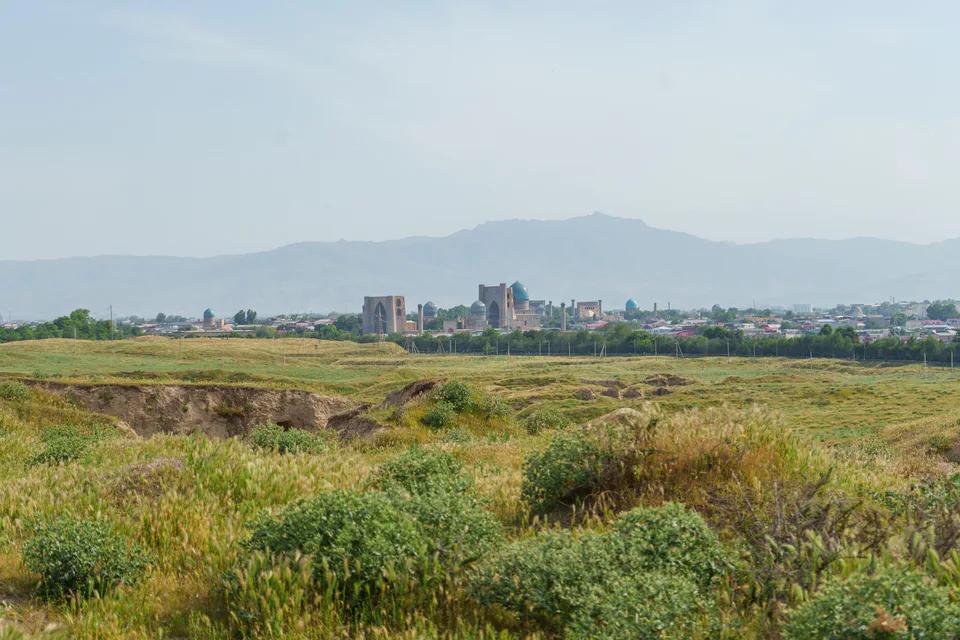
Archaeology · Samarkand
The ruins of pre-Mongol Samarkand
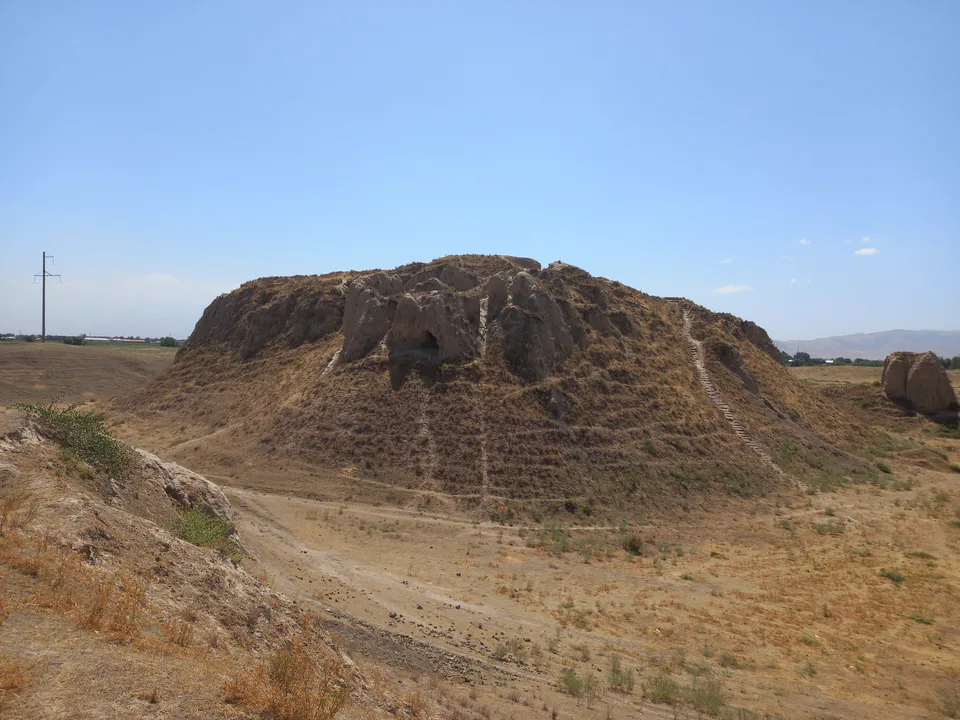
Archaeology · Samarkand District
The burnt castle of Sogdian kings
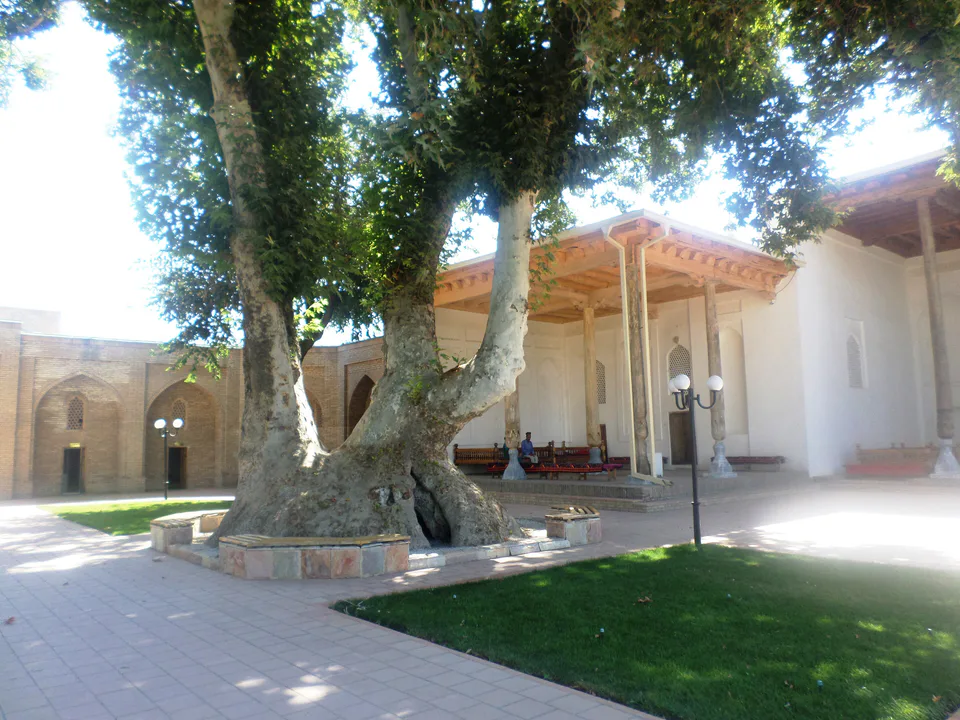
Pilgrimage site · Oqdaryo District
Shrine of a Naqshbandi master in Dahbed
Pilgrimage site · Jomboy District
Shrine of a Yasawi sheikh and wrestler
Entertainment · Samarkand
A new amusement park with a 92-metre Ferris wheel
Entertainment · Samarkand
An amusement park with a Soviet past
Park & garden · Samarkand
The fig-garden quarter — Uzbekistan's first tourism mahalla
Pilgrimage site · Samarkand
A Timurid dome on the city's highest point
Museum · Samarkand
From the Neolithic to the present