Archaeology · Ohangaron District
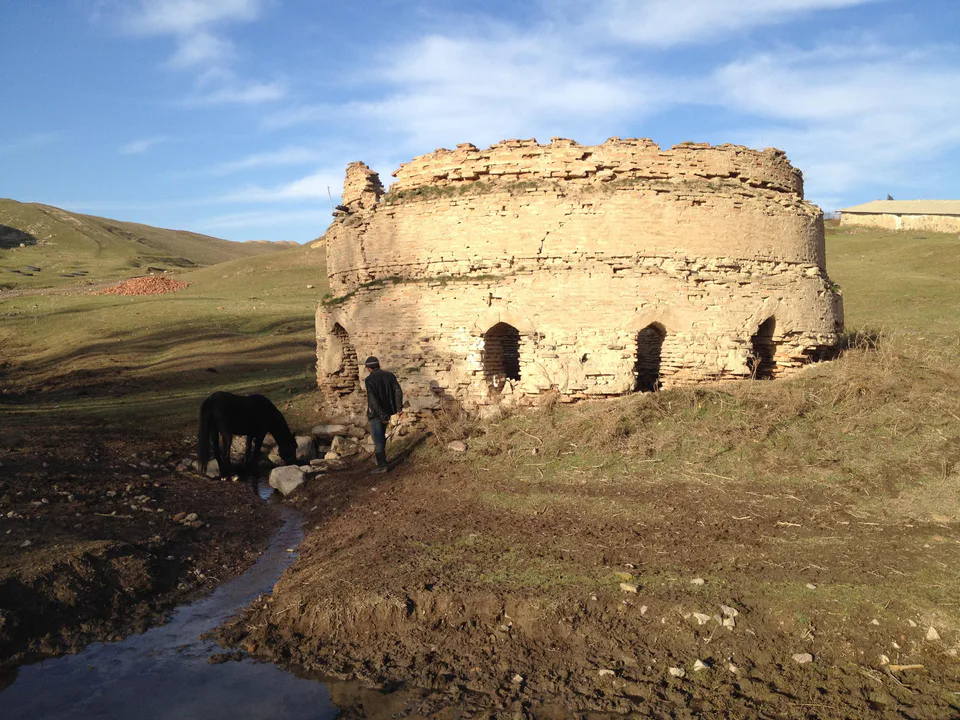
Qaynar Sardoba
The region’s only surviving cistern
Archaeology · Ohangaron District
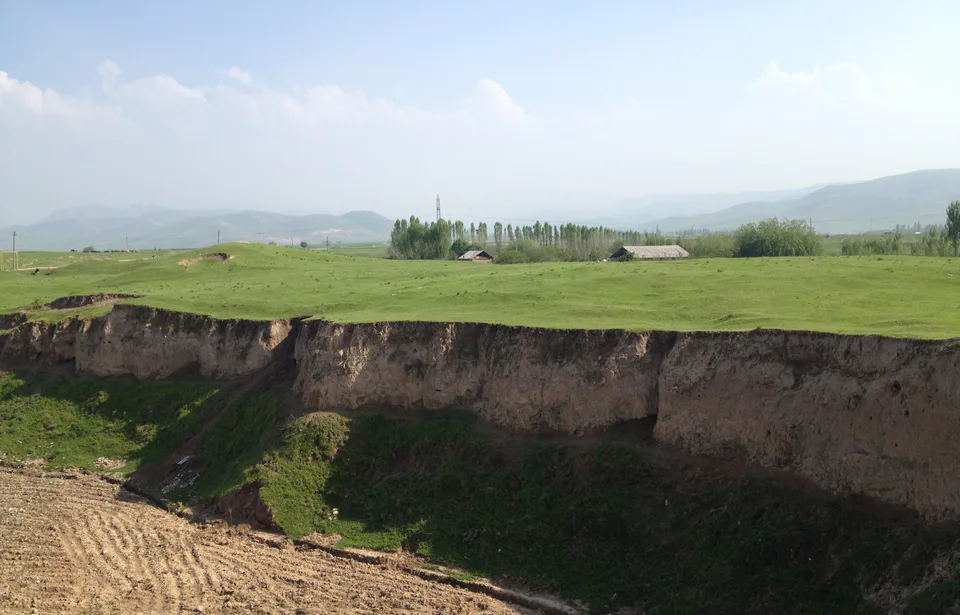
The Kul-Ata (Kyrkkyzbulak) shrine on a small lake 5 km east of Olmaliq, beside the ruins of an early medieval mining town.
The Kul-Ata shrine lies on the eastern shore of a small lake, with an artificial mound, a sacred grove, pavilions and hearths for cooking offerings. Devotion centres on the springs and rocks at the western end, where incense is burned. Since the 1980s it has also been called Kyrkkyzbulak. The lake probably formed when medieval mine workings flooded.
Further west lie the ruins of a major craft town of the Akhangaran valley. At its core is a citadel with walls up to 10 m high and a triangular keep, regarded as one of the oldest castles in Uzbekistan. The first settlement dates from the 3rd–4th centuries, and Yuri Buryakov put the town’s area at 50 hectares. Some scholars identify it with Tukkat, a metal-working centre of medieval Ilak.