Archaeology · Khojeyli District
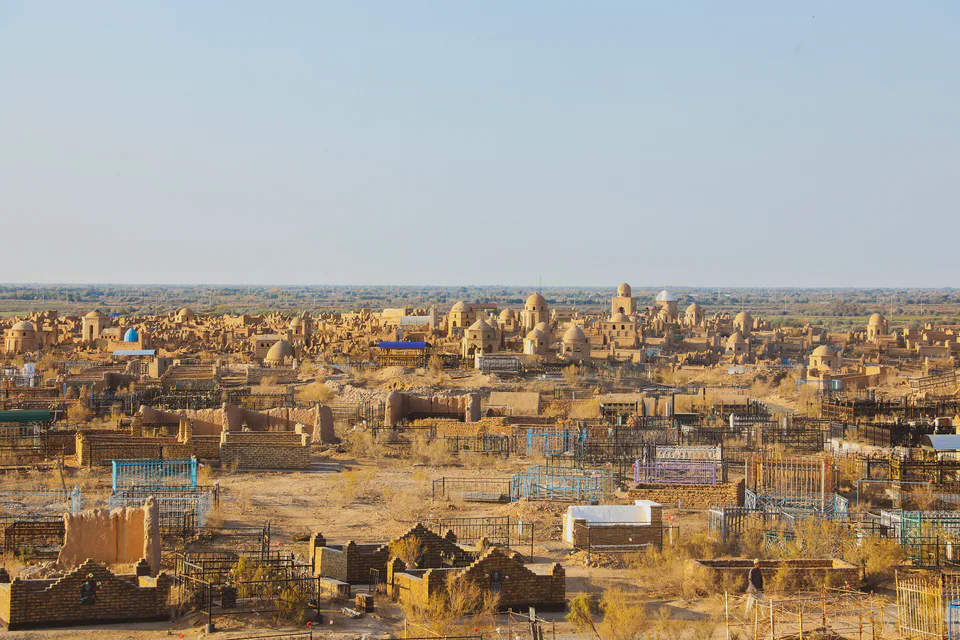
Mizdahkan
Adam’s grave and the holy hills of Khorezm
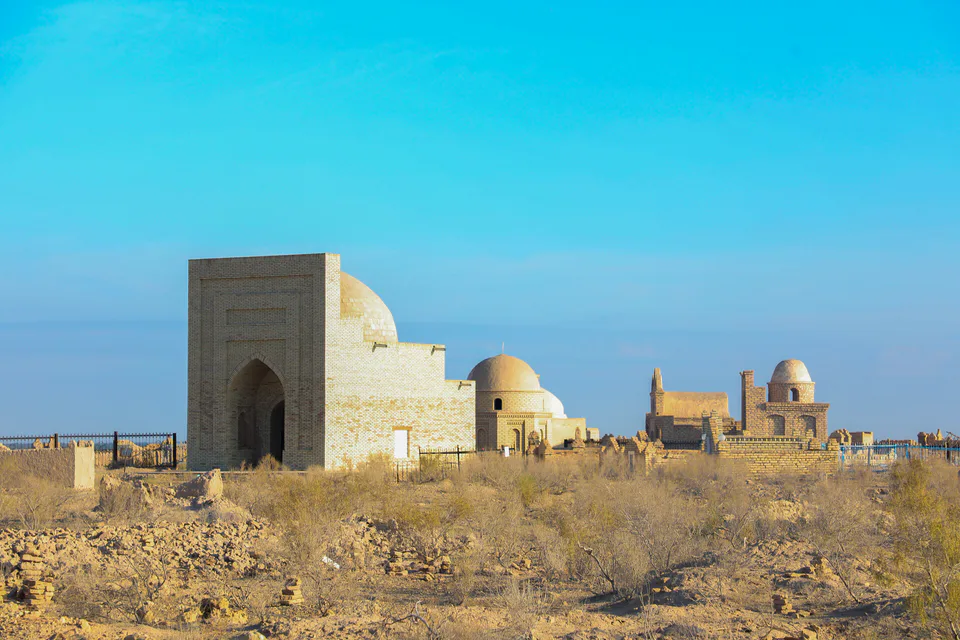
Mausoleum · Khojeyli District
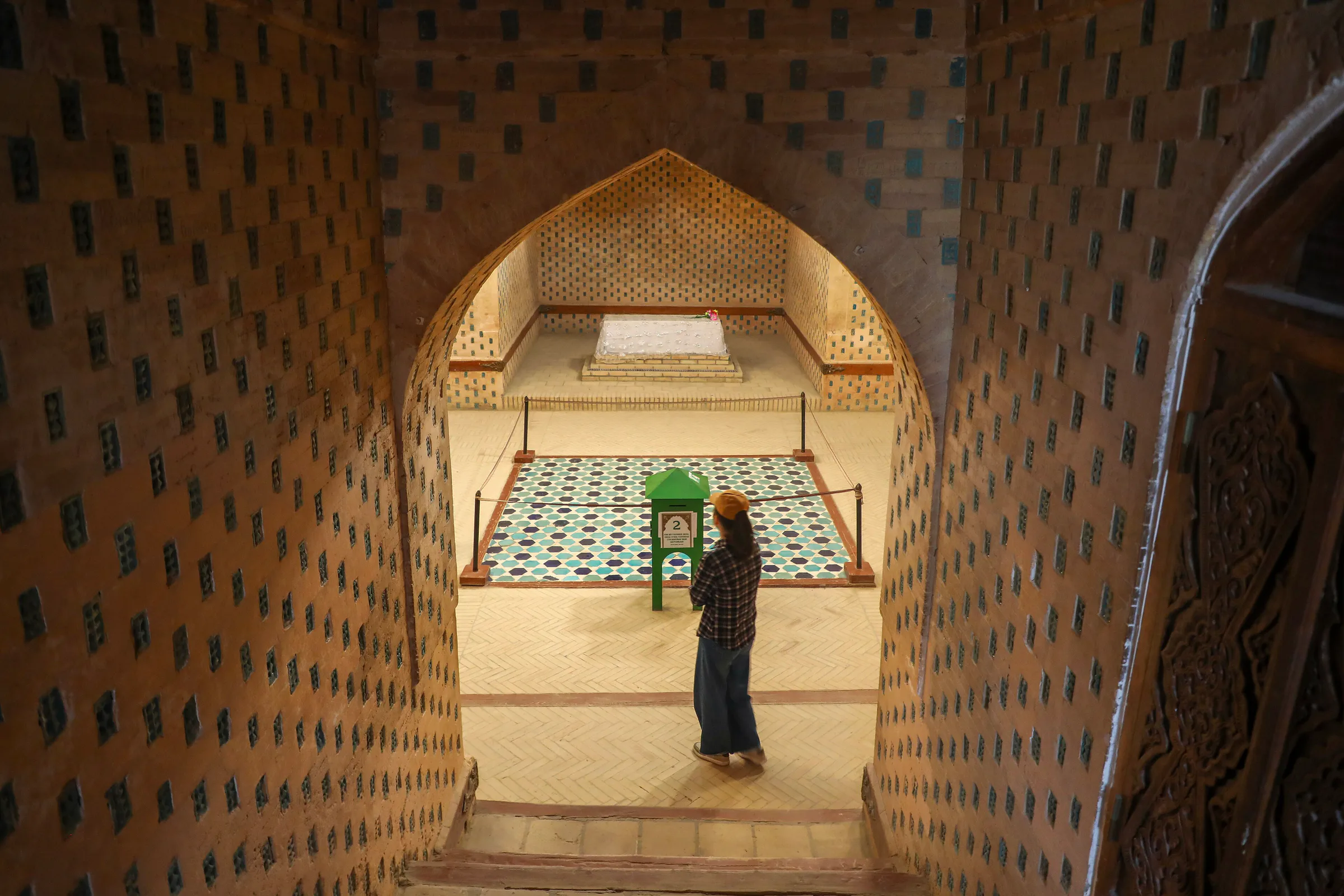
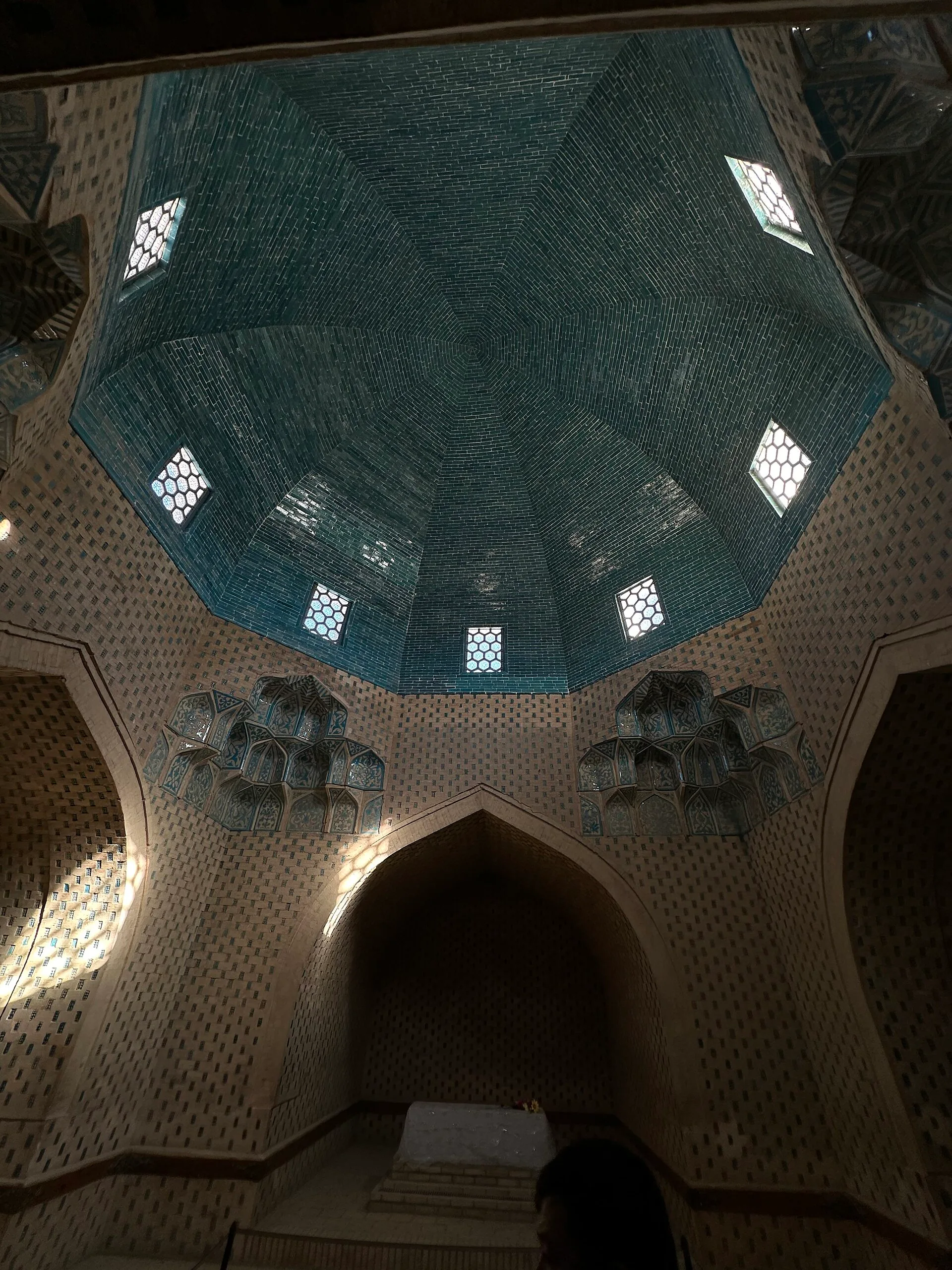
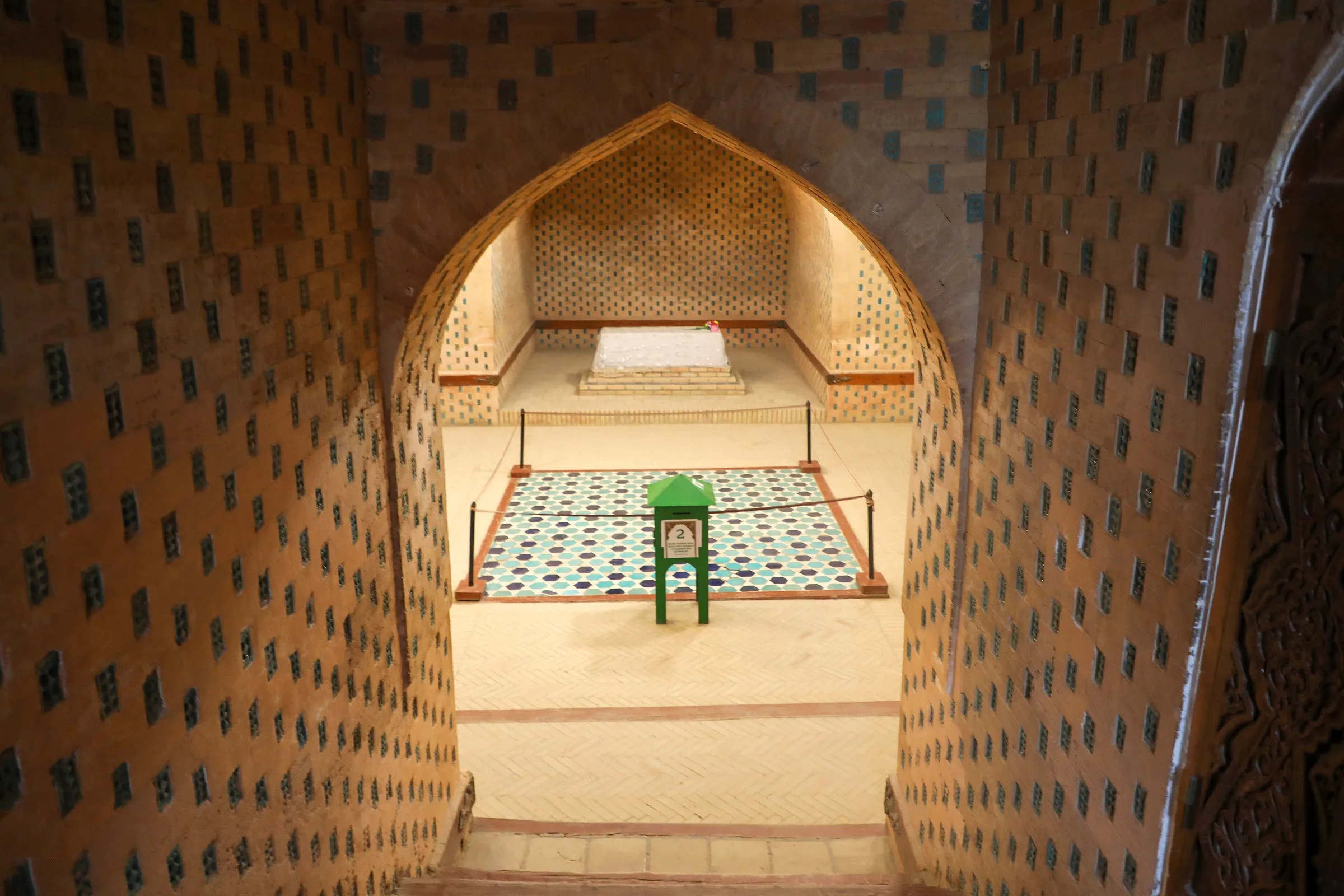
A five-chambered mausoleum at Mizdahkan, largely underground. Its cenotaphs are faced with 13th–14th-century relief tiles and Persian verses; legend says the Khorezm shah’s daughter Mazlumkhan lies here.
The mausoleum has five rooms, most of them below ground. You descend through a half-buried arch along a stepped passage with a small domed vestibule halfway down, into a main hall of 7.4 by 7.5 metres whose east and north arches hold the cenotaphs. These are clad in moulded glazed tiles typical of the 13th–14th centuries, with Persian verses of a philosophical bent among the patterns. Convex roundels of glass were set into the carved plaster window grilles of the dome, and the platform in the main hall is tiled in a blue-and-white girih pattern.
Coins date the building to the first half of the 14th century, when the Golden Horde trading towns of Khorezm flourished. Alexander Yakubovsky studied it in 1928–1929, and the orientalist A. A. Nekrasov translated its inscriptions.
Legend has it that a ruler of Khorezm promised his daughter Mazlumkhan to whoever could create something extraordinary. A young man built a hall underground, leaving only its dome above the surface — but the ruler demanded he prove his love by leaping from the unfinished dome, and he died. The two graves are attributed to Mazlum and her lover, though the inscriptions are too damaged to say who is really buried here.
Archaeology · Khojeyli District
Adam’s grave and the holy hills of Khorezm
Archaeology · Khojeyli District
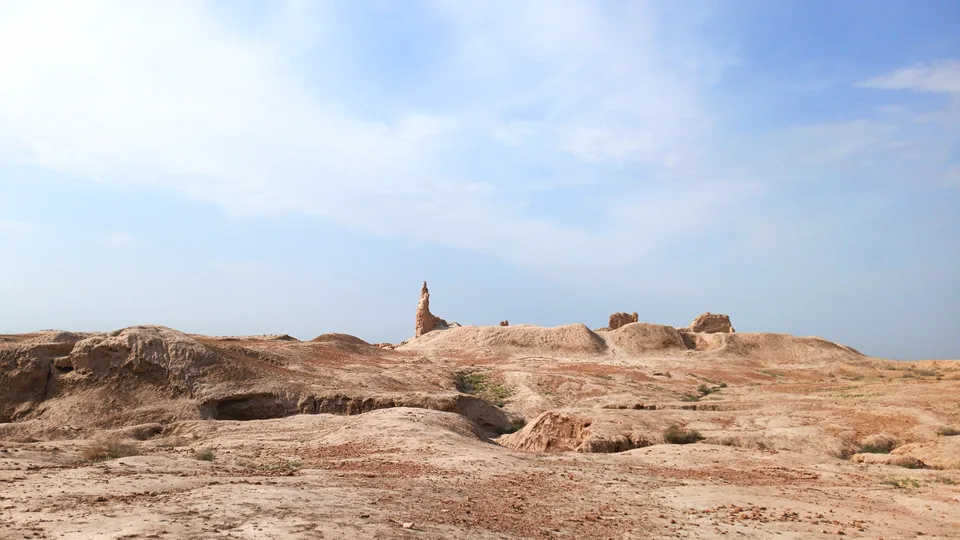
Mizdahkan’s oldest fortress
Museum · Nukus
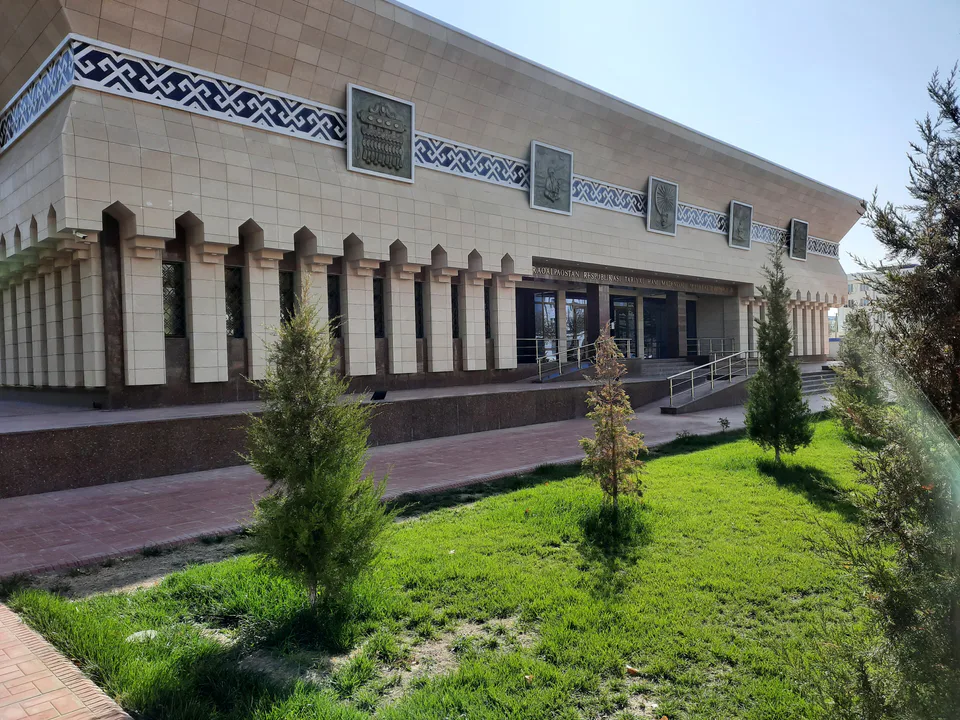
The republic’s oldest museum
Museum · Nukus
Forbidden art saved in the middle of the desert