Archaeology · Khojeyli District
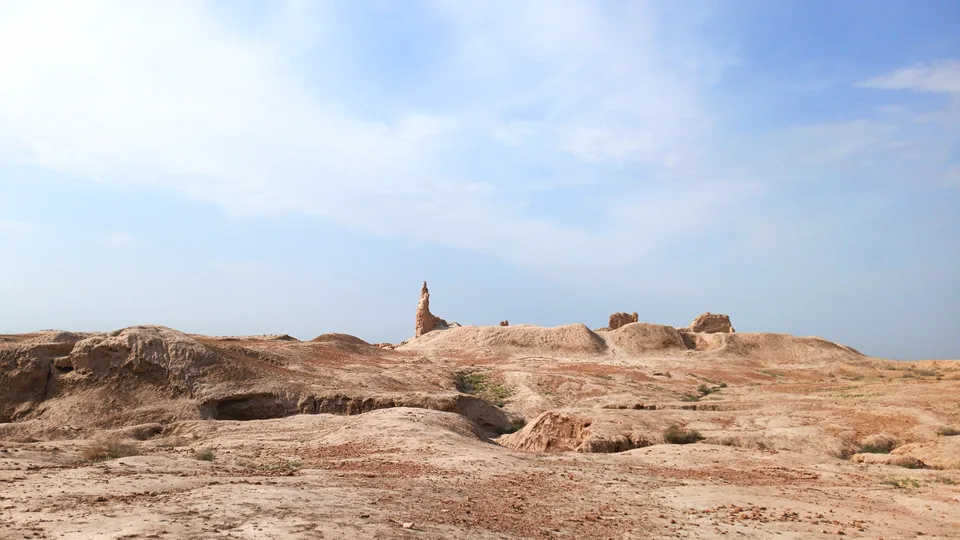
Gyaur Kala (Mizdahkan)
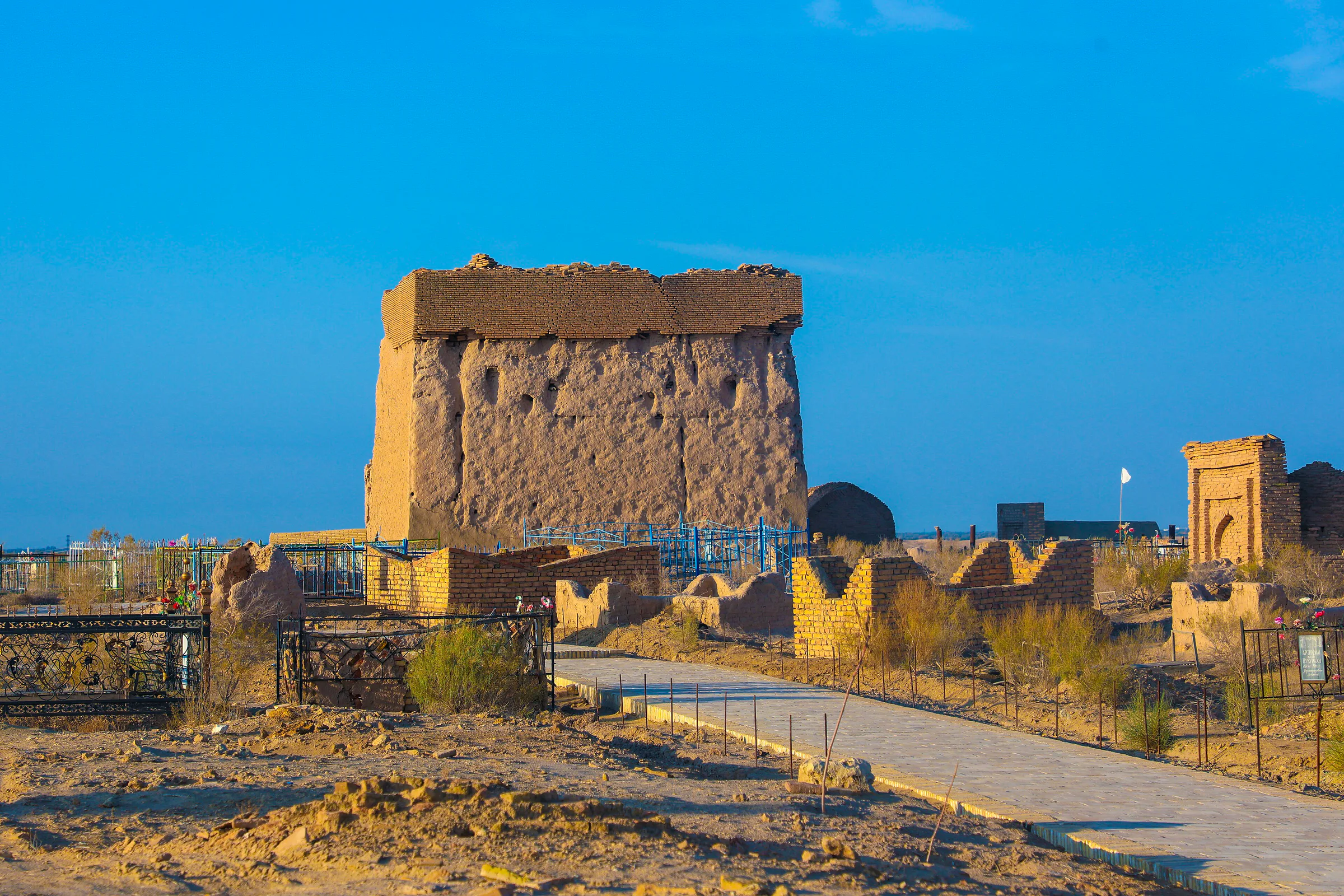
Mizdahkan’s oldest fortress
Archaeology · Khojeyli District
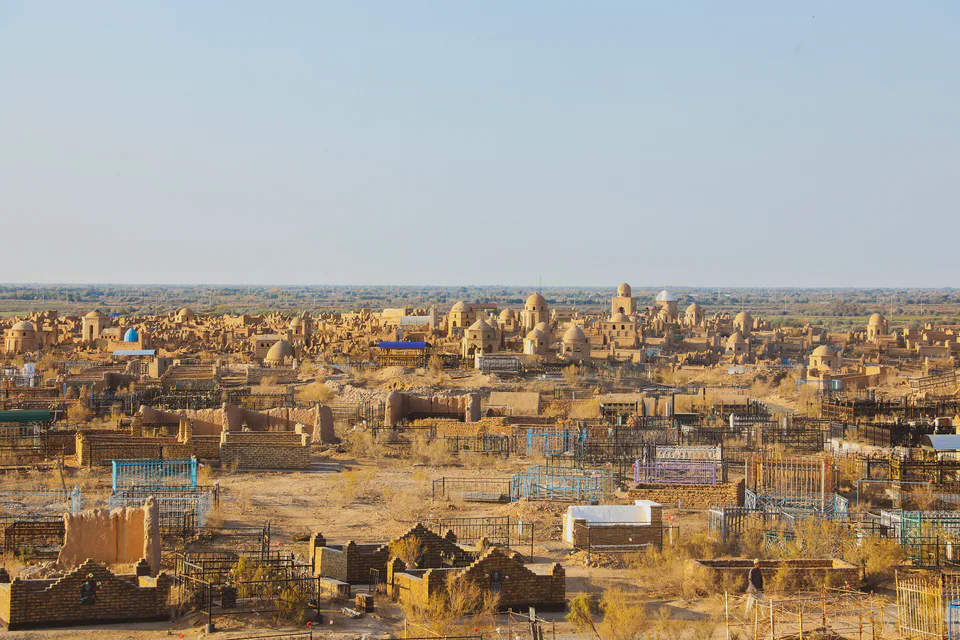
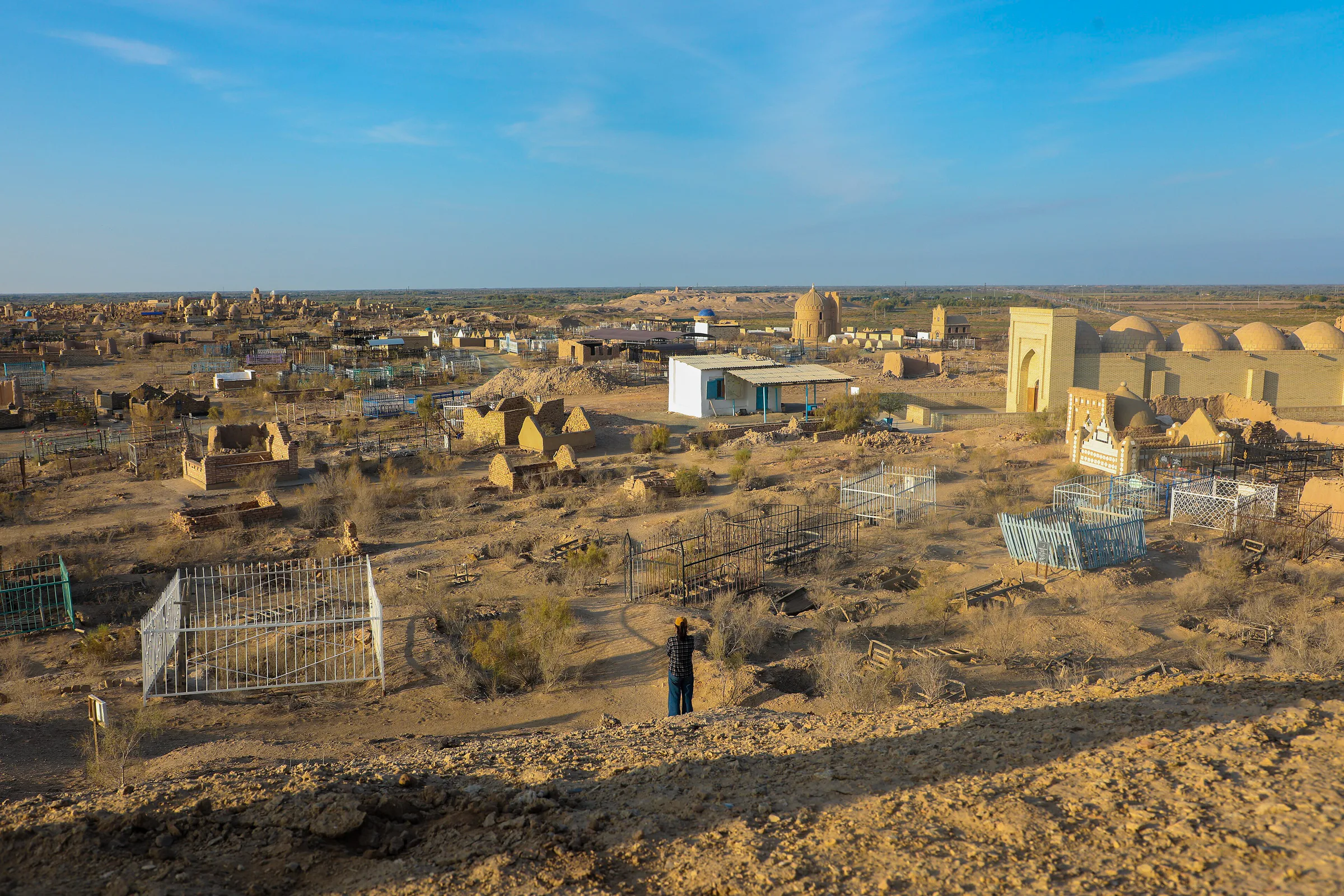
A 200-hectare archaeological complex near Khojeyli: the ancient Gyaur Kala fortress, a necropolis that yielded Zoroastrian ossuaries, and 13th–14th-century mausoleums. Legend has it that Adam is buried here.
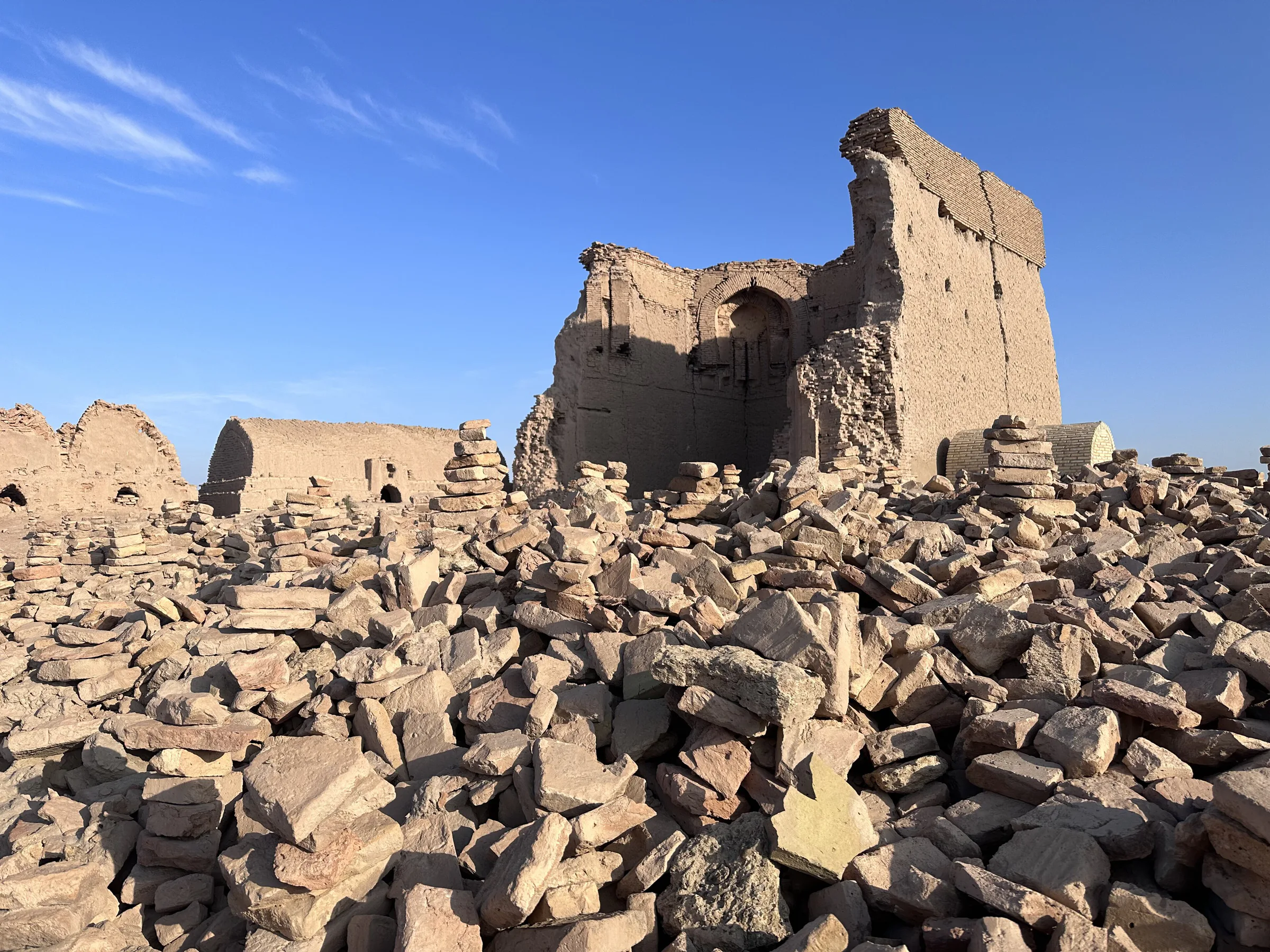
Mizdahkan spreads across three hills 7–8 km west of Khojeyli. Its oldest part is the Gyaur Kala fortress, whose first structures are dated to the 4th century BCE, and in Kushan times (1st–4th centuries CE) the town occupied the western hill. The Arab geographer al-Muqaddasi, passing through in 985, called it the third-largest city of Khorezm after Kath and Gurganj, and researchers estimate some 12,000 farmsteads surrounded it in the 10th century.
A new flowering in the 9th–12th centuries brought two fortresses and a change in burial customs that marks the arrival of Islam. Life stopped for a time after the Mongol invasion of 1221, and some accounts say the complex was destroyed in 1388 during Timur’s campaign against Urgench. Afterwards Mizdahkan served mainly as a burial ground.
The western half of the cemetery hill is a Zoroastrian ossuary necropolis. Zoroastrians did not bury their dead; bodies were exposed in dakhmas and the cleaned bones placed in ceramic ossuaries, several of which, found here, bear paintings and inscriptions in the ancient Khwarezmian language. The last burials date from the 14th century.
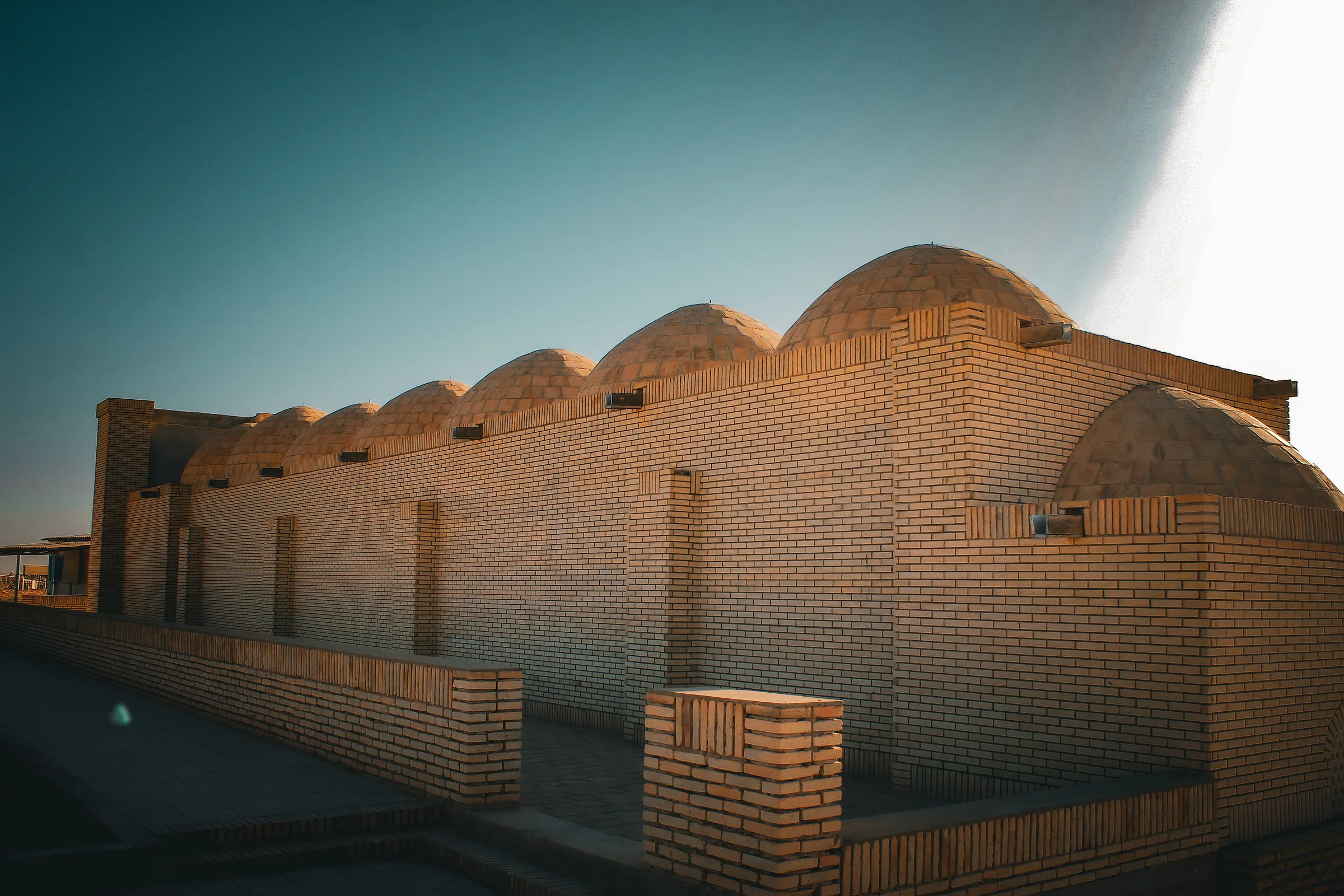
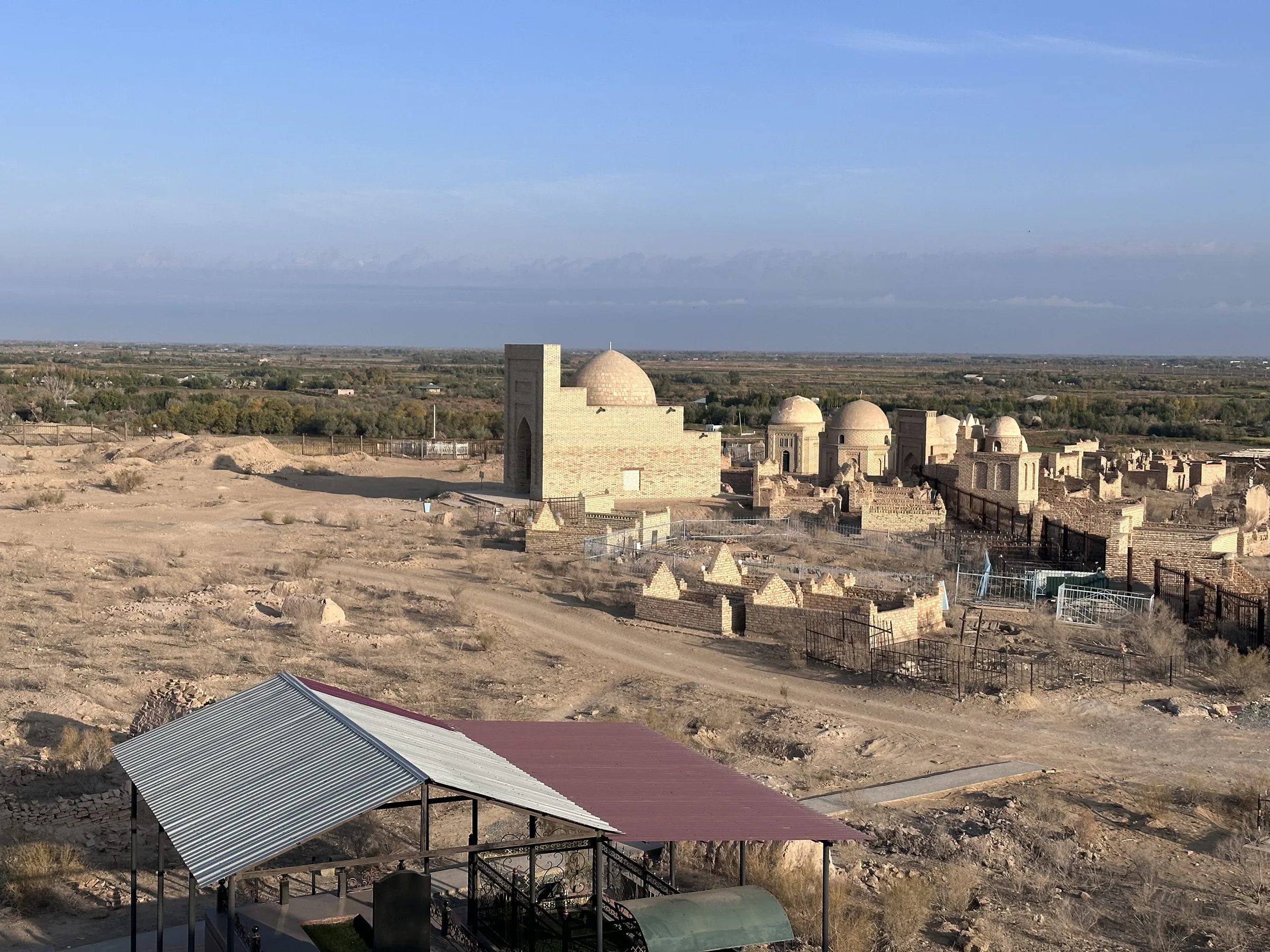
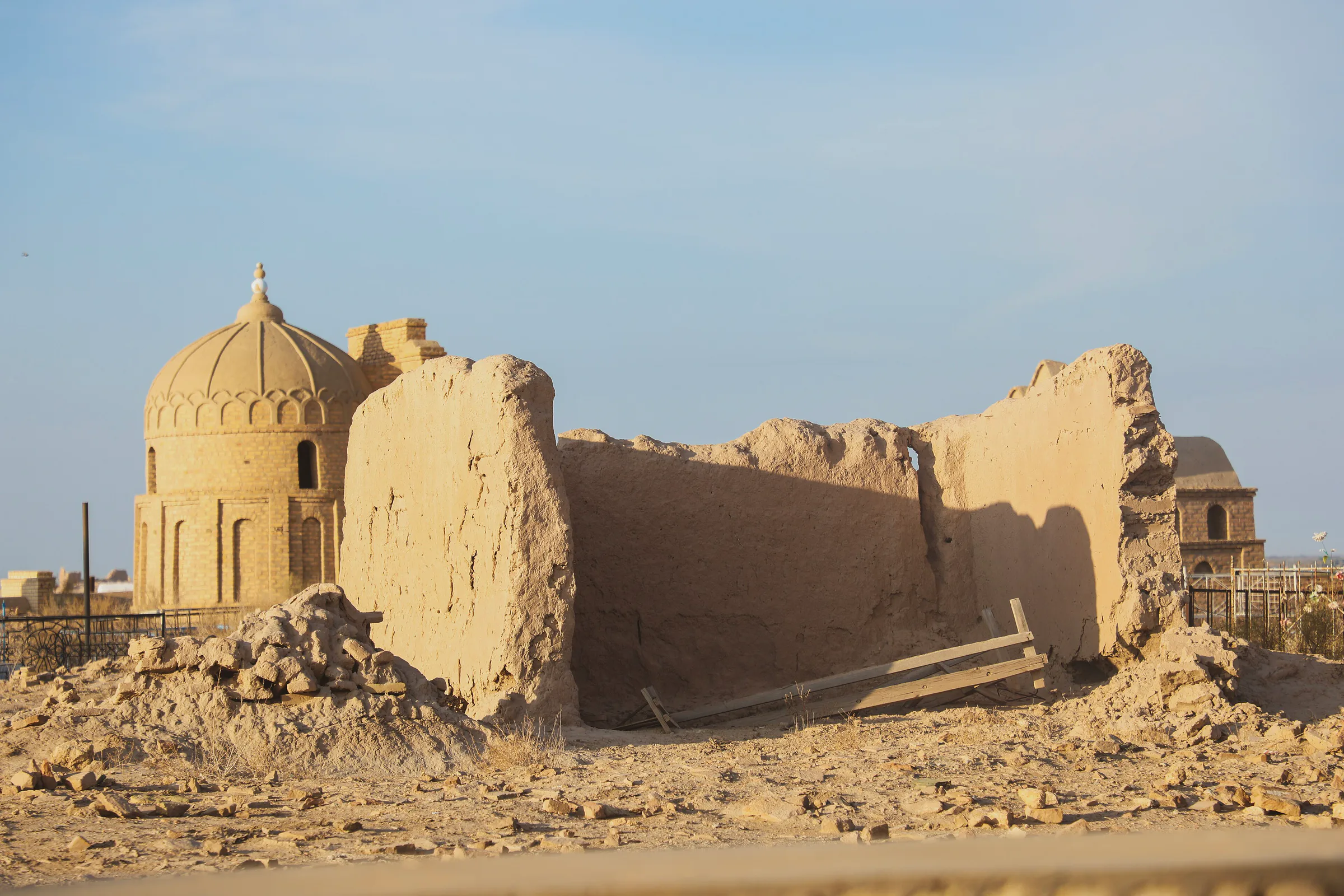
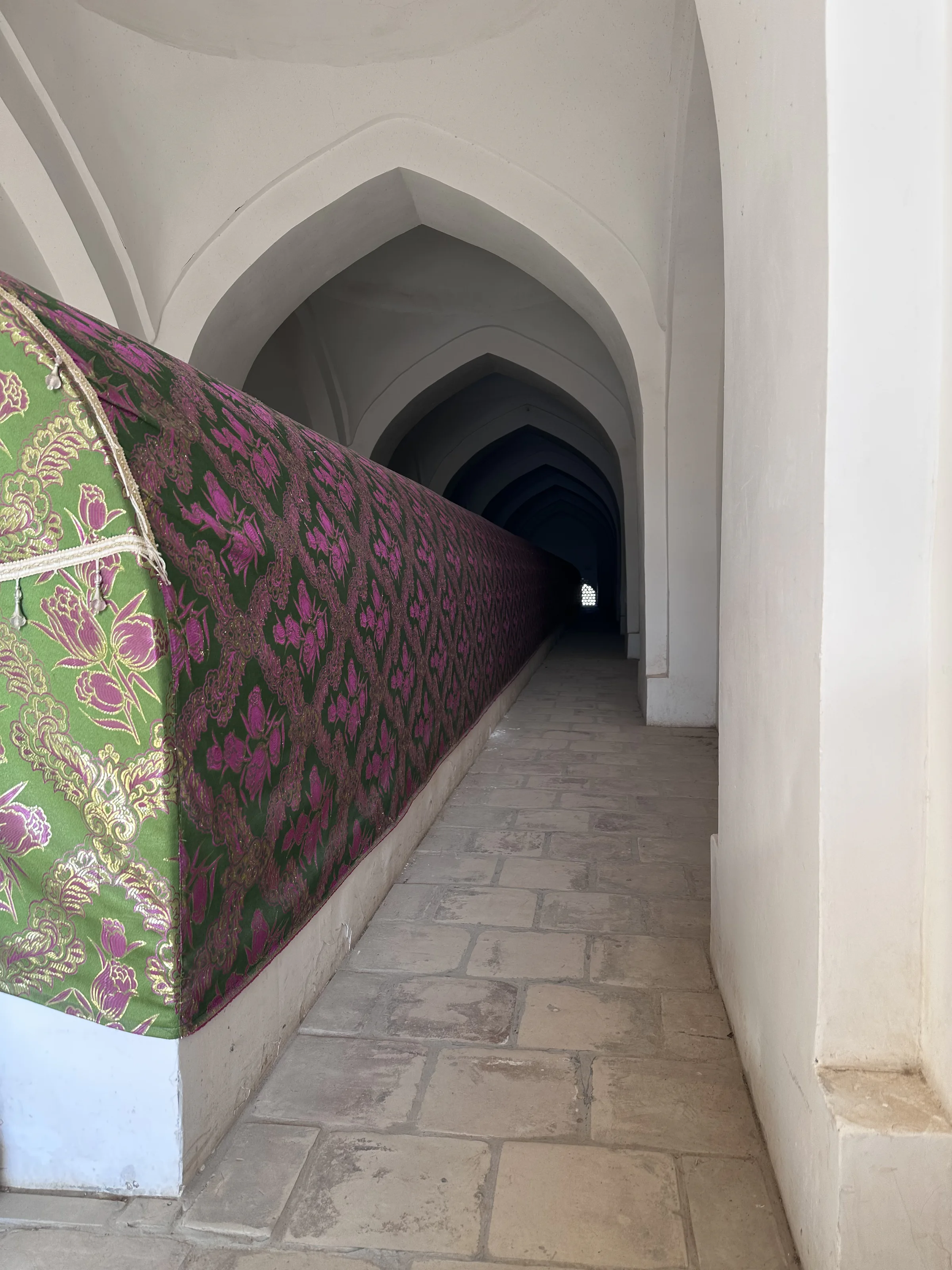
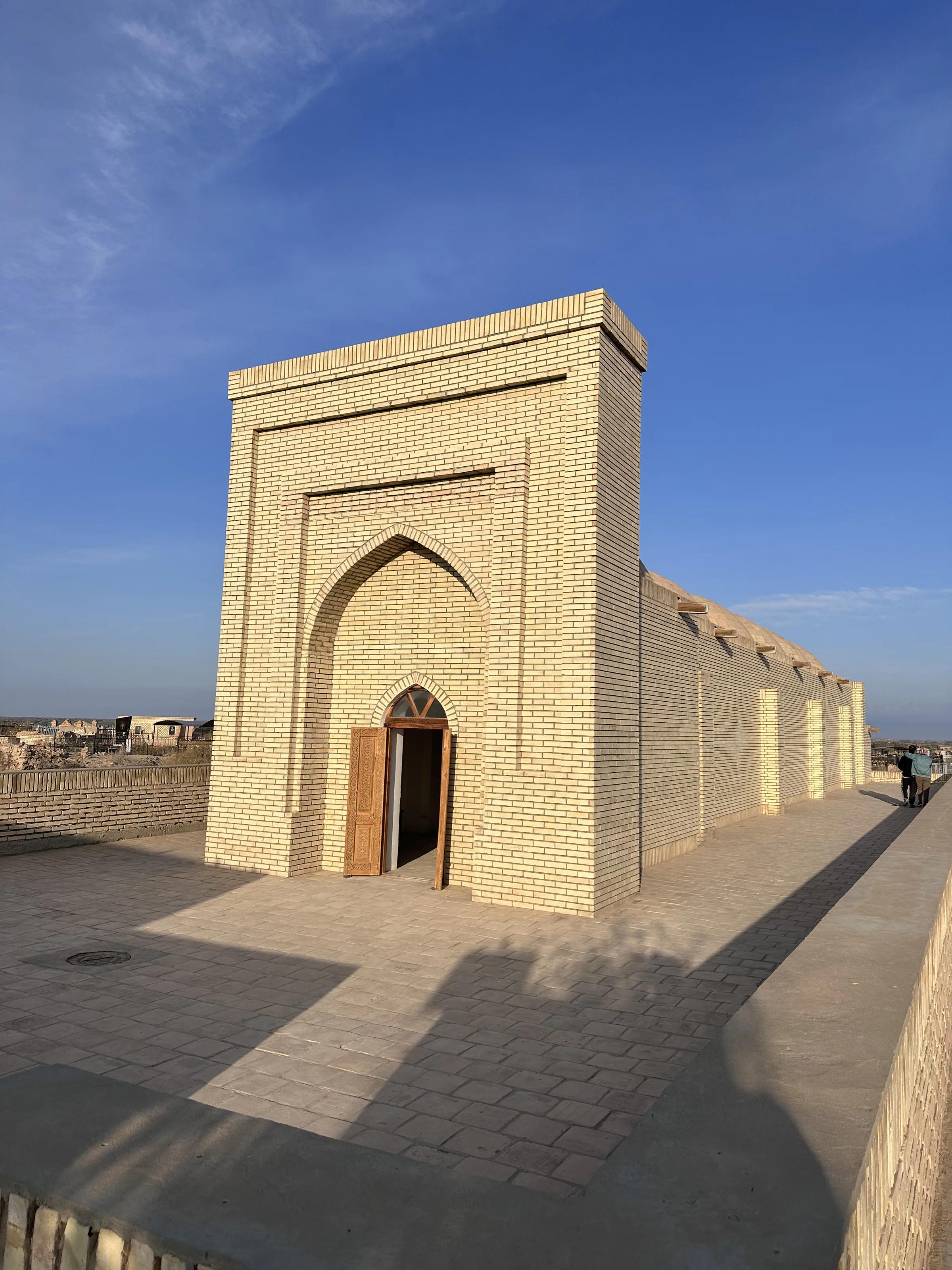
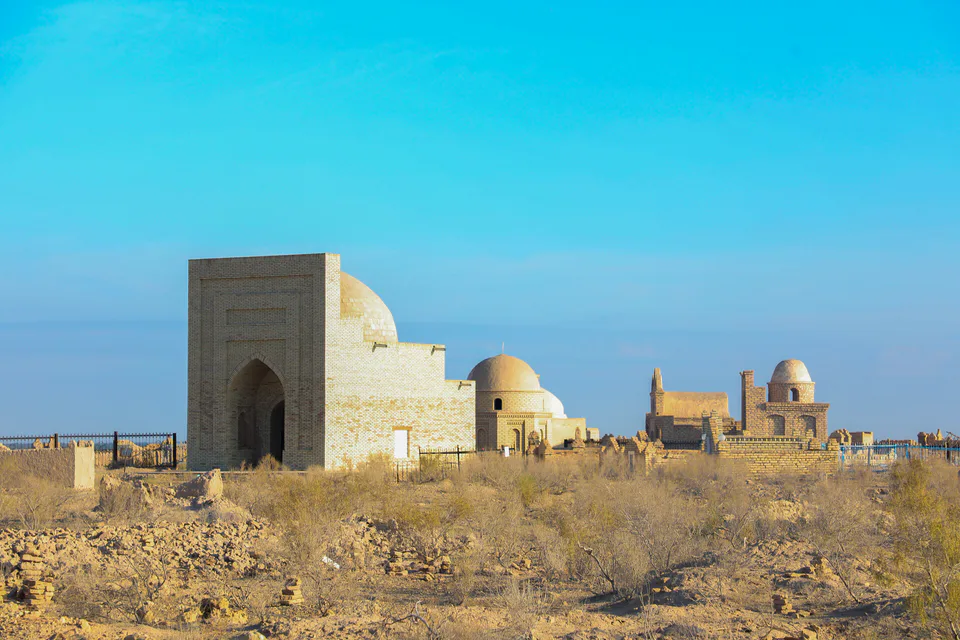
The complex includes the underground mausoleum of Mazlumkhan Sulu (late 13th–early 14th century), the Shamun Nabi mausoleum, the mosque-mausoleum of Khalifa Rajab (Erejep), the Kyrk Shopan mausoleum and more. The tradition of Shamun Nabi’s grave did not survive scrutiny: a 1966 commission found the burial to be a cenotaph. The neighbouring hills are still Khojeyli’s cemetery.
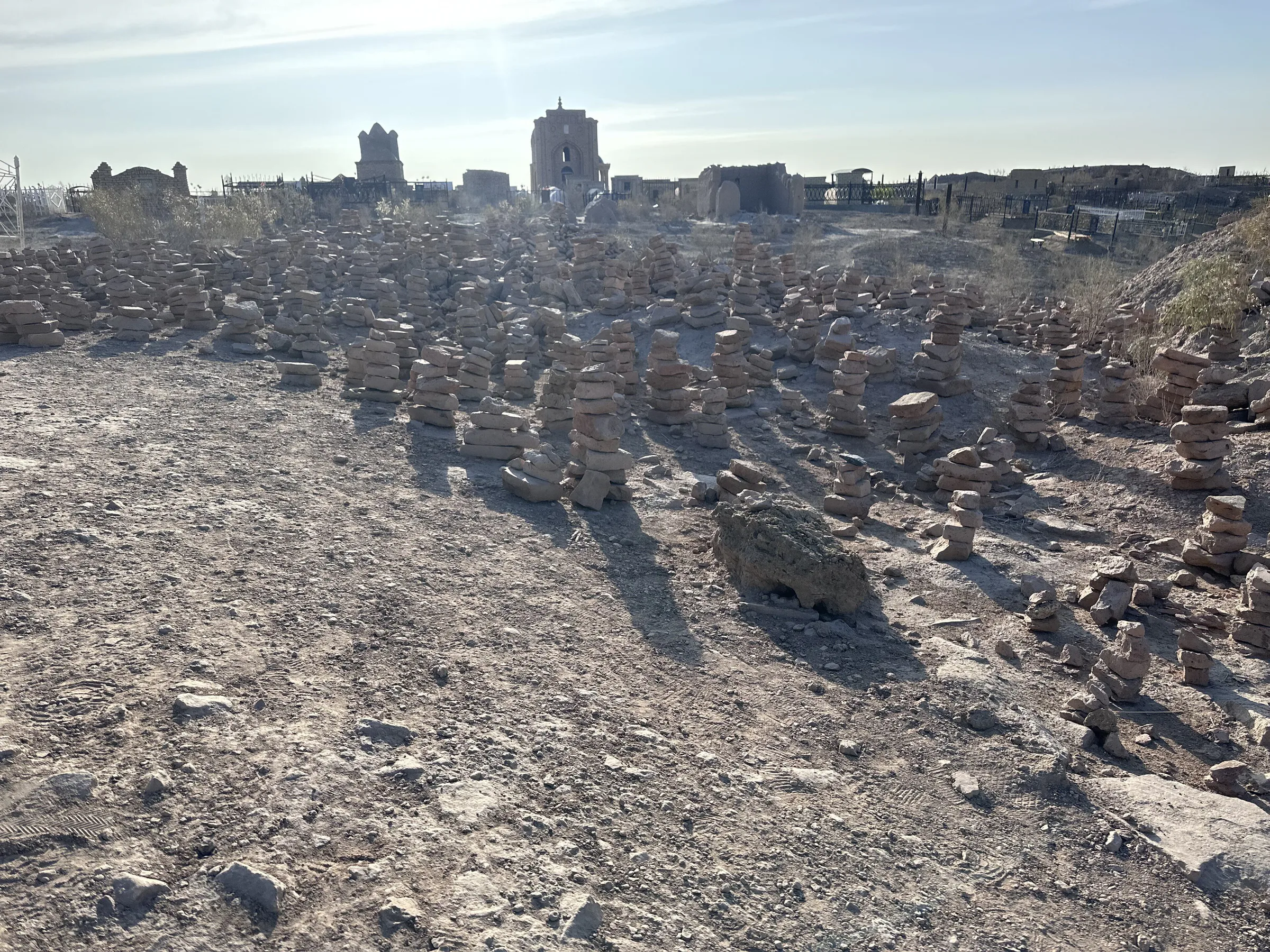
Local legend holds that Adam is buried at Mizdahkan, which scholars connect with Zoroastrian ideas about the tomb of Gayomart, the first man. Another story says a brick falls from the shrine every year and the world will end when the last one drops — so pilgrims stack little columns of bricks, and a seven-brick pillar built with a wish is said to make it come true.
Alexander Yakubovsky began studying Mizdahkan in 1928, and Sergey Tolstov’s Khorezm Expedition excavated extensively in the 1960s. Funds were allocated in 2017 to restore four mausoleums; in 2024 a protective fence went up around the Mazlumkhan Sulu mausoleum and a grant was secured to conserve and study the Khalifa Rajab mosque-mausoleum.
Archaeology · Khojeyli District
Mizdahkan’s oldest fortress
Mausoleum · Khojeyli District
An underground tiled tomb and a tale of love
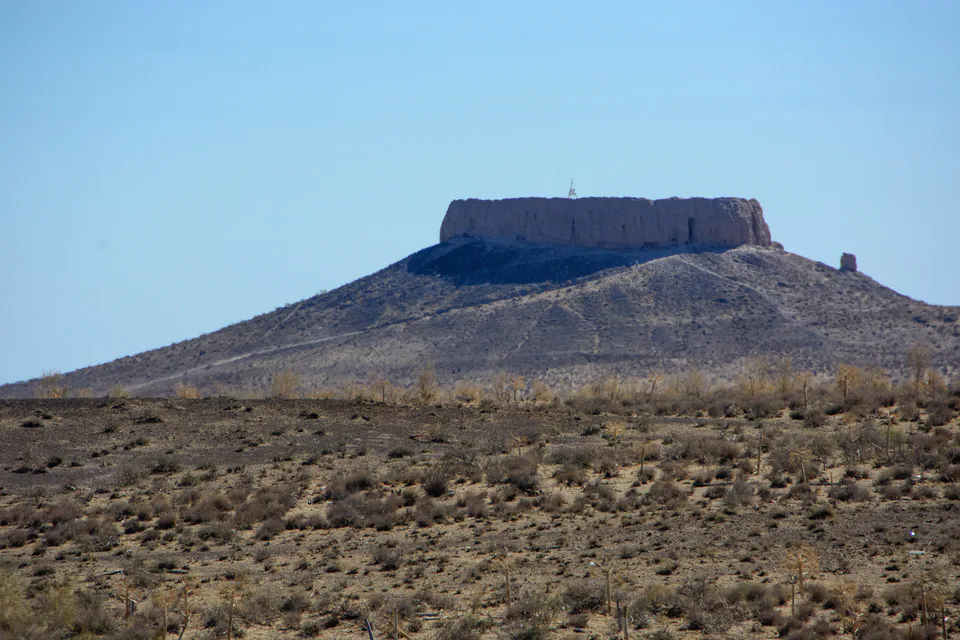
Archaeology · Amudaryo District
A Zoroastrian “tower of silence”
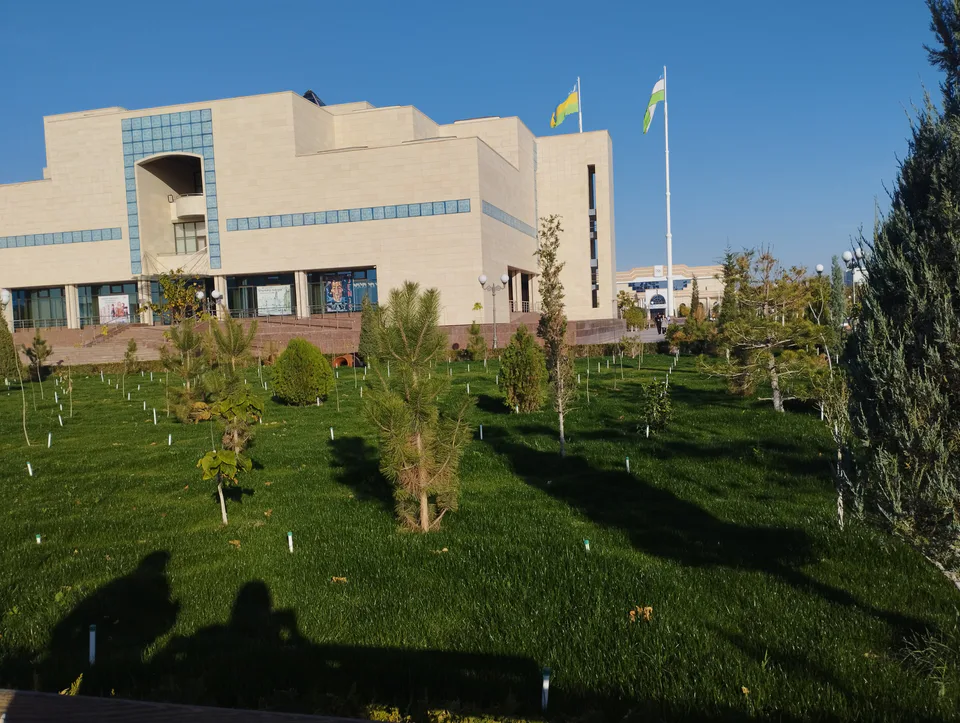
Museum · Nukus
Forbidden art saved in the middle of the desert
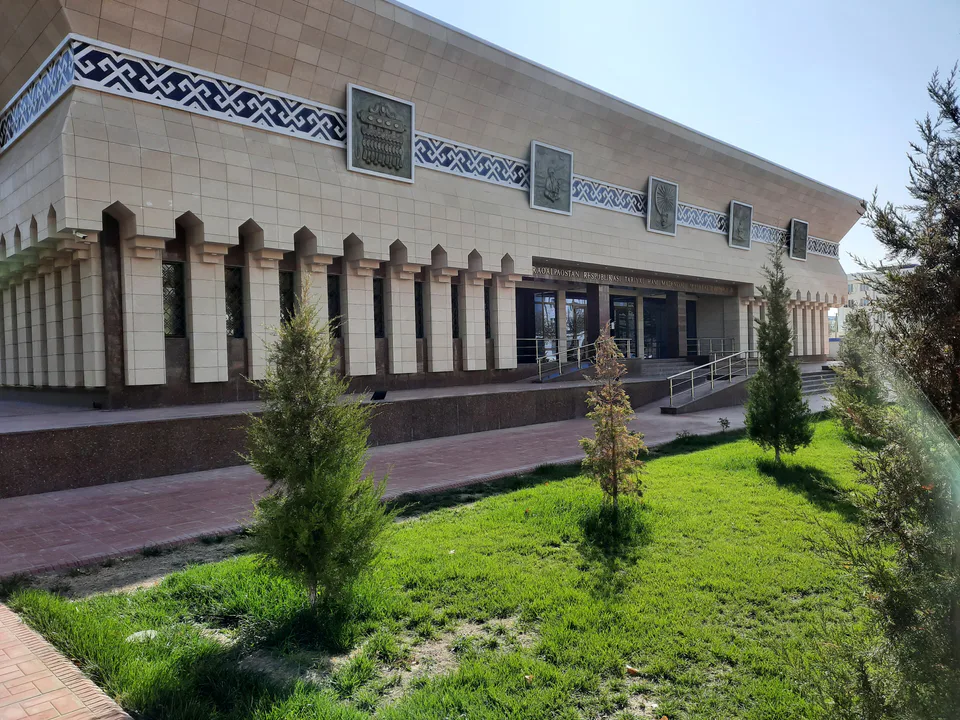
Museum · Nukus
The republic’s oldest museum