Archaeology · Khojeyli District
Mizdahkan
Adam’s grave and the holy hills of Khorezm
Archaeology · Amudaryo District
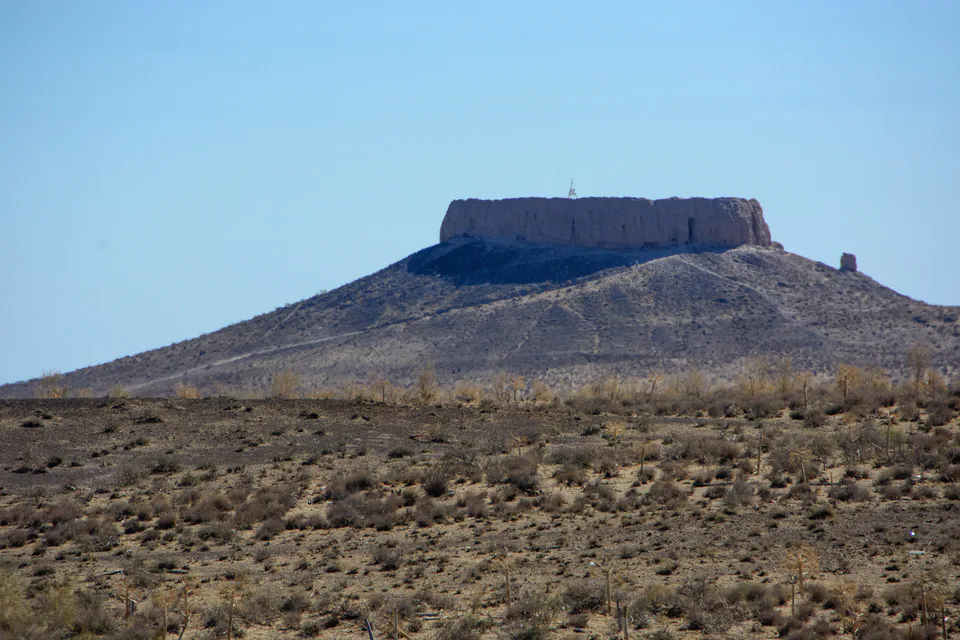
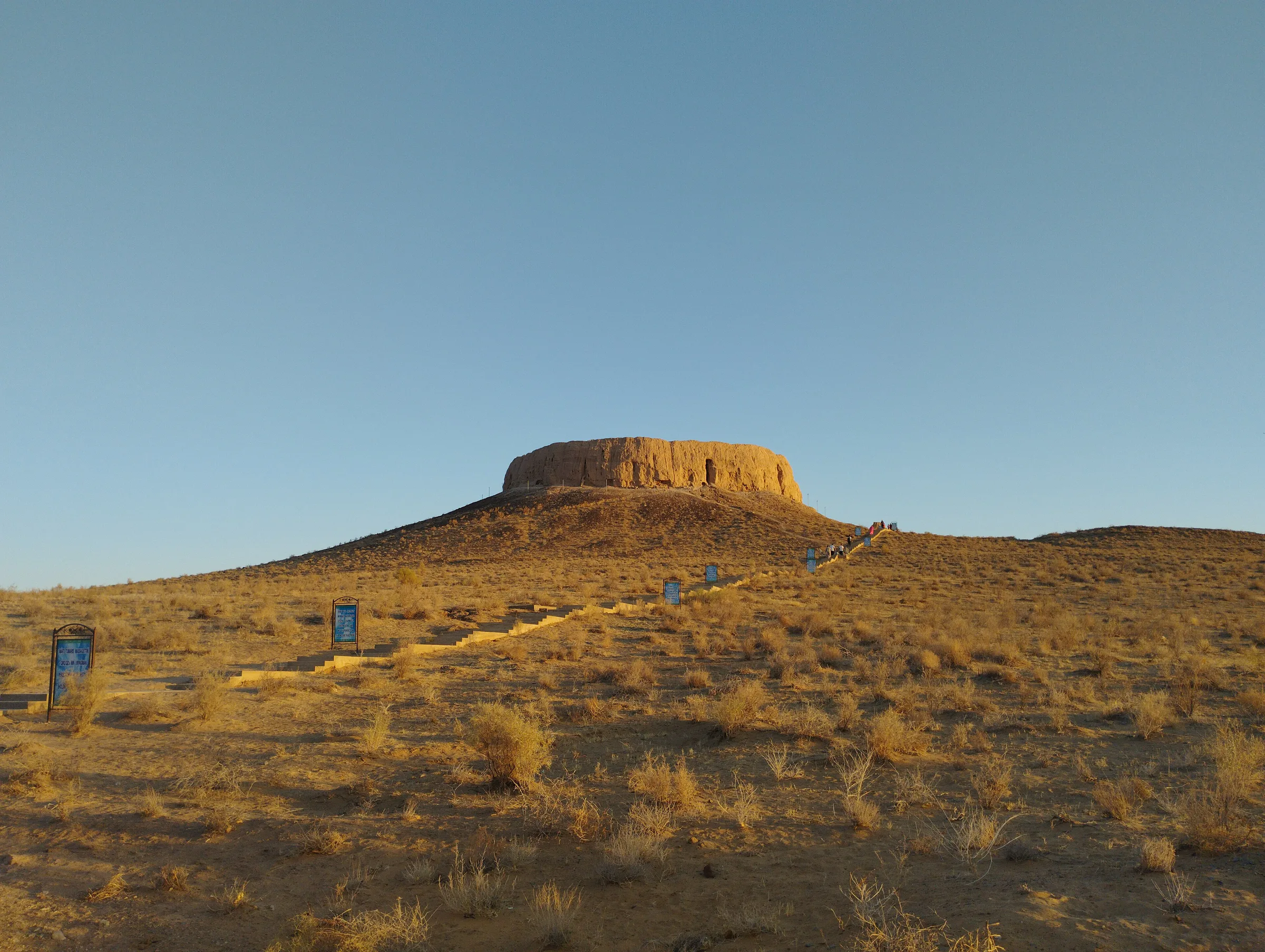
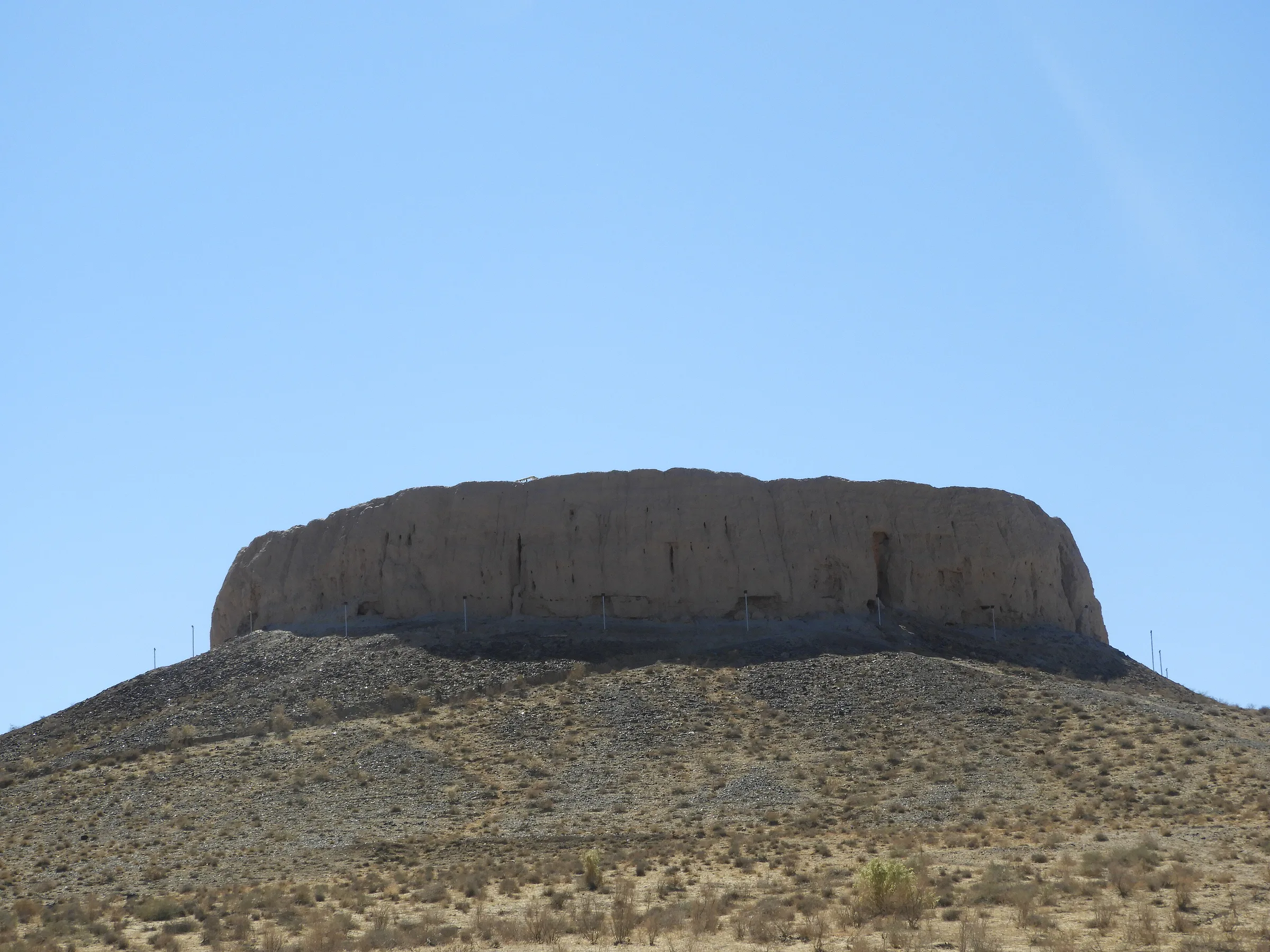
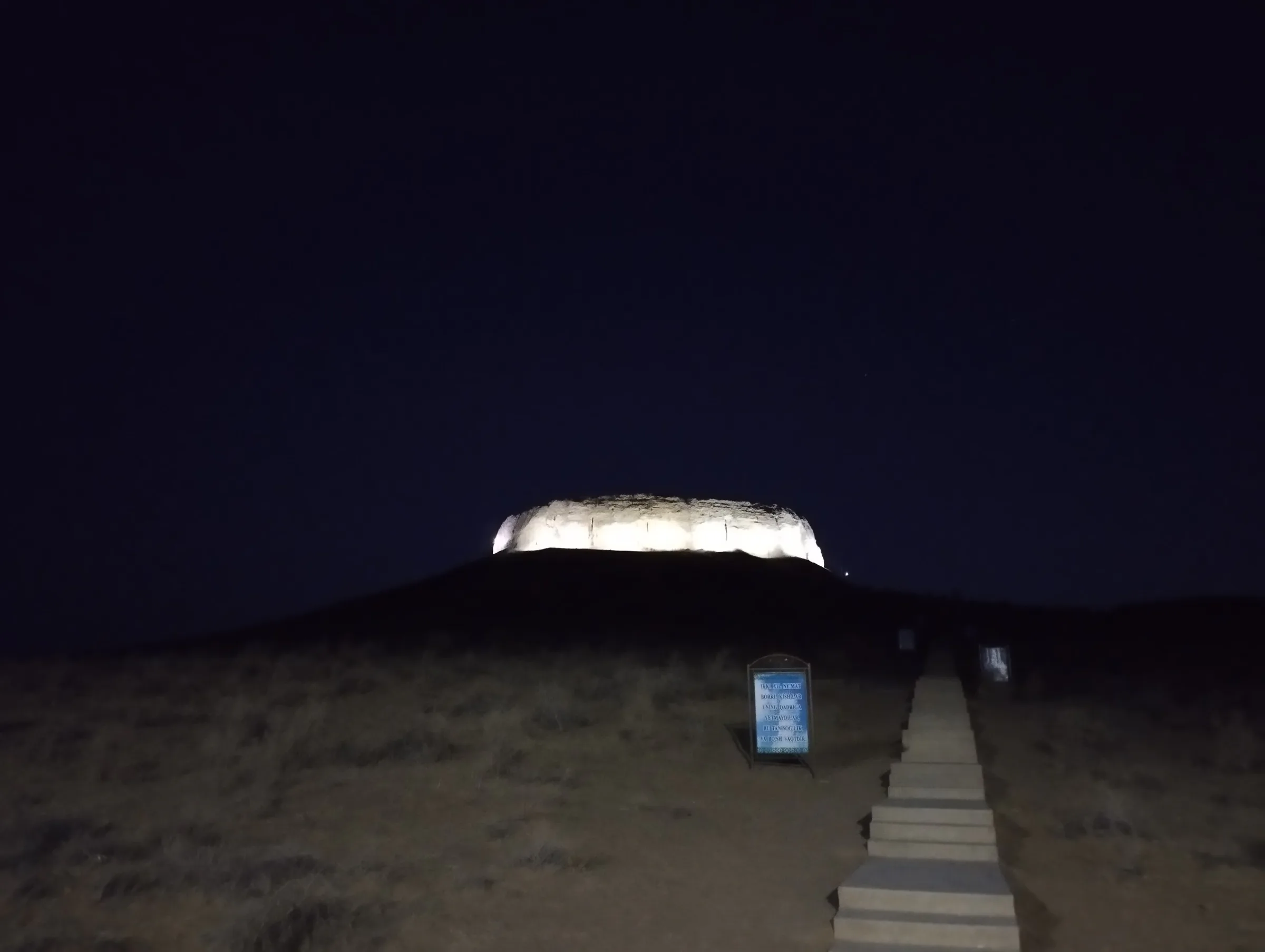
A colossal ring wall crowning a natural conical hill — a Zoroastrian dakhma built around the turn of the 1st century BCE and CE. Its silhouette appears on the coat of arms of Karakalpakstan.
Zoroastrians believed a corpse would pollute the pure elements of fire, water and earth. The dead were therefore laid in a dakhma, a tall, roofless circular structure, and left to vultures and the sun until the bones were picked clean; the bones were then placed in ossuaries. Herodotus mentioned the custom as early as the 5th century BCE.
Chilpik is just such a dakhma, remarkable for its size. It is dated to the heyday of Zoroastrian culture in ancient Khorezm, around the end of the 1st century BCE and the start of the 1st century CE. It is sometimes called Chilpik Kala, “Chilpik fortress”, but it never was one.
Excavations found no towers or loopholes, no living quarters, stores or water supply — only fragments of ossuaries — so nobody lived here for long. The dakhma remained in use even after the Arab conquest of the early 8th century, and two rebuildings of its interior have been traced, in the 7th–8th and the 9th–10th centuries. Later it served as a watch and signal tower until the Mongol invasion of the early 13th century.
The war artist Nikolai Karazin sketched it in 1873, and Sergey Tolstov’s Khorezm Archaeological Expedition made the first scientific survey in 1940. After independence, Chilpik and the Amu Darya were placed on the coat of arms of the Republic of Karakalpakstan.
The ring wall stands about 15 metres high and 65 metres across on top of a natural cone-shaped hill some 35 metres tall. It is built of blocks of rammed clay typical of the ancient period, up to 5 metres thick at the base and 2–3 metres at the top, with a bench running round the inside. Rising alone above the plain on the right bank of the Amu Darya, it can be seen from far away.
Local tales recorded by the ethnographer Gleb Snesarev say Chilpik was once a castle where a princess who loved a slave hid from her father’s anger. Another credits a hero named Chilpik, the clods of clay he dropped while building forming the great hill; a third blames a demon locked in eternal struggle with the forces of light led by Ahura Mazda.
Archaeology · Khojeyli District
Adam’s grave and the holy hills of Khorezm
Archaeology · Ellikqala District
The palace city of ancient Khorezm’s kings
Archaeology · Ellikqala District
Three fortresses above the Kyzylkum
Archaeology · Qoraozak District
A medieval river port on the Amu Darya
Nature · Beruniy District
The great refuge of the Bukhara deer