Archaeology · Boysun District
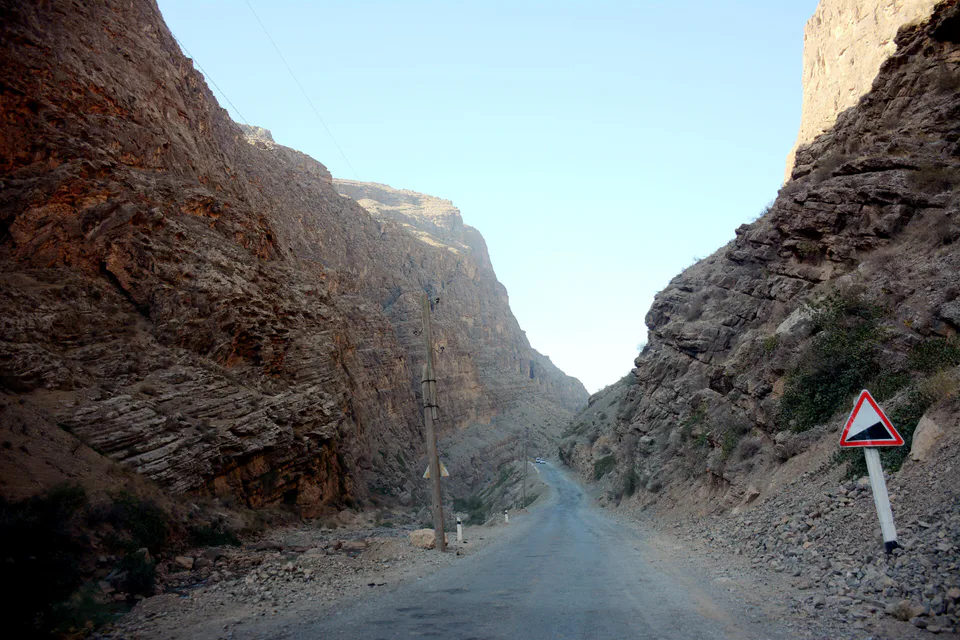
Iron Gate and the Darband Wall
The famous mountain pass between Sogdiana and Bactria
Archaeology · Boysun District
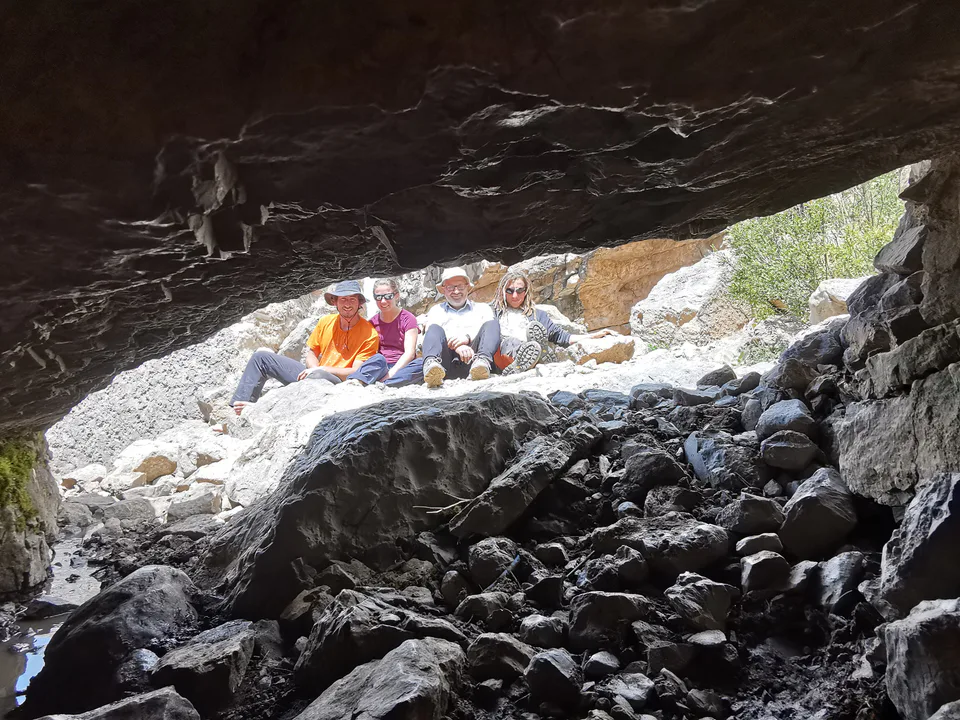
A rock shelter in the Boysuntog range where A. P. Okladnikov found a Mousterian camp and the burial of a Neanderthal child in 1938–1939, the first proof that Neanderthals reached Central Asia.
Teshik-Tash, “stone with a hole”, is a cave-grotto in the Boysuntog mountains. In 1938–1939 the Soviet archaeologist Alexey Okladnikov excavated a Mousterian camp here. Neanderthals used the shelter repeatedly over a long period: five cultural layers up to 1.5 m thick are separated by sterile deposits.
The layers held hearths and the bones of hunted animals. Of 667 identifiable bones, 649 belonged to Siberian ibex, showing that the occupants mainly drove and hunted wild goats; wild horse, deer, bear and leopard bones also turned up. Stone tools include discoidal cores, scrapers and points, along with bone tools for working stone.
Beneath the upper layer lay the skull and some bones of a Neanderthal child aged 8–9. Okladnikov reported ibex horns set in the ground around the grave and read this as evidence of ritual among Neanderthals; later scholars consider that interpretation debatable. The skull was reconstructed from about 150 fragments. Long thought to be a boy, the child was shown by later research to have been a girl.
In 2007 a team in Leipzig led by Svante Pääbo analysed mitochondrial DNA from the bones and confirmed they were Neanderthal. Before this find, Neanderthals were not believed to have ranged as far east as Central Asia. Okladnikov and his colleagues received the Stalin Prize for the discovery.
Archaeology · Boysun District
The famous mountain pass between Sogdiana and Bactria
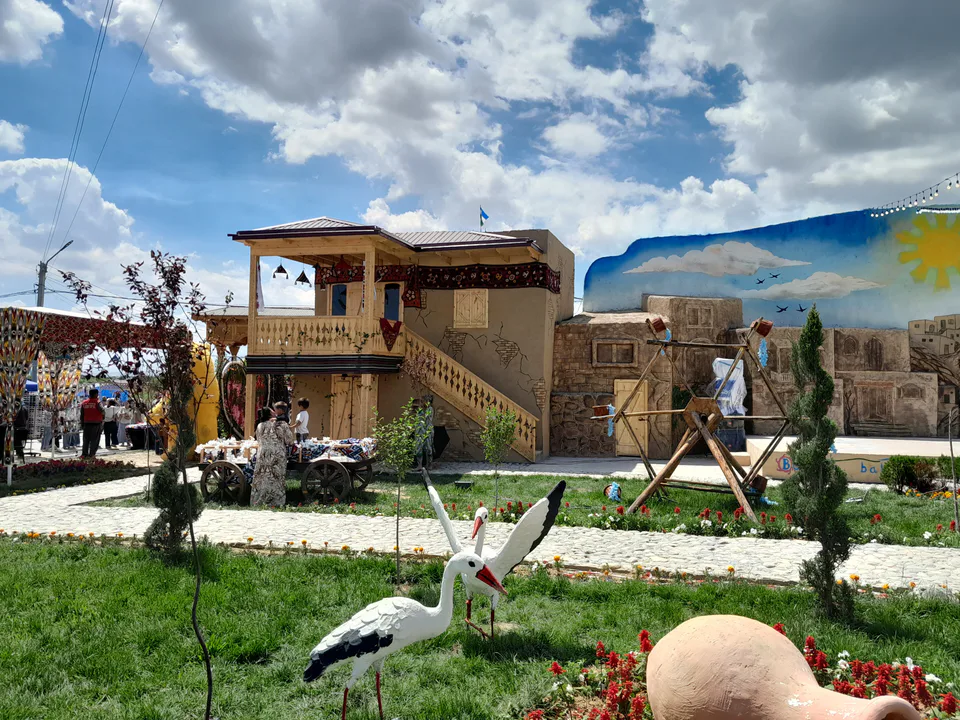
Culture & arts · Boysun District
A mountain district where ancient customs are still alive
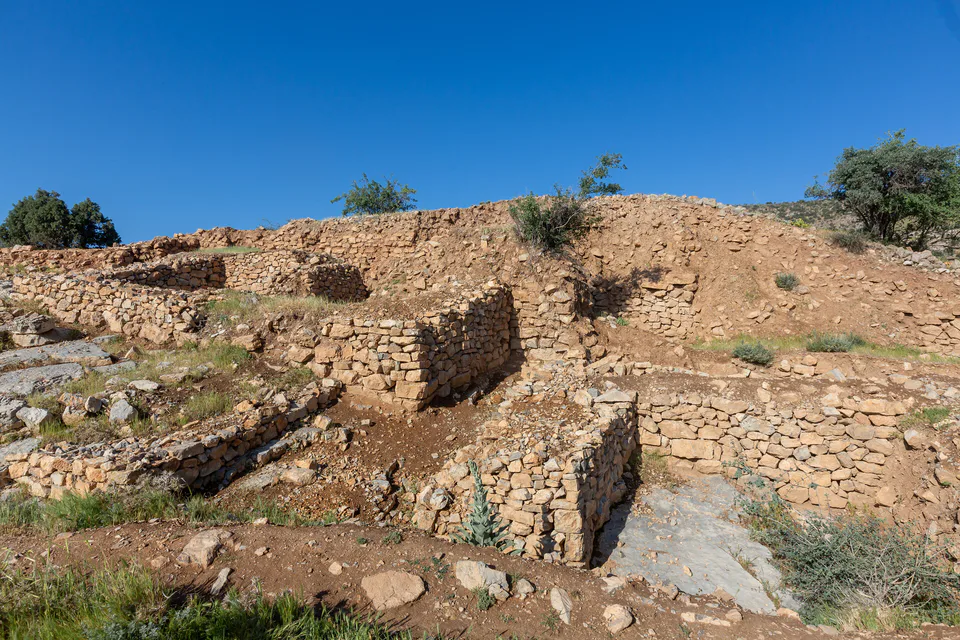
Archaeology · Boysun District
A Greek fort guarding Bactria’s northern frontier
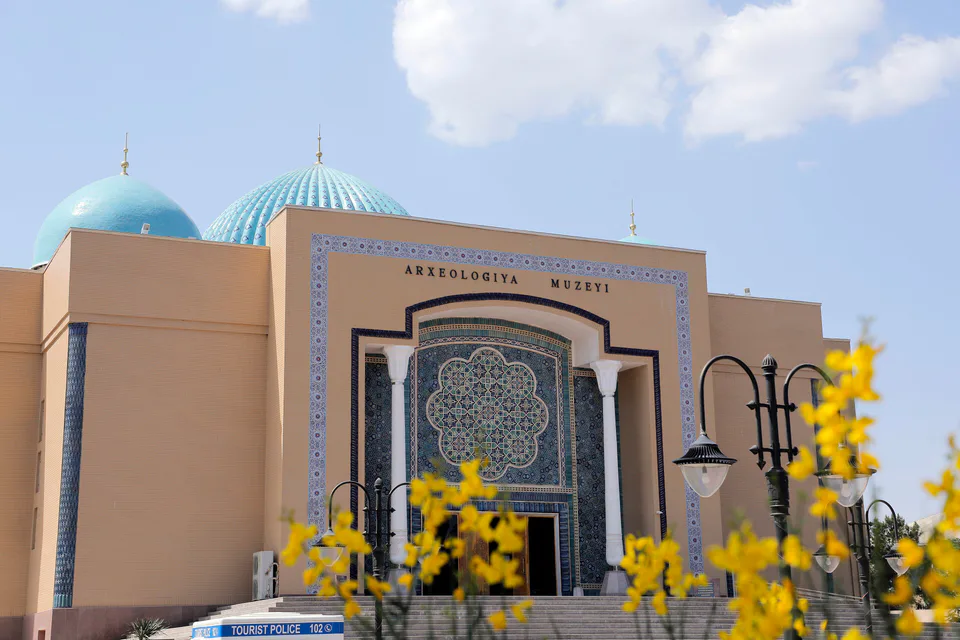
Museum · Termez City
Bactrian and Kushan treasures under one roof
Resort · Boysun District
A healing spring among juniper-clad mountains
Nature · Qumqo‘rg‘on District
The deepest cave in Central Asia