Museum · Andijan
Babur House Museum (Ark-ichi Madrasa)
Where Babur grew up
Ensemble · Andijan
A late 19th-century madrasa, Friday mosque and 32-metre minaret: Andijan's most important historic building and a survivor of the 1902 earthquake.
The complex stands in the heart of the old town, next to the former city urda. It was funded by a wealthy local, Mahmudaliboy Kholmirzaboyev, who at the request of the city's clergy built a new Friday mosque on the site of an older mosque founded by Nasriddinbek, and then a madrasa beside it. To support them he endowed 1,840 tanob of farmland, several caravanserais, dozens of shops and other plots as waqf.
Sources give slightly different dates, all within 1882–1892. Most studies say the mosque was finished in 1885 and the madrasa in 1889. The decoration was carried out by master Isakhan, Yusufali Musayev and other local craftsmen. By the 1890s the madrasa was famous across the valley, and students were so numerous that extra cells had to be added in the courtyard.
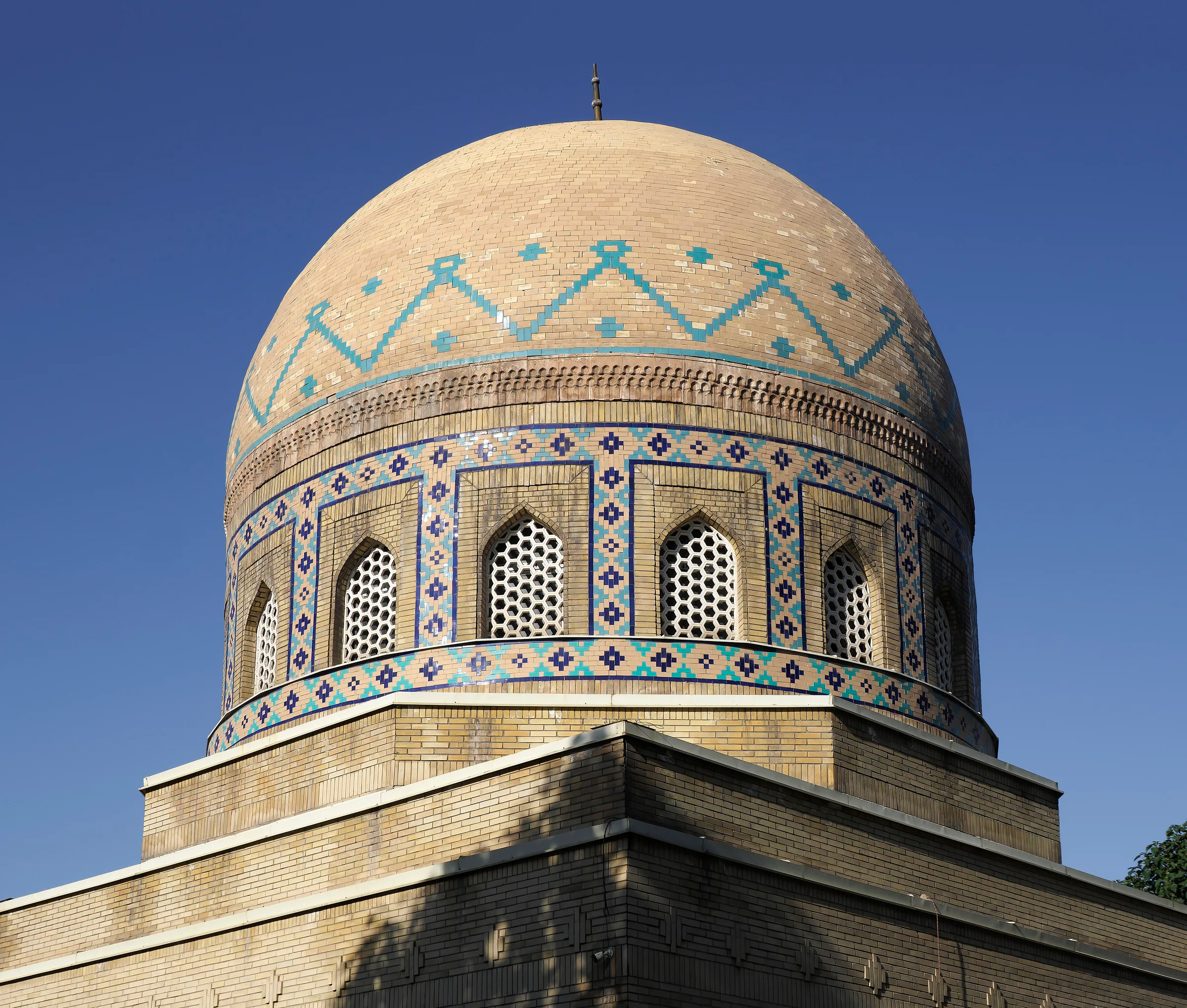
The 1902 Andijan earthquake all but levelled the old city, yet the Jome complex survived. One of the madrasa's five domes collapsed, and in 1906 Yusufali Musayev rebuilt it at a smaller scale on the upper storey. Under Soviet rule the madrasa was closed and served as a market, wartime housing and a warehouse; from 1934 it housed the regional history museum.
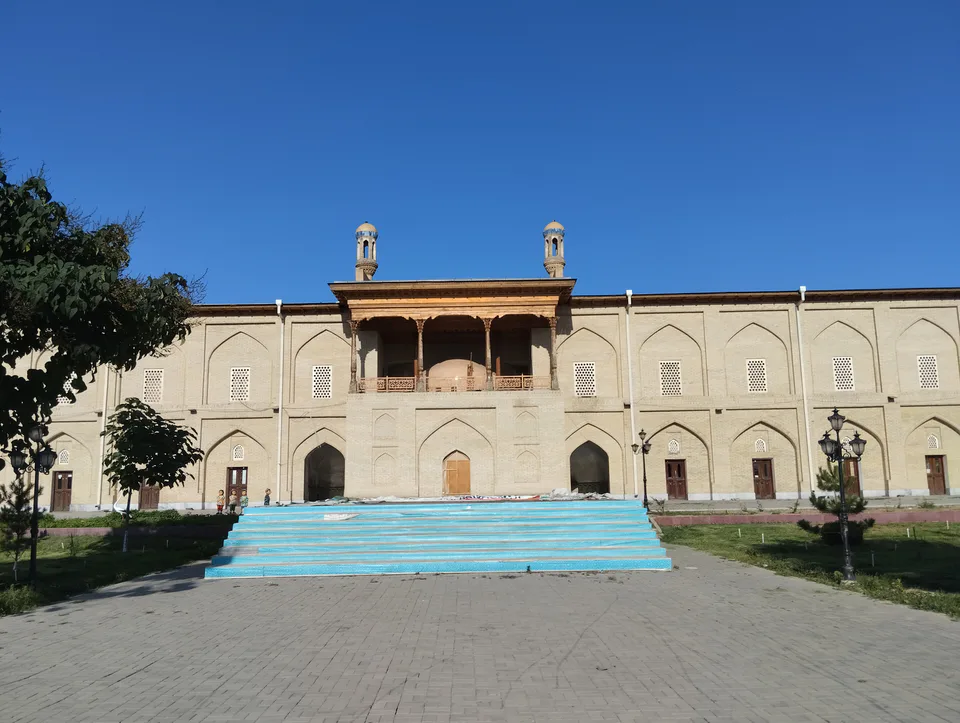
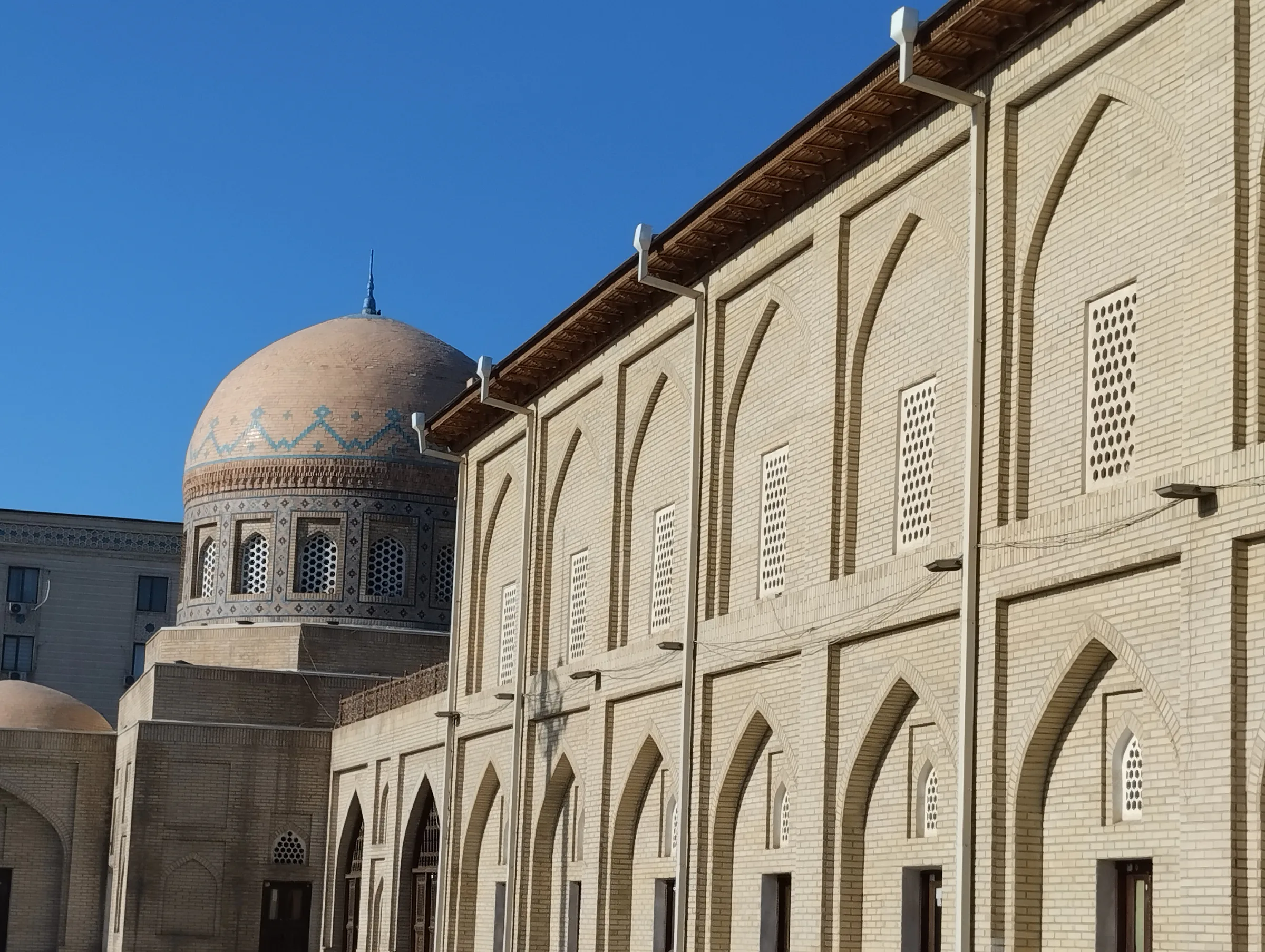
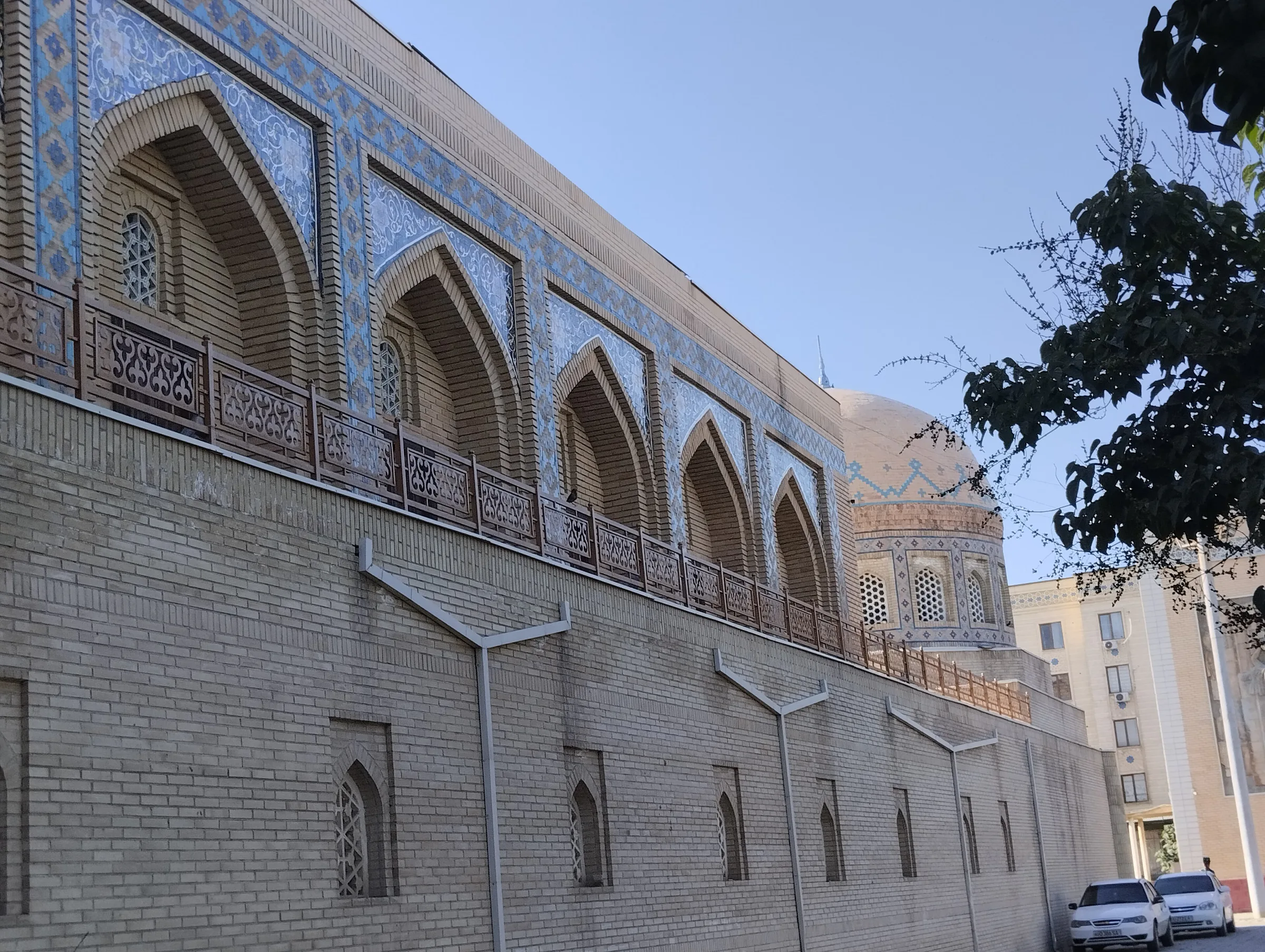
The madrasa's main facade faces east and runs for 123 metres. A tall pishtaq portal rises in the centre, flanked by ornamental guldasta turrets, with domed lecture halls at the corners and two-storey rows of student cells between them. Latticed windows line the ground floor, while mihrab-shaped arches on the upper level give the facade a light rhythm. Blue and green, the signature colours of Fergana Valley architecture, dominate the tilework and ornament.
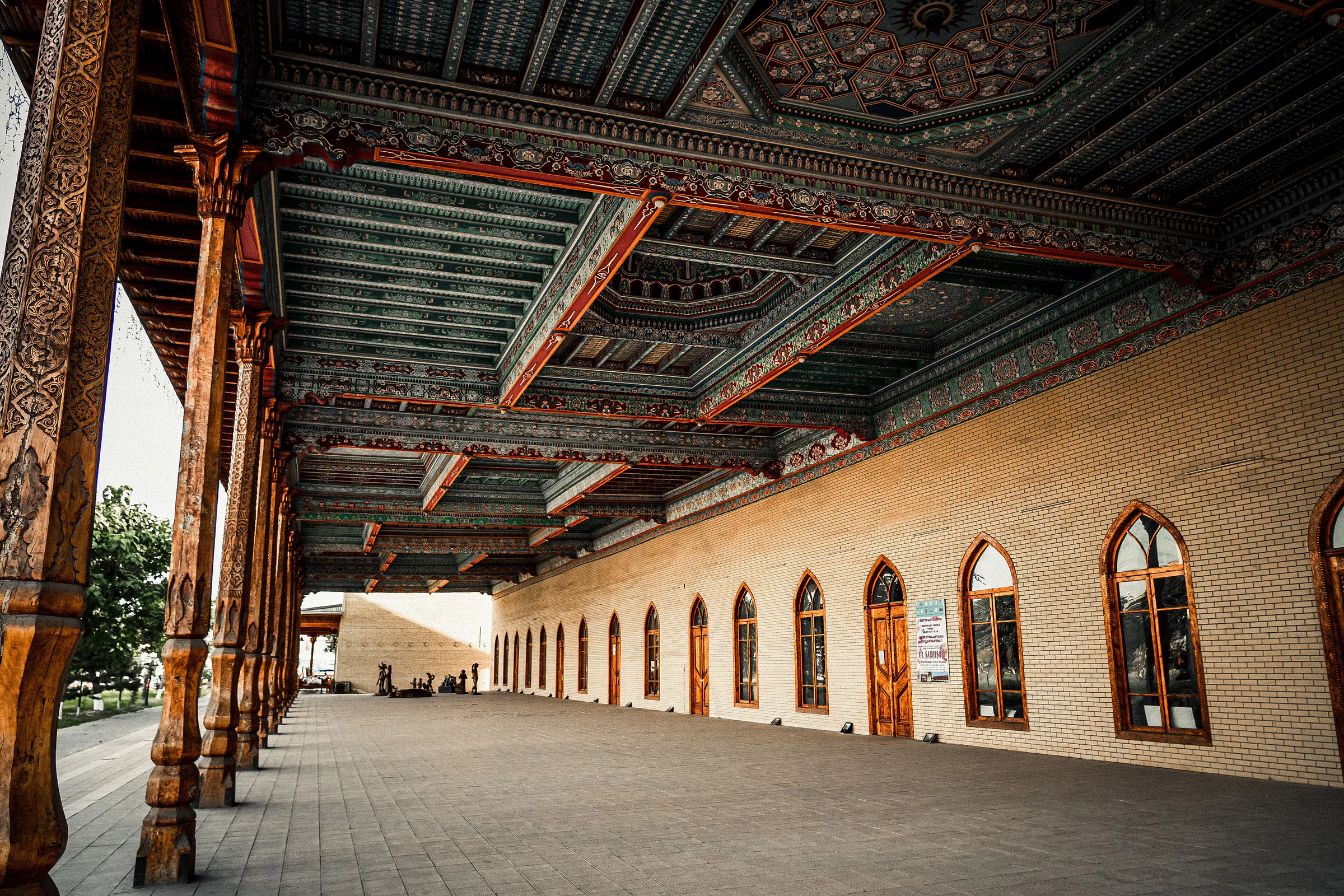
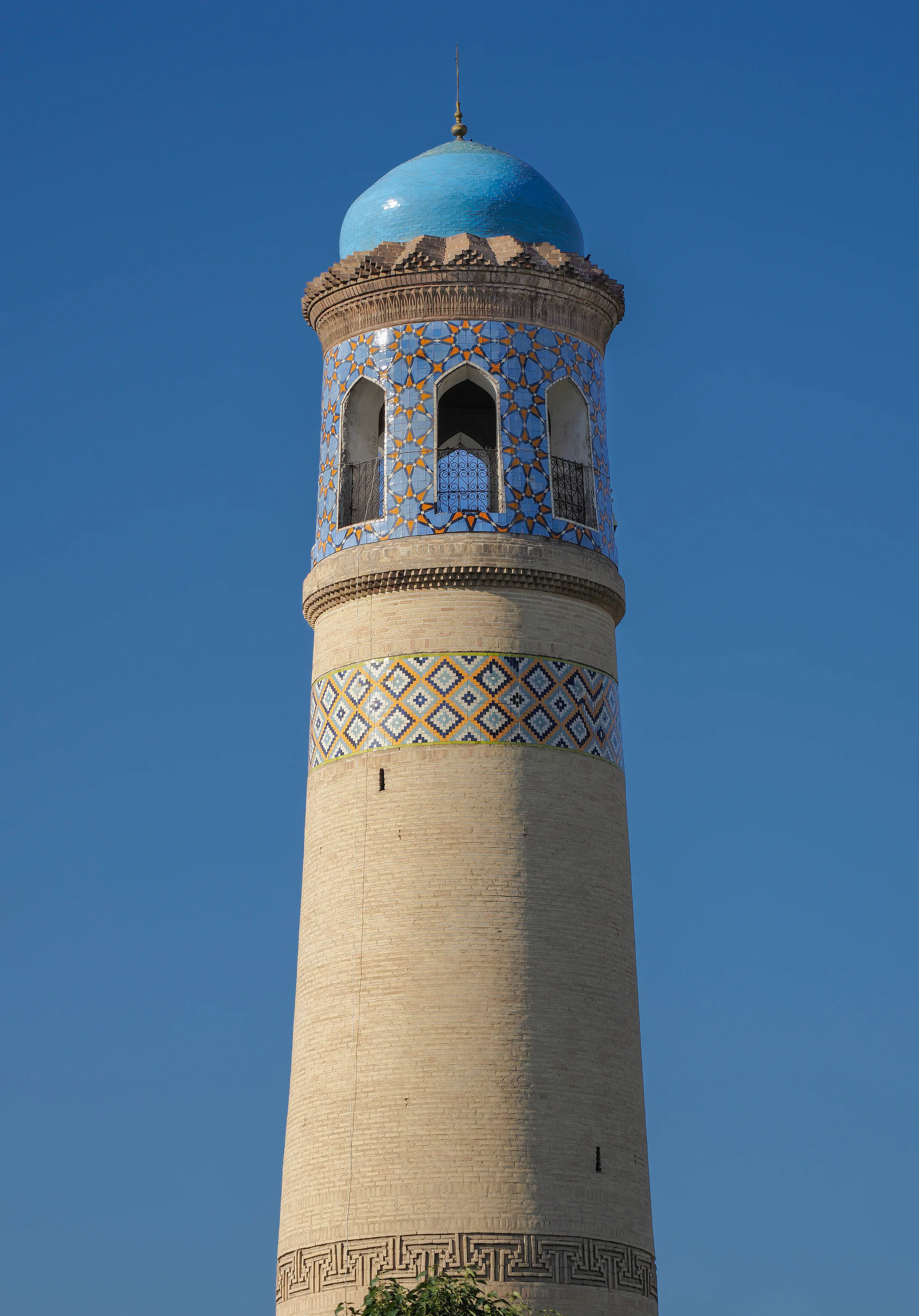
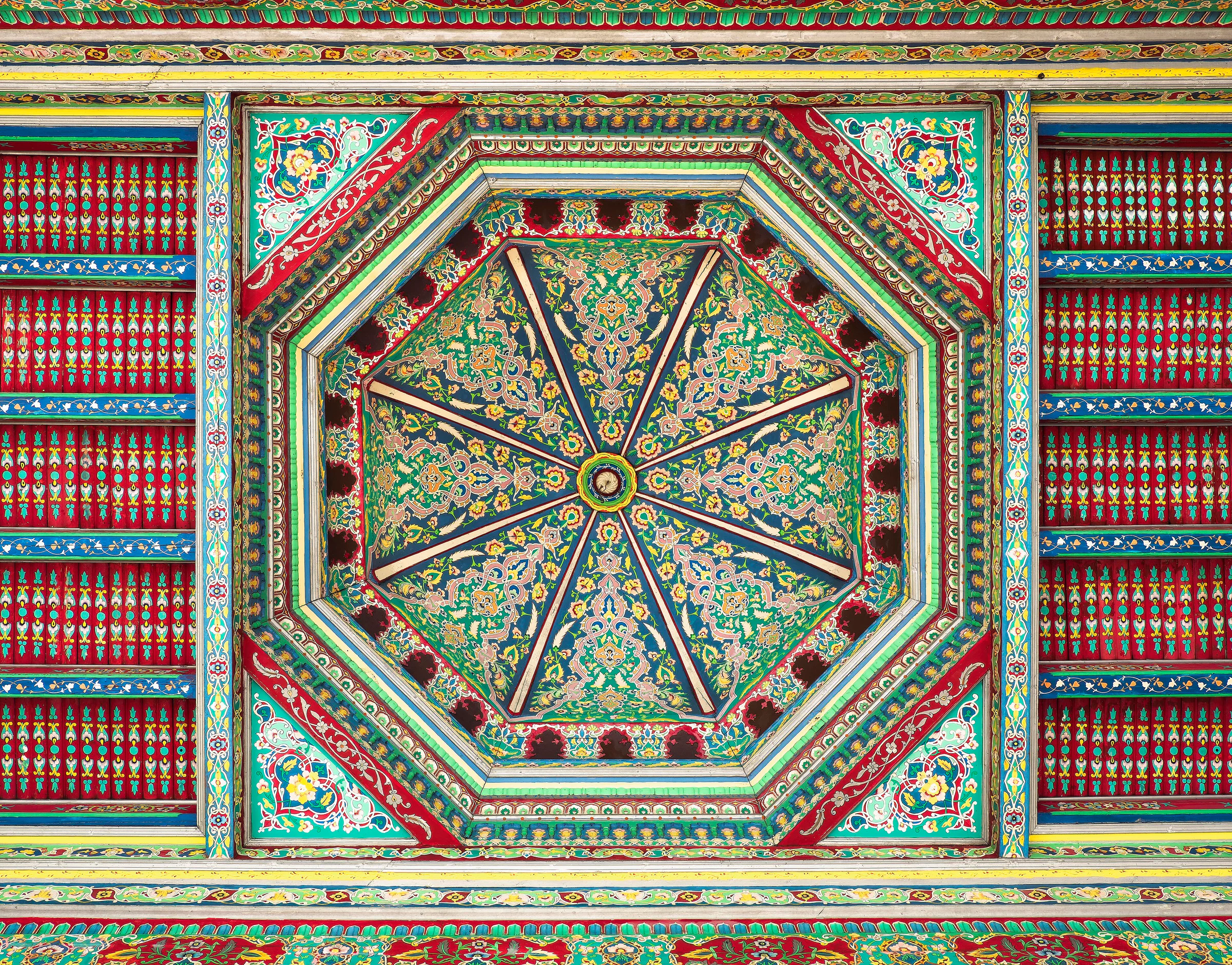
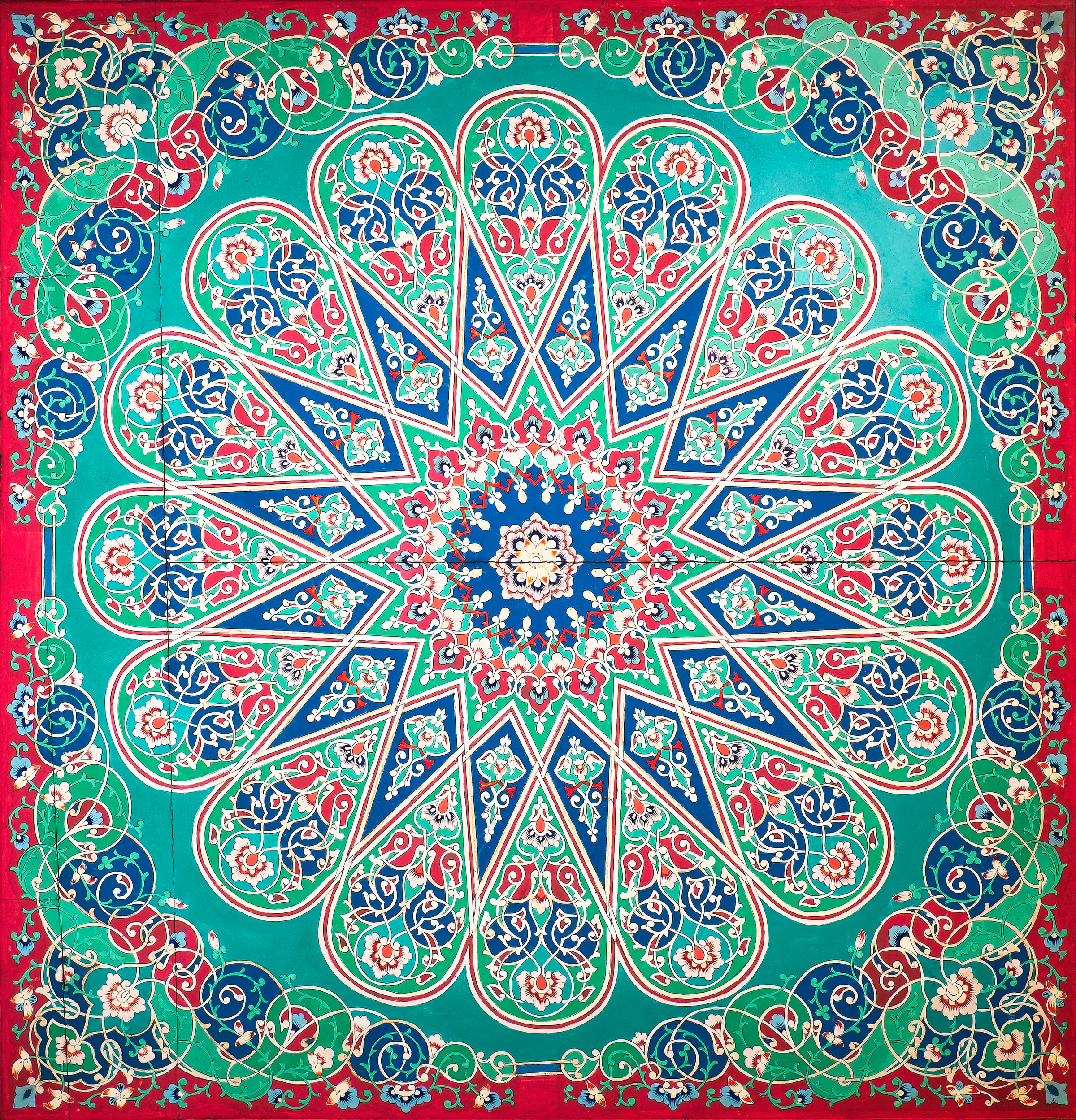
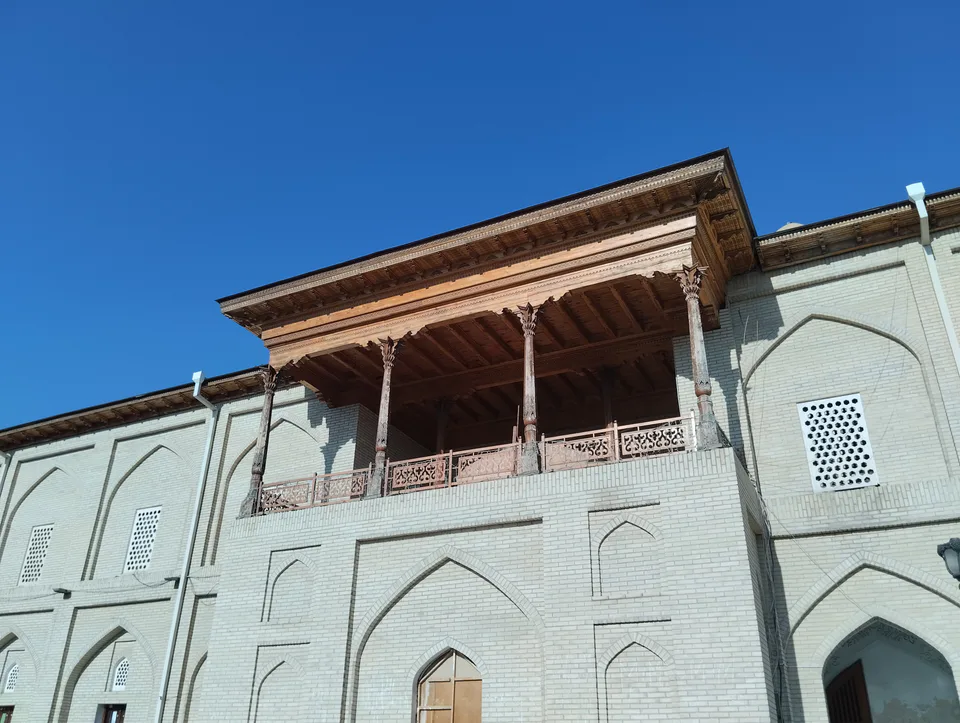
The mosque occupies the western part of the ensemble: a rectangular winter prayer hall with a columned iwan and painted ceiling on three sides. The 32-metre minaret in the courtyard rises from an octagonal base and is the tallest in the Fergana Valley. The complex covers 1.5 hectares and was restored in 1971–1974 and 1999–2000.
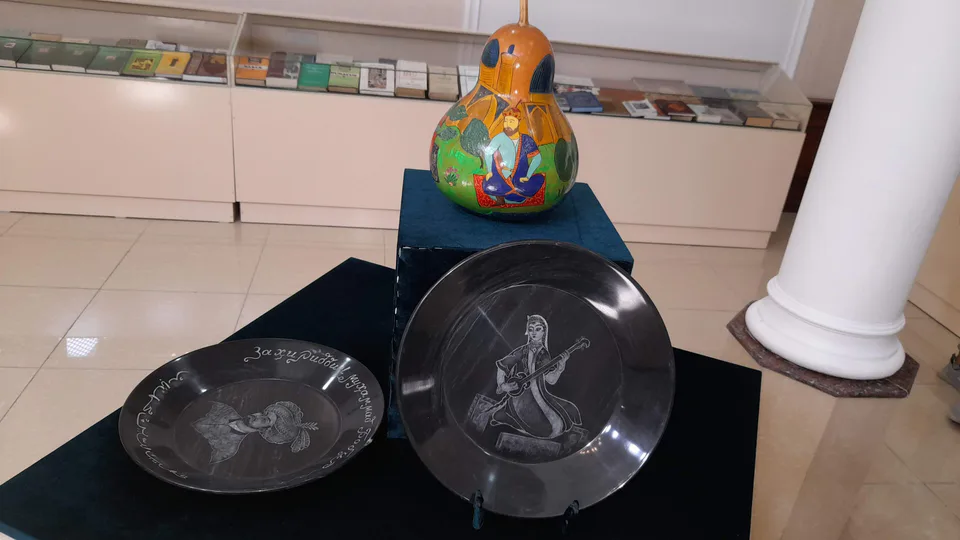
The madrasa houses the main building of the State Museum of History and Culture of Andijan Region. In 2018 a new Jome mosque was built alongside in the four-iwan style, with two 54-metre minarets, an 18-metre dome and room for more than 15,000 worshippers, so one square shows the architecture of the 19th and 21st centuries side by side.
The earthquake of December 1902 was one of the strongest in the history of the Fergana Valley: officially more than 4,600 people died and some 40,000 buildings collapsed across the Andijan district. Because the city was largely rebuilt afterwards, the Jome complex is one of the few surviving witnesses of old Andijan.
Museum · Andijan
Where Babur grew up
Museum · Andijan
The valley's main treasure house
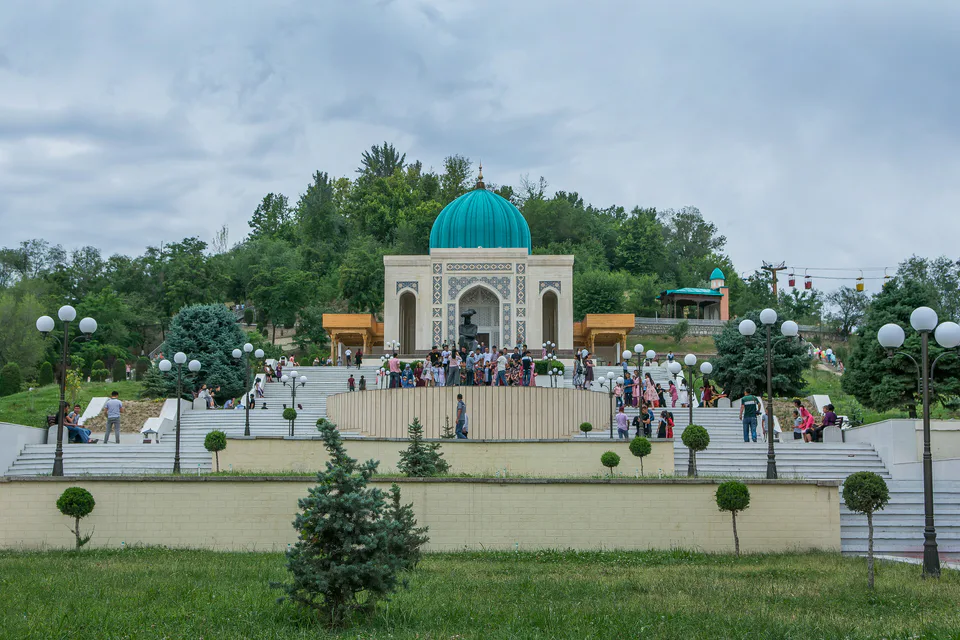
Park & garden · Andijan
A memorial garden to Babur above Andijan
Fortress · Andijan
From garrison fort to art gallery
Pilgrimage site · Jalaquduq District
A shrine linked to an Arab conqueror
Madrasa · Pakhtaobod District
A small masterpiece of brickwork
Archaeology · Marhamat District
Possibly the capital of ancient Dayuan
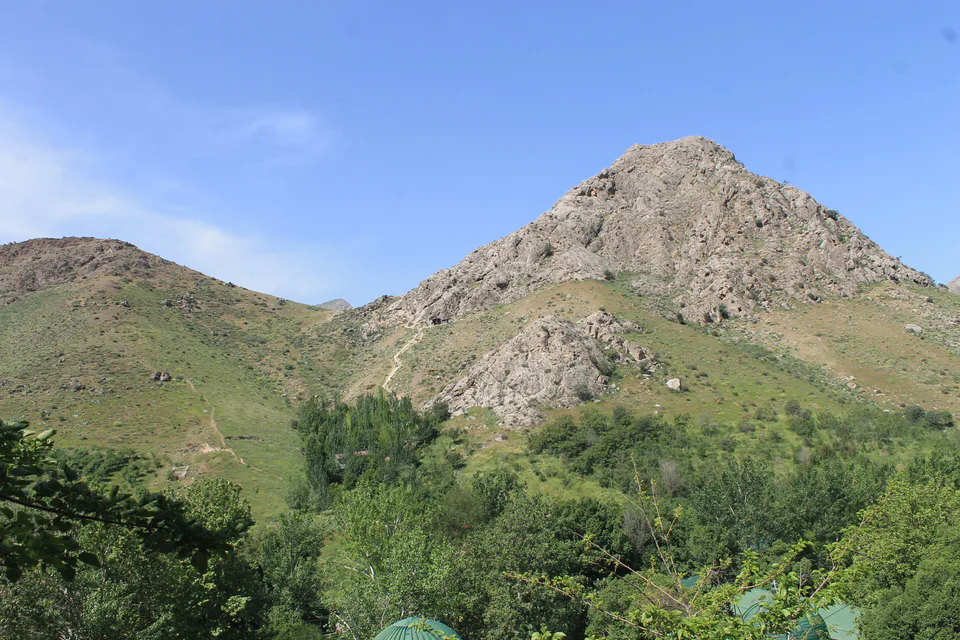
Pilgrimage site · Khojaobod District
An old shrine in the foothills