Archaeology · Sherobod District
Djarkutan (Jarqo‘ton)
A Bronze Age “proto-city” with a fire temple
Archaeology · Muzrabot District
A Bronze Age settlement in Muzrabot District: an 82 × 82 m square fort, 138 burials and the oldest silk remains in Central Asia. Northern Bactria’s Sapalli culture is named after it.
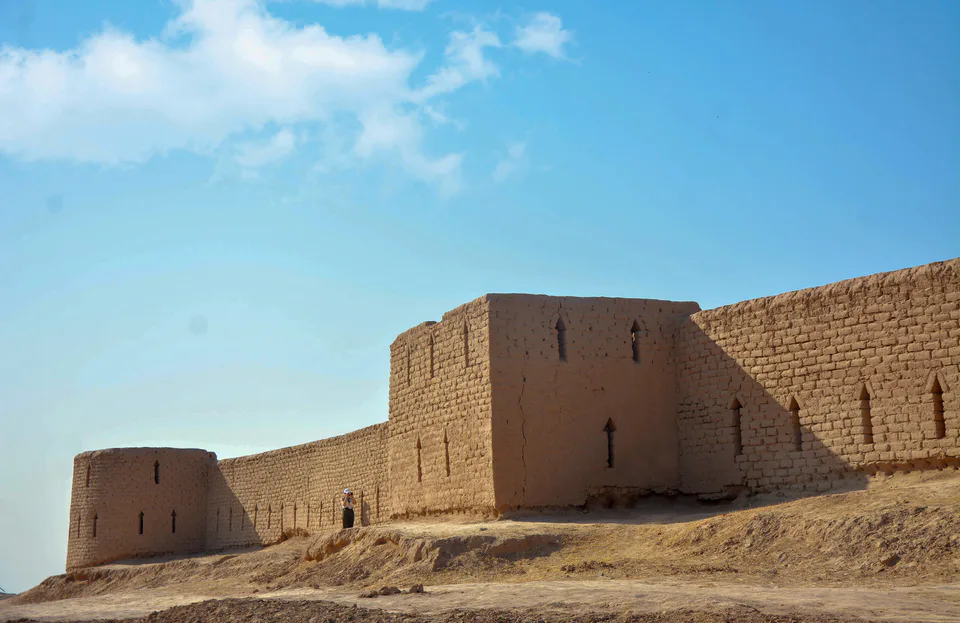
Sapallitepa lies in the Sherobod steppe, about 30 km south-west of Sherobod town. L. I. Albaum discovered it in 1968, and an expedition led by A. A. Askarov excavated it in 1969–1974; the name comes from the potsherds (sopol) that littered the mound. At its heart stood a square fort 82 m on each side, ringed by an elaborate defensive wall of corridors and rooms, with a single gate on the south. Inside, eight blocks of houses, pottery kilns and granaries surrounded a central square.
Excavators found 138 burials beneath the floors and around the rooms. Finds include wheel-made pottery, bronze tools and ornaments, seals and scraps of silk cloth, the oldest yet known in Central Asia. Archaeologists call the Bronze Age farming culture of northern Bactria the Sapalli culture after this site. Its dating varies: the Great Russian Encyclopedia gives roughly 2000/1900–1700 BC, while Uzbek publications cite the 17th–14th centuries BC.
Archaeology · Sherobod District
A Bronze Age “proto-city” with a fire temple
Archaeology · Muzrabot District
A Hellenistic fortress on the Amu Darya: the lost Alexandria on the Oxus?
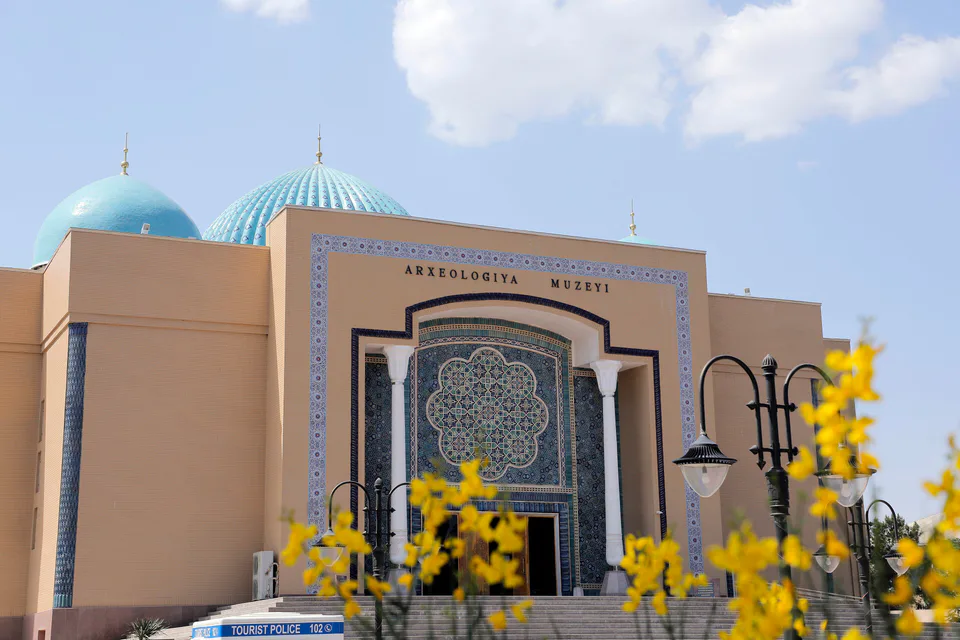
Museum · Termez City
Bactrian and Kushan treasures under one roof
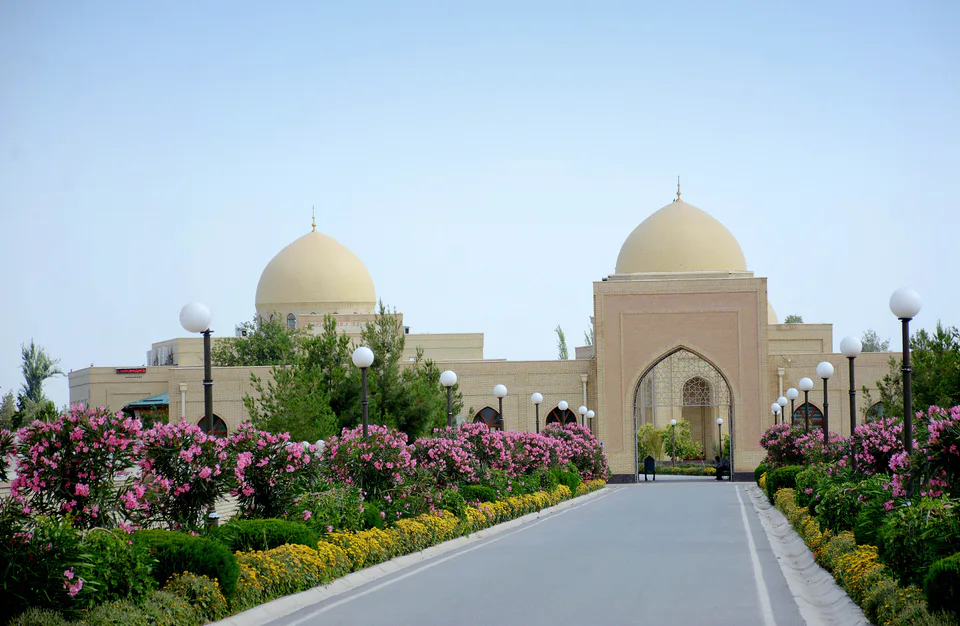
Pilgrimage site · Sherobod District
Resting place of the compiler of Jami al-Tirmidhi
Archaeology · Angor District
The Kushan-era hub of the Sherobod oasis
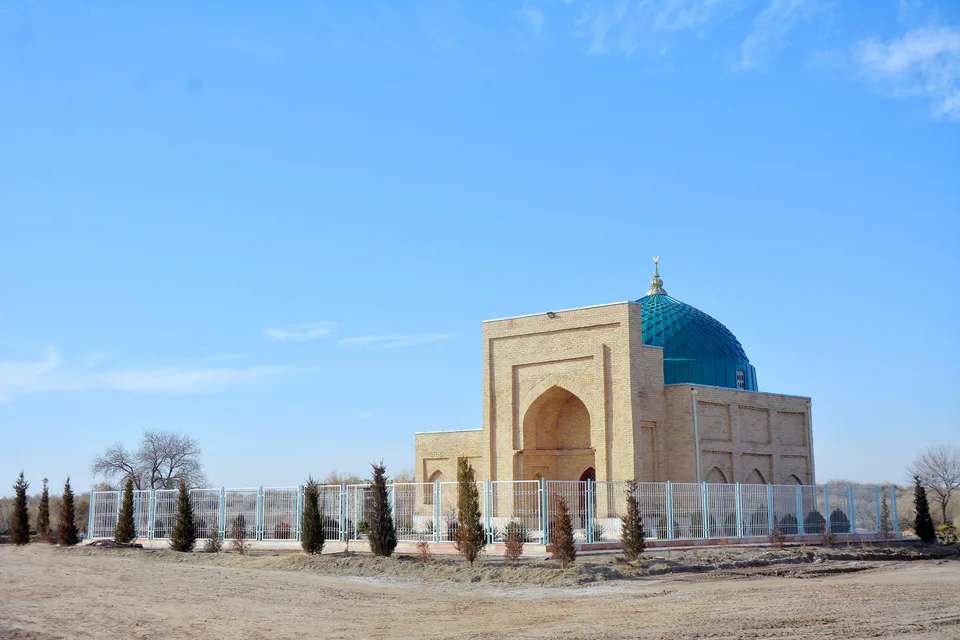
Pilgrimage site · Termez District
The shrine that named the Prophet’s Island
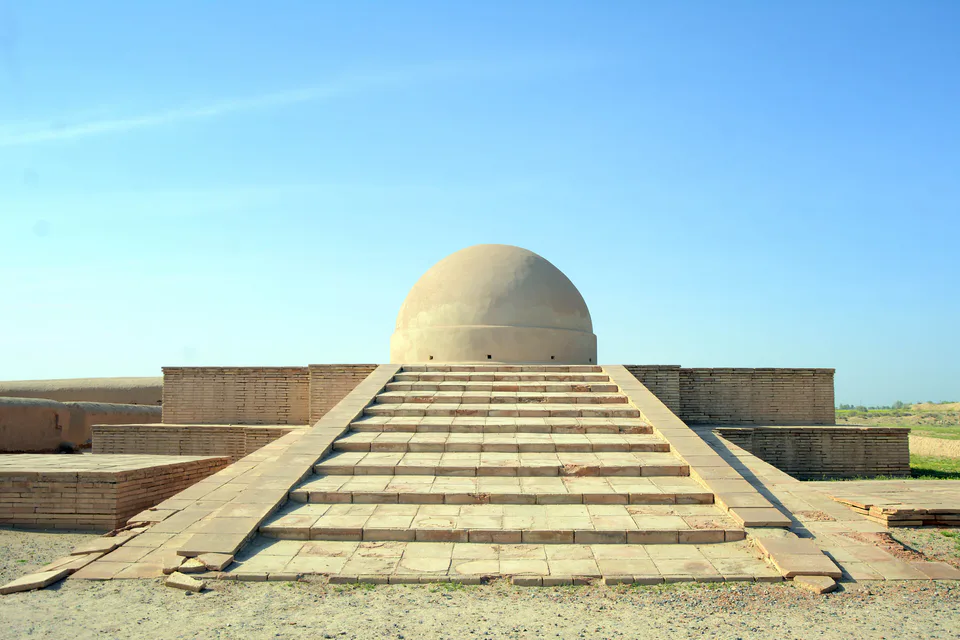
Archaeology · Termez District
A Buddha found by a shepherd and a Kushan monastery
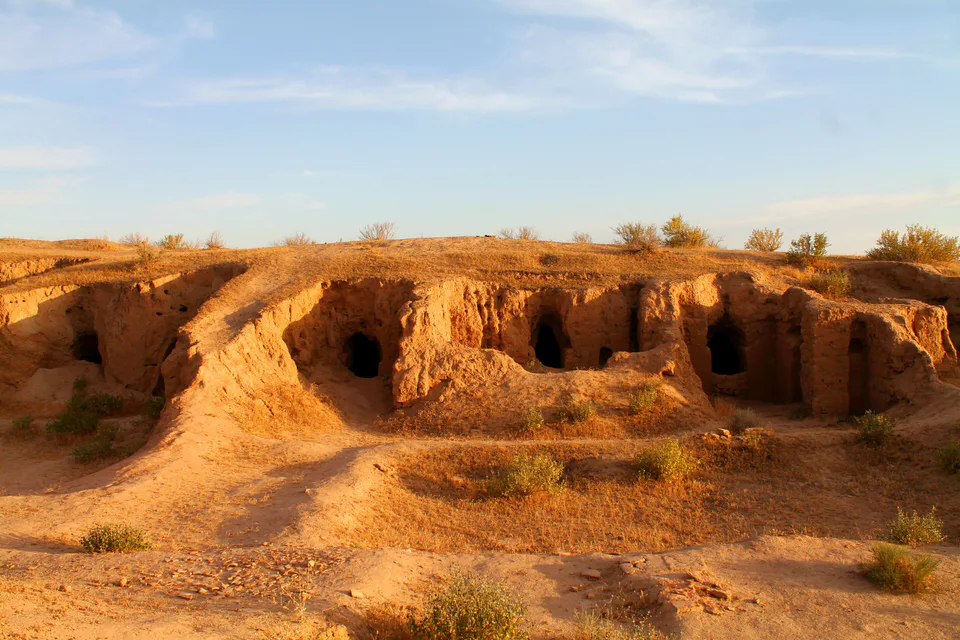
Archaeology · Termez District
Buddhist cave monasteries cut into the hills
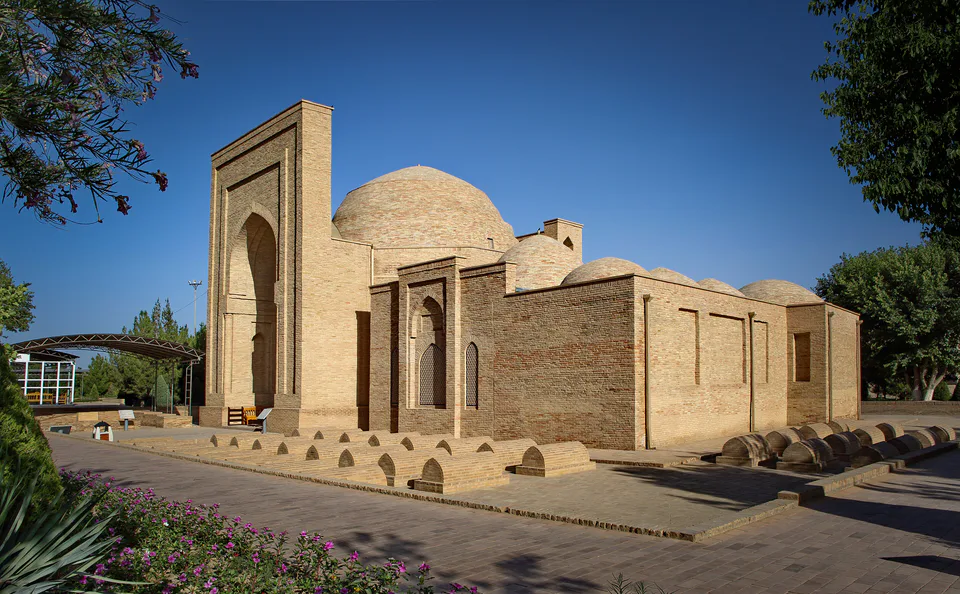
Pilgrimage site · Termez District
The shrine of “Termiz Ota”, the city’s patron saint
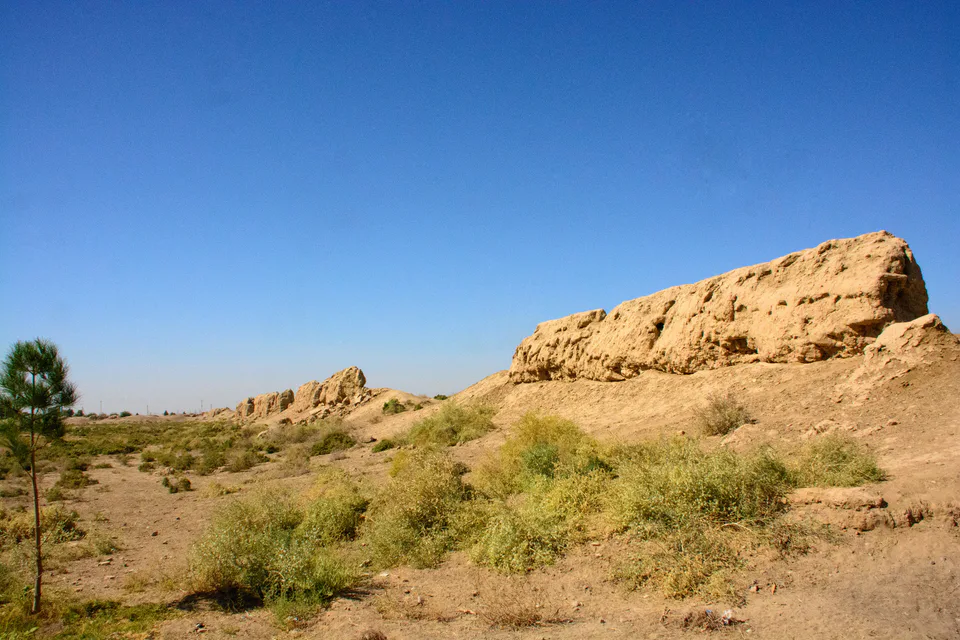
Archaeology · Termez District
The ruins of a 2,500-year-old city at an Amu Darya crossing