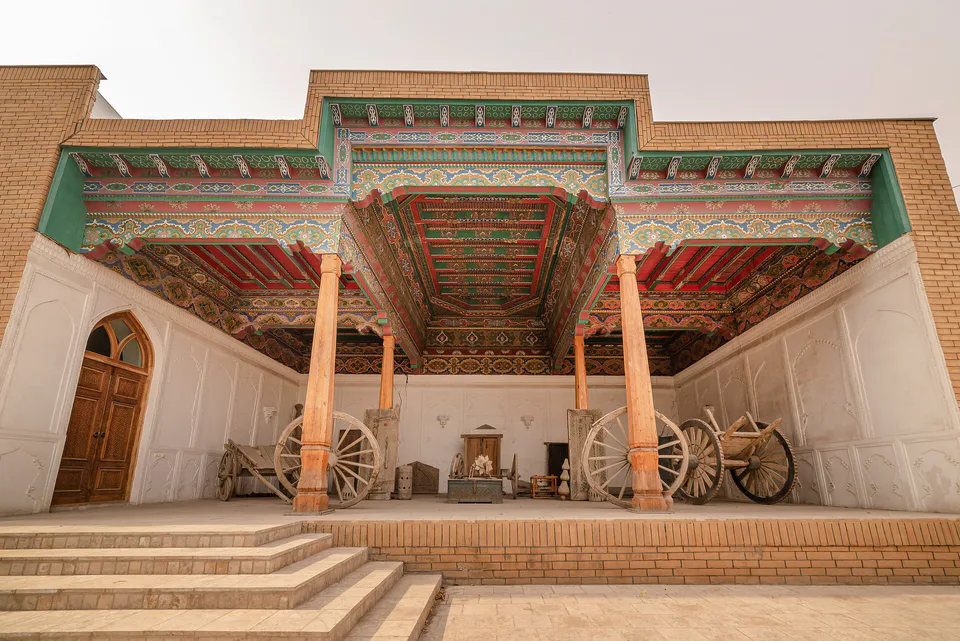
Madrasa · Margilan
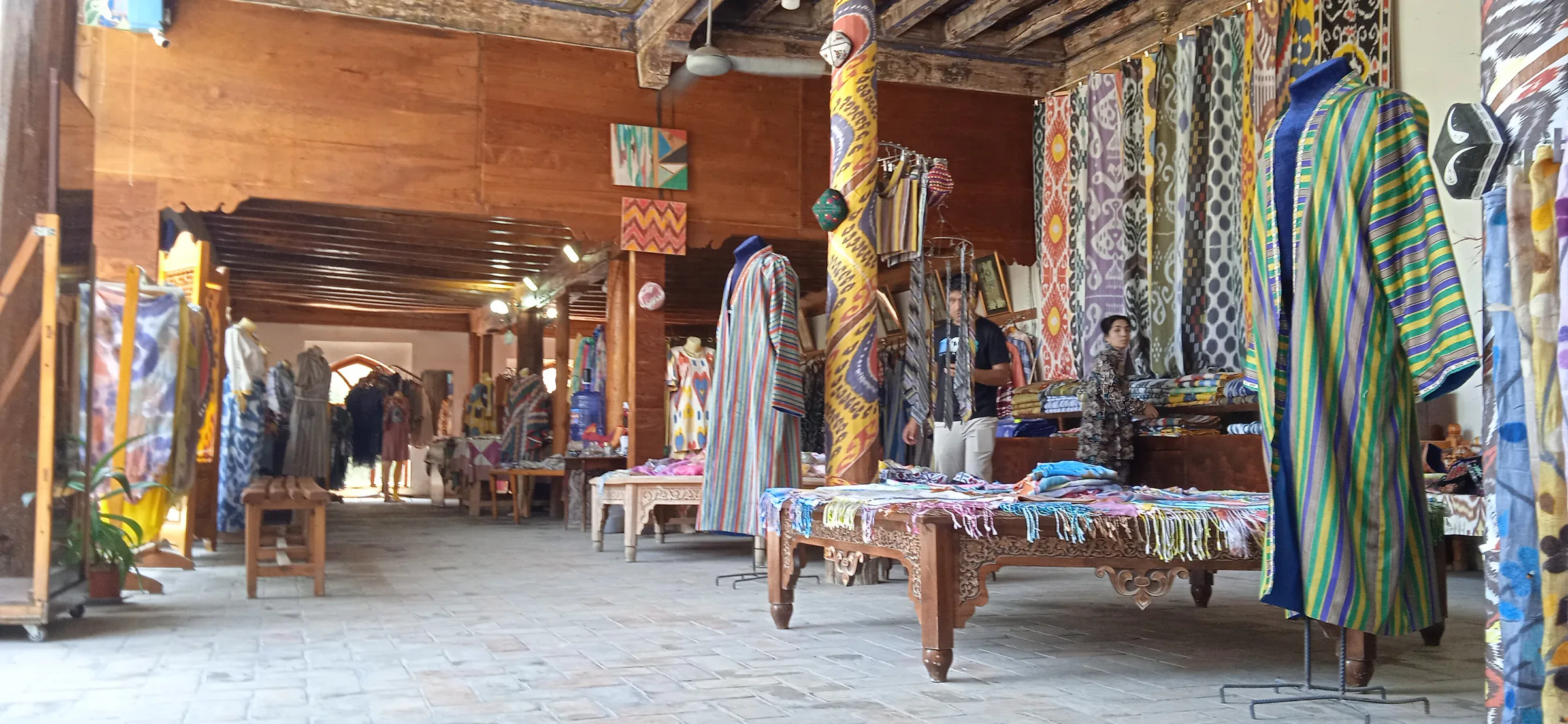
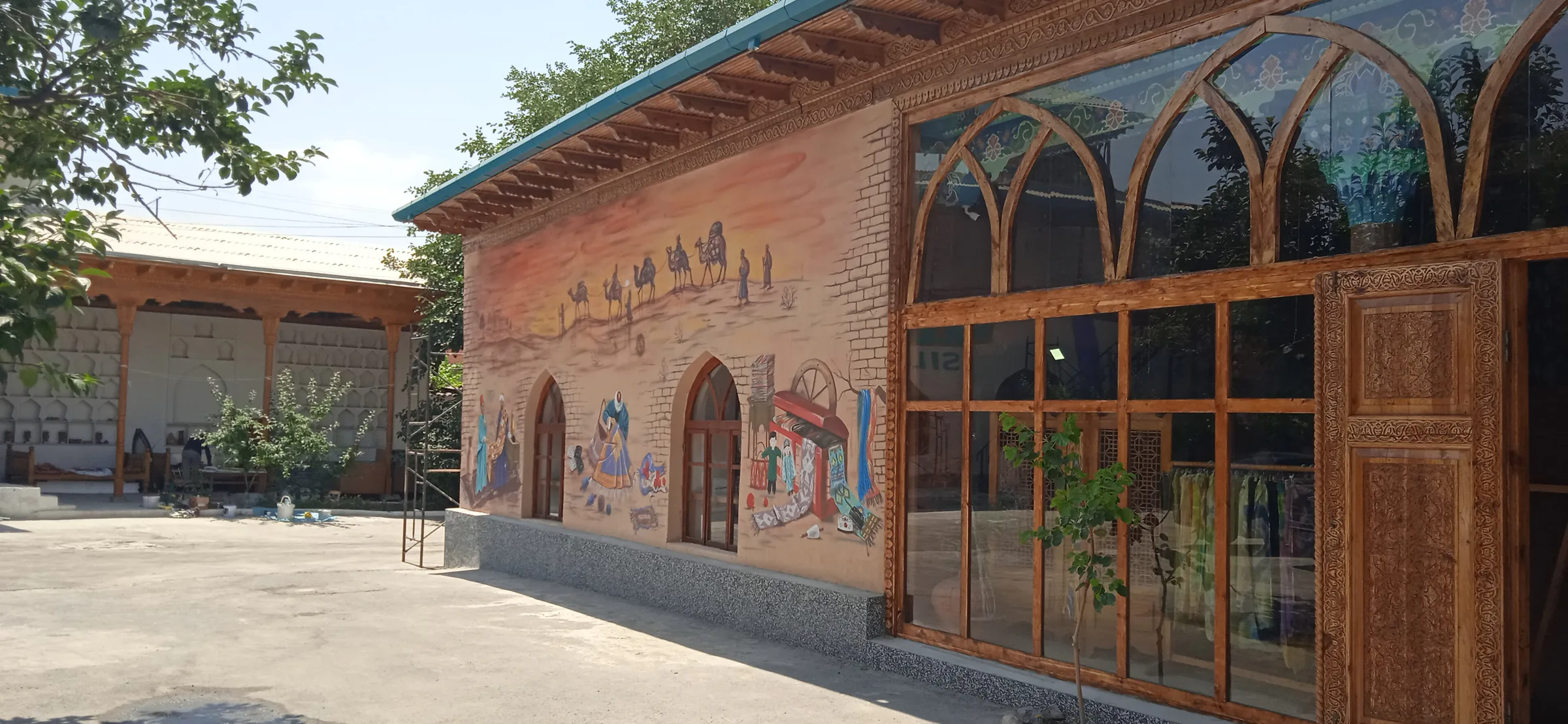
Said Ahmad Khoja Madrasa
Where Margilan's craftsmen work
Culture & arts · Margilan
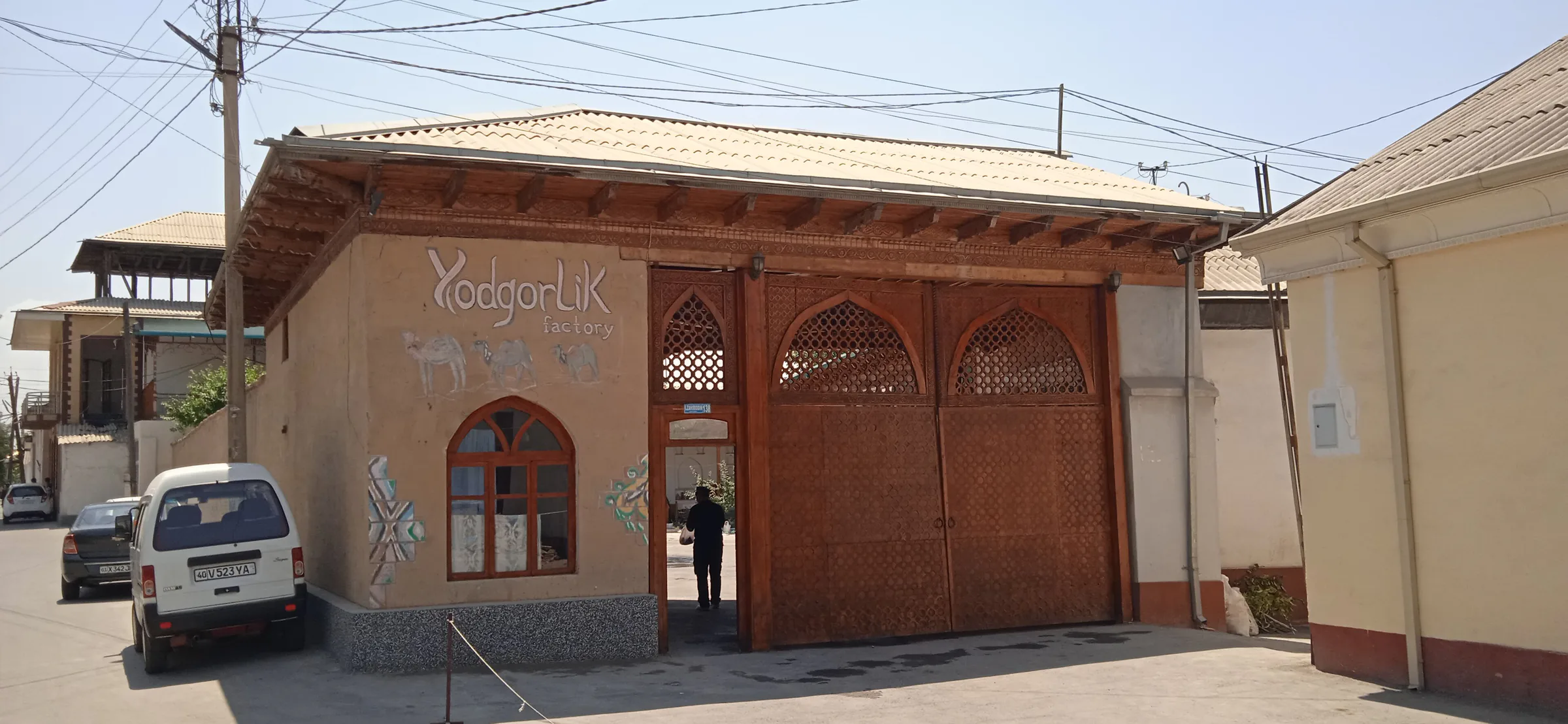
A Margilan factory that grew out of a 1924 workshop cooperative, where you can watch the whole life of silk — from reeling cocoons to hand-weaving ikat.
The factory's story begins in 1924, when, after the creation of the Uzbek SSR, craftsmen were organised into cooperatives known as artels; one of them was a silk-weaving artel in Margilan. A factory was later built on its foundations and grew into a large enterprise in the 1970s and 1980s. In Soviet times output plans were set from above, and traditional hand-woven fabrics were largely pushed aside.
After independence Yodgorlik was among the first enterprises to be privatised. Azamkhon Abdullayev, who had joined the factory in 1981, became its owner in the early 1990s and set about reviving old Uzbek fabrics and designing new ones. Today Yodgorlik is Margilan's best-known silk workshop and a 'living museum' open to visitors, with much of its output exported.
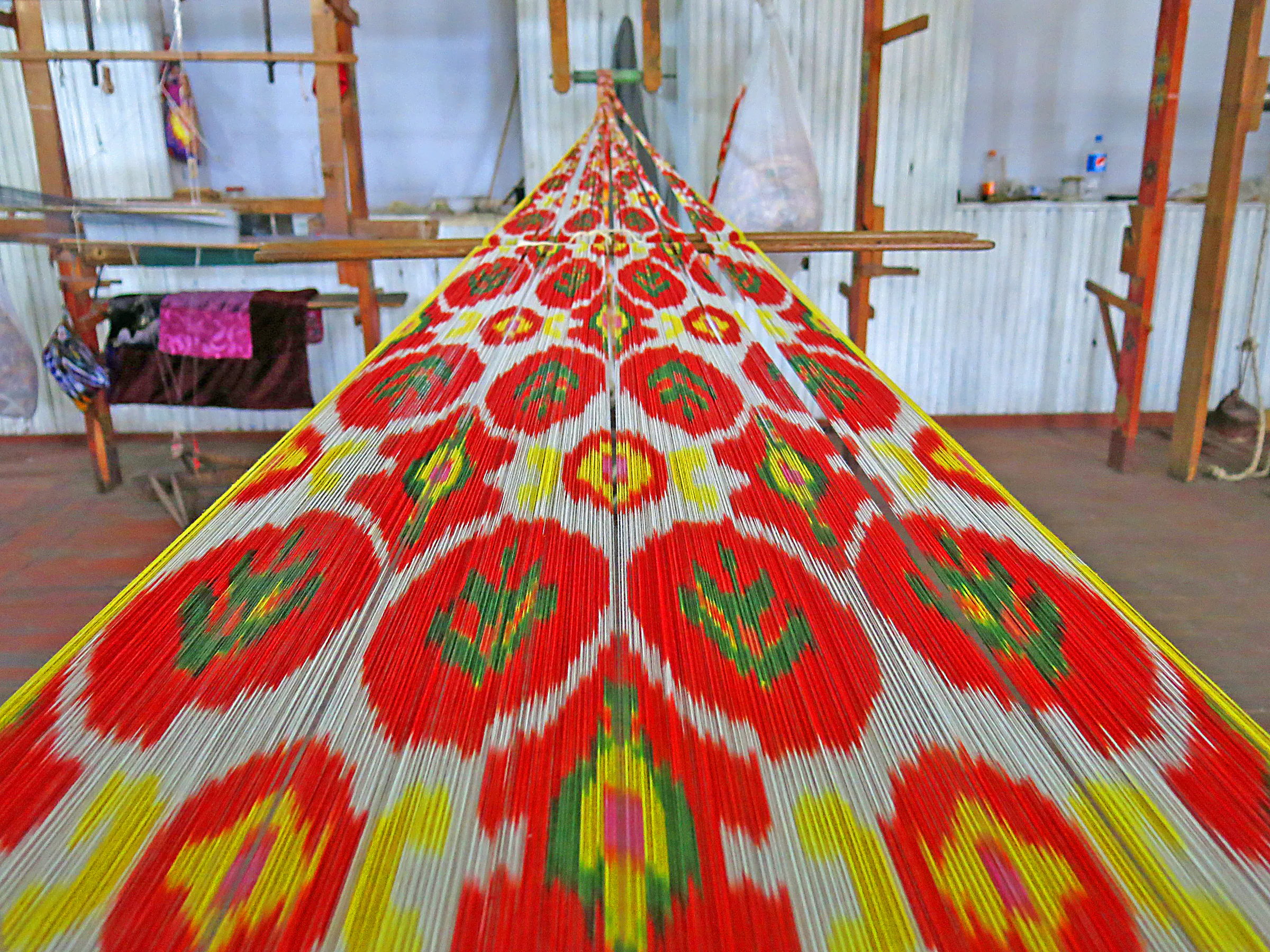
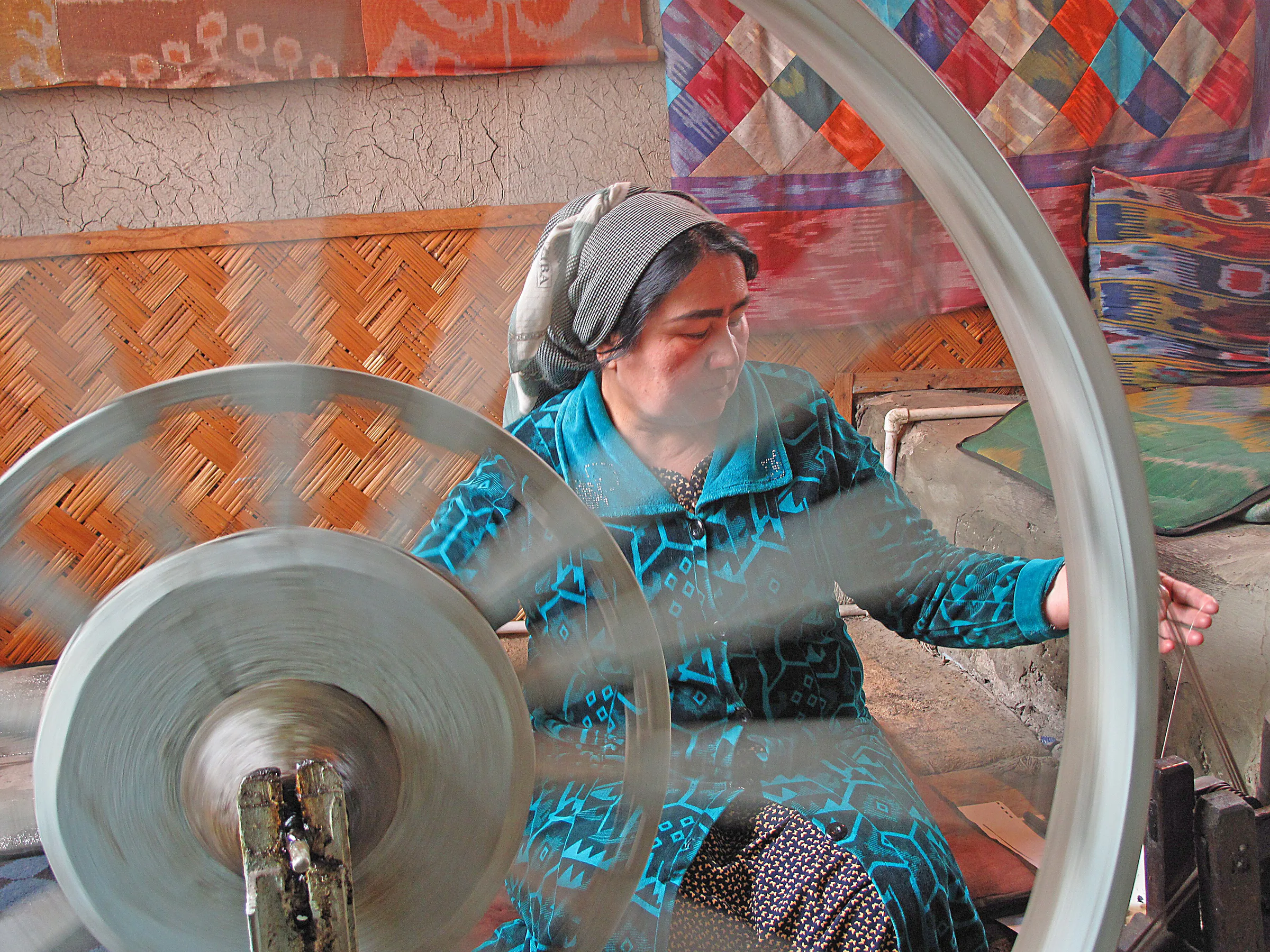
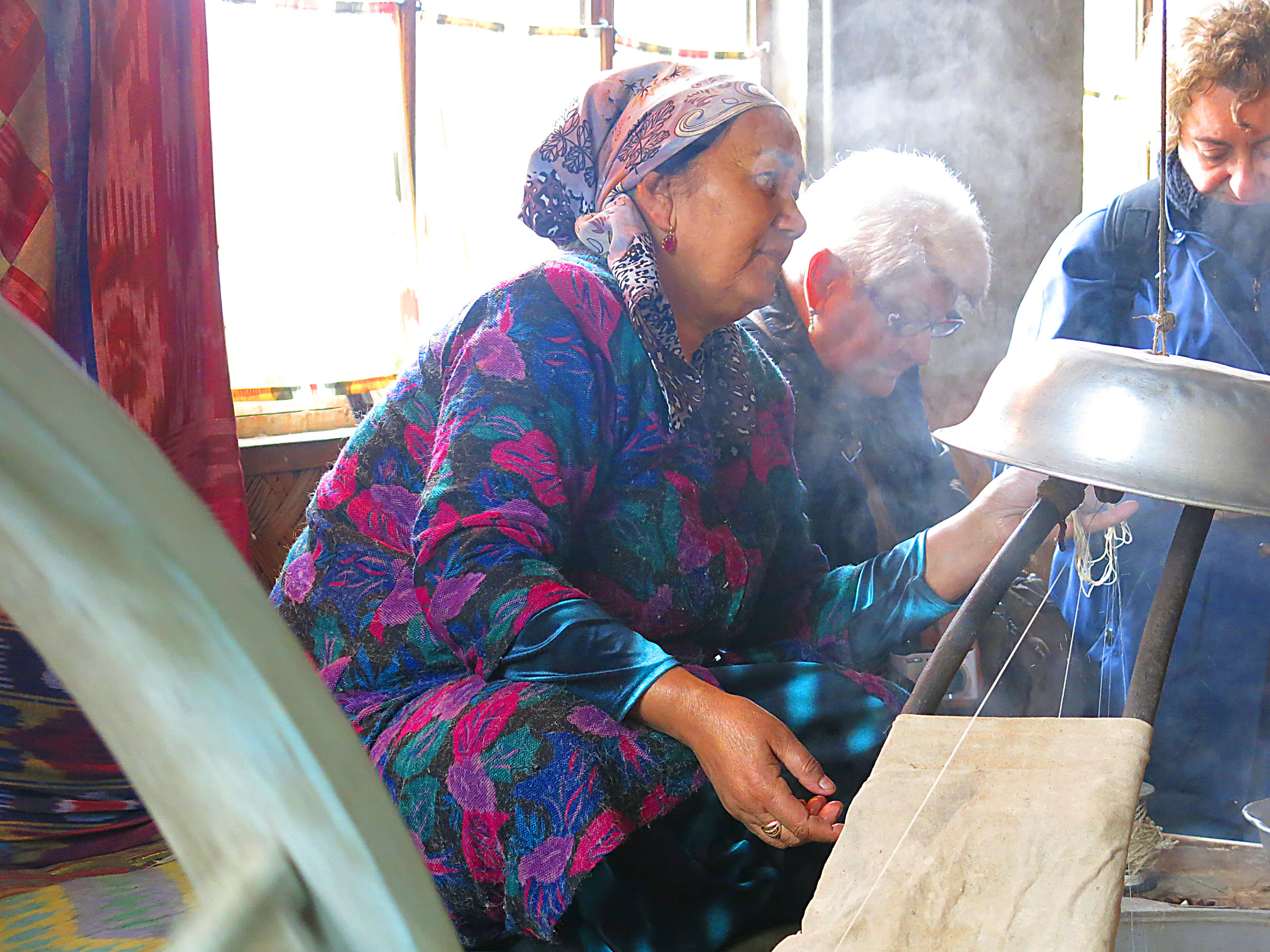
The tour starts where silk begins: cocoons are softened in hot water and several gossamer filaments are reeled together into yarn. Bundles of yarn are then bound according to the future pattern by specialists called abrband. For each colour the yarn is re-tied and dipped into a separate dye bath, which is why the edges of the pattern blur like clouds — 'abr' itself means 'cloud'.
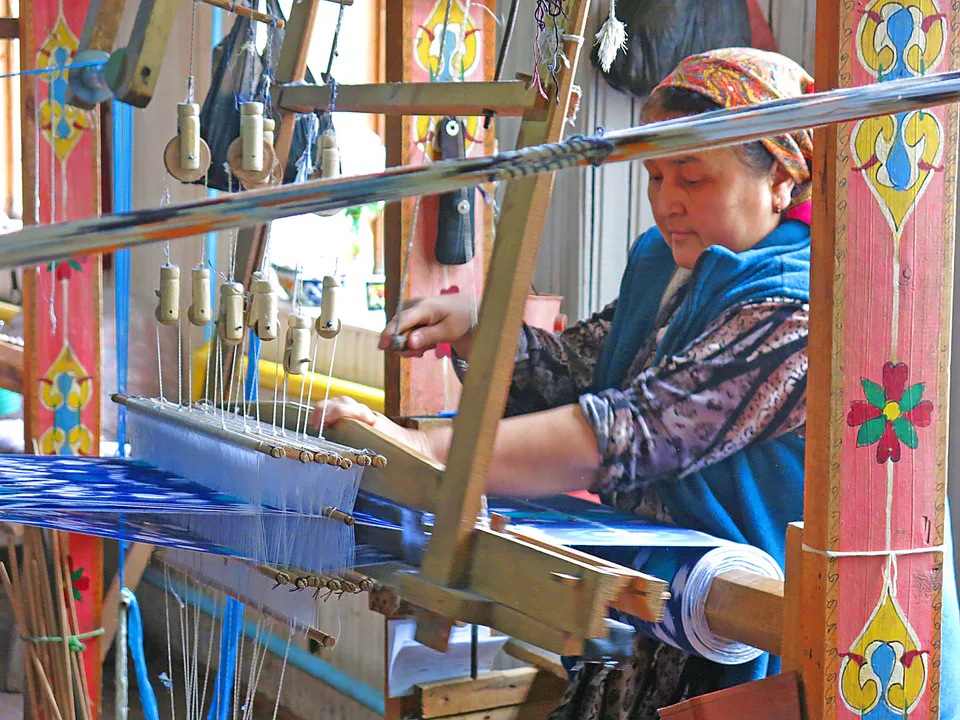
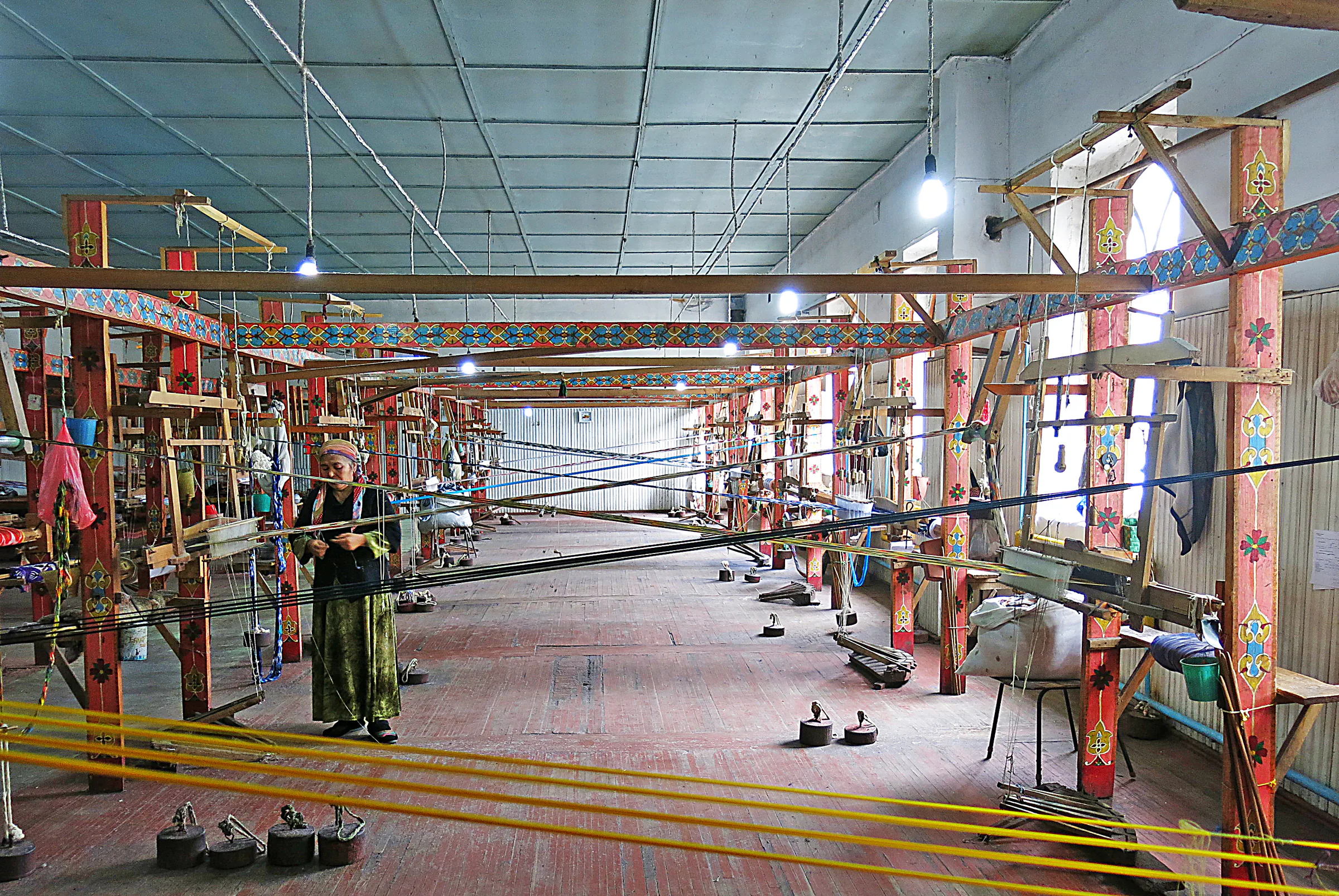
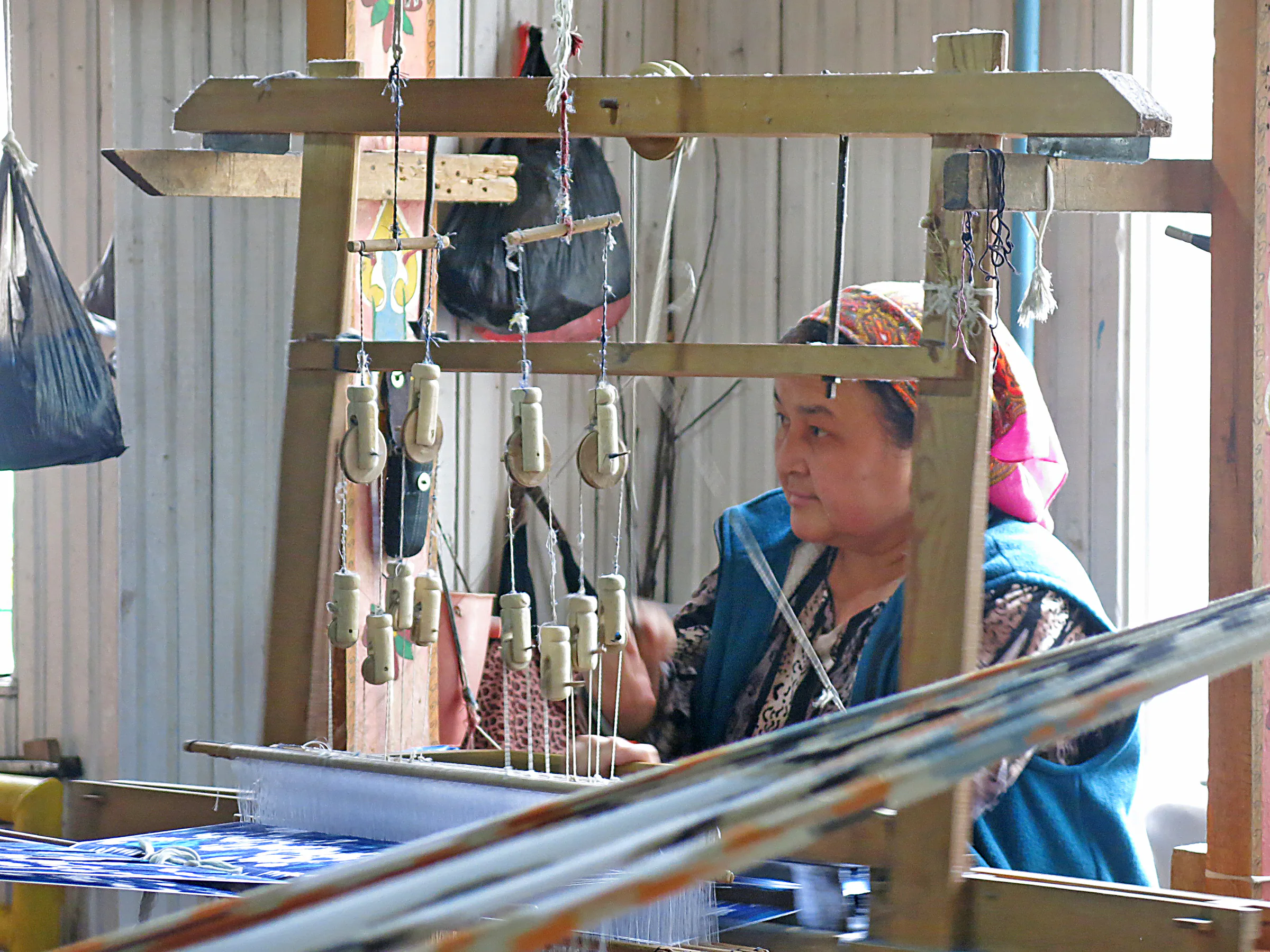
Further on, weavers work at hand looms: pure silk becomes atlas, while silk warp with cotton weft becomes adras. There are also carpet and dyeing workshops, and the route ends at a shop selling fabric, scarves and clothes. The whole visit takes more than an hour and leaves plenty of time for questions.
For centuries Margilan was a silk-weaving centre on the Great Silk Road, sending its fabrics to Kashgar, Iran and beyond. The tradition has international recognition: the Margilan Crafts Development Centre's work safeguarding the traditional technologies of atlas and adras was added to UNESCO's Register of Good Safeguarding Practices for intangible heritage in 2017. Yodgorlik shows these techniques alive on an industrial scale, yet still in the hands of craftspeople.
In the 20th century the city's silk making industrialised: work on Margilan's first silk-reeling mill began in 1927, and in 1963 the artels producing decorative fabrics were merged into the Atlas company. Sericulture is still widespread in valley villages, where silkworms fed on mulberry leaves spin cocoons that are sold to the silk factories.
Atlas and adras differ in their fibres: atlas is woven entirely of silk, adras from silk and cotton, which makes it heavier and more practical for everyday wear. Because the ikat pattern is dyed into the threads before weaving, no two lengths of cloth are ever exactly alike.
Madrasa · Margilan
Where Margilan's craftsmen work
Bazaar · Qoshtepa District
A traditional valley market near Margilan
Mosque · Margilan
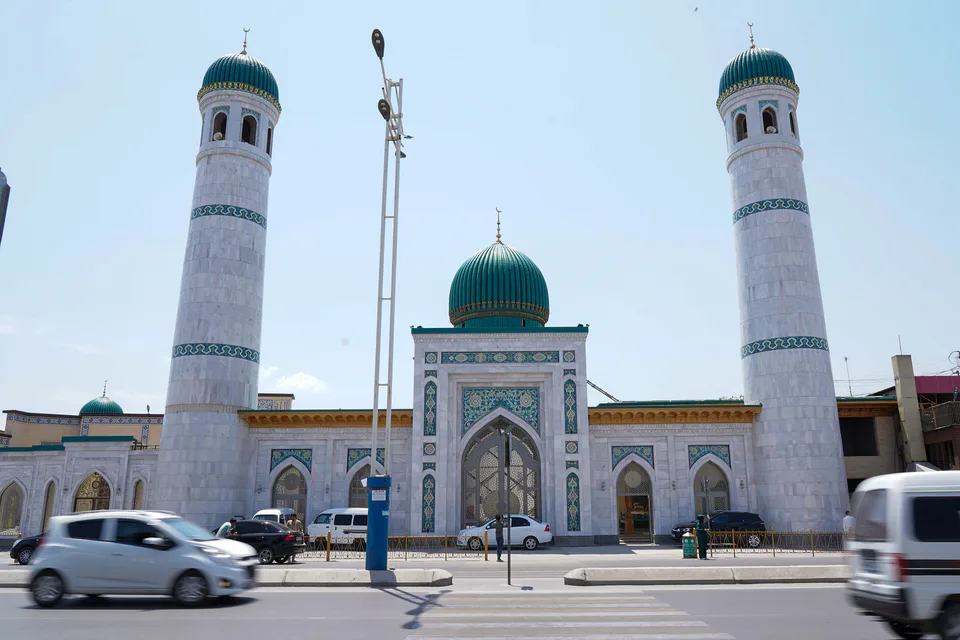
Margilan's main Friday mosque
Pilgrimage site · Margilan
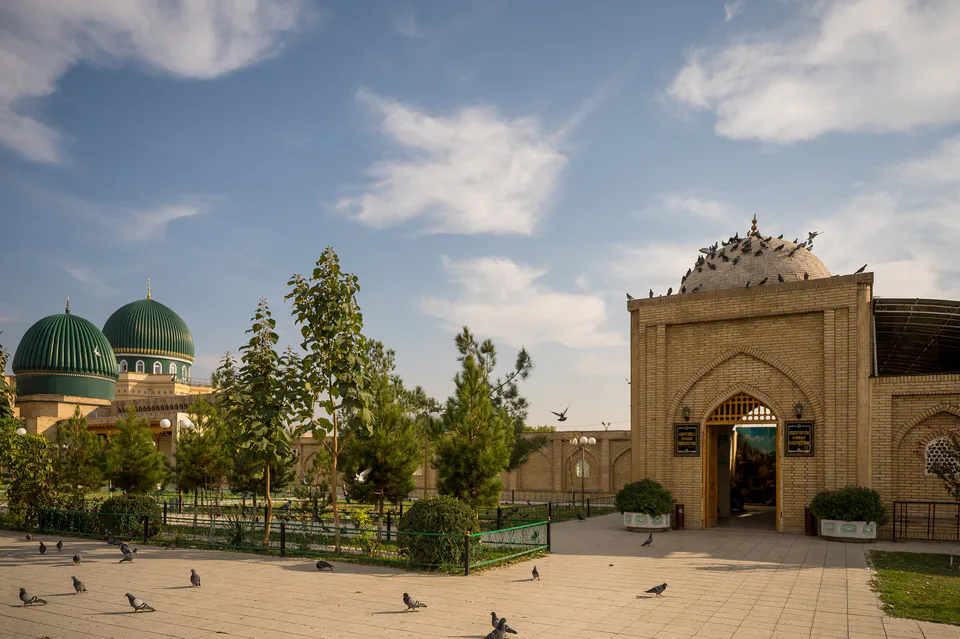
The saint who was saved by pigeons
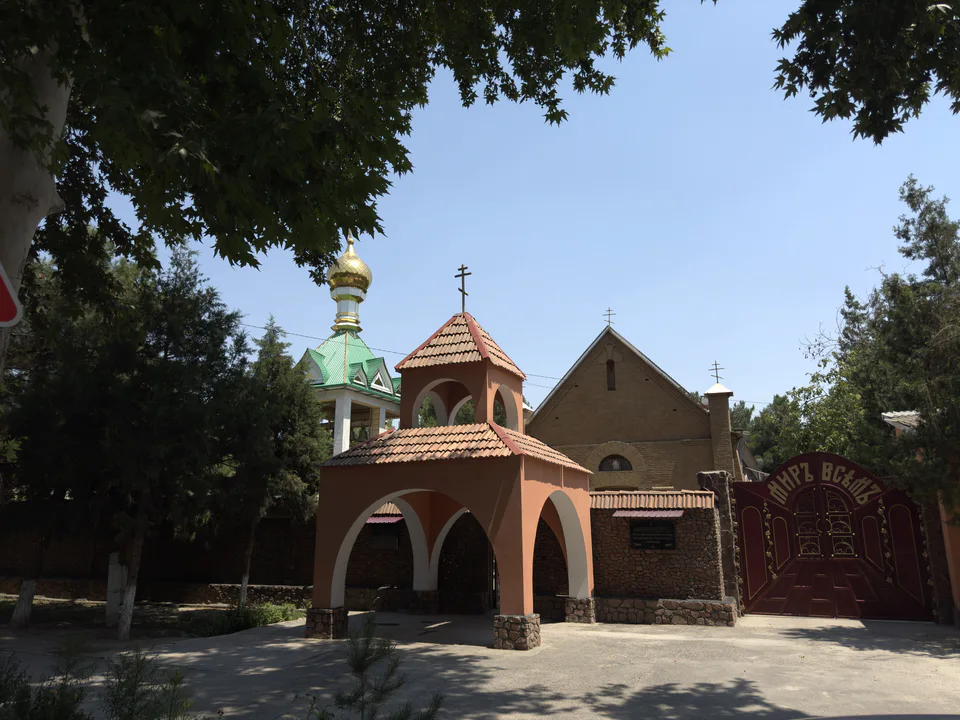
Temple & church · Fergana
Fergana's Orthodox church
Museum · Fergana
One of the oldest museums in Uzbekistan
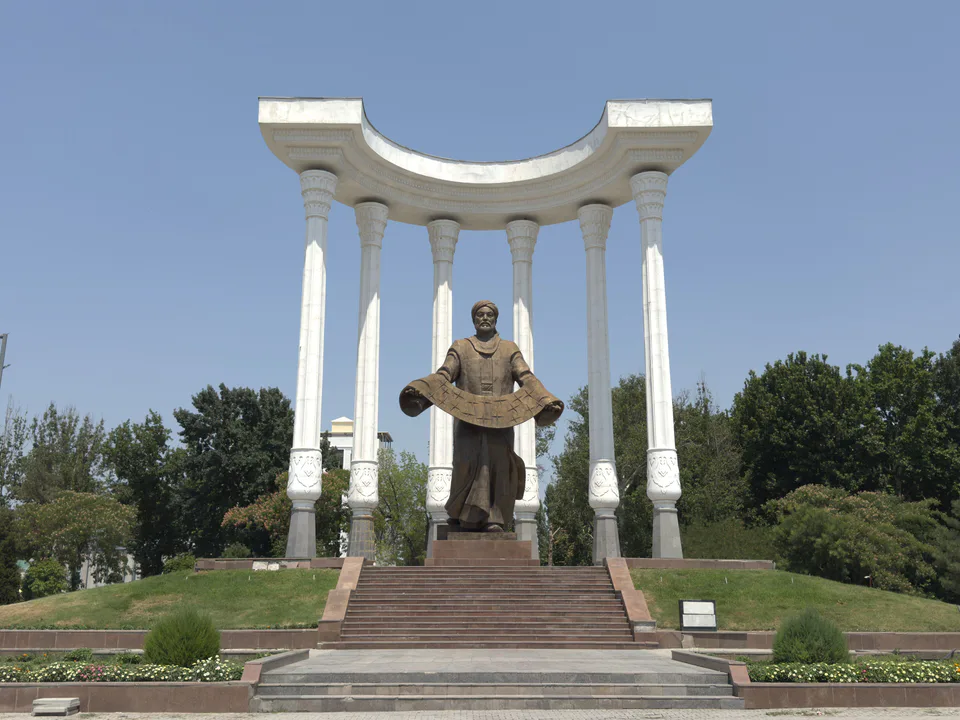
Park & garden · Fergana
A city park named after an astronomer
Archaeology · Quva District
The ruins of Kuba and its Buddhist temple

Nature · Yozyovon District
Sand dunes at the heart of the valley
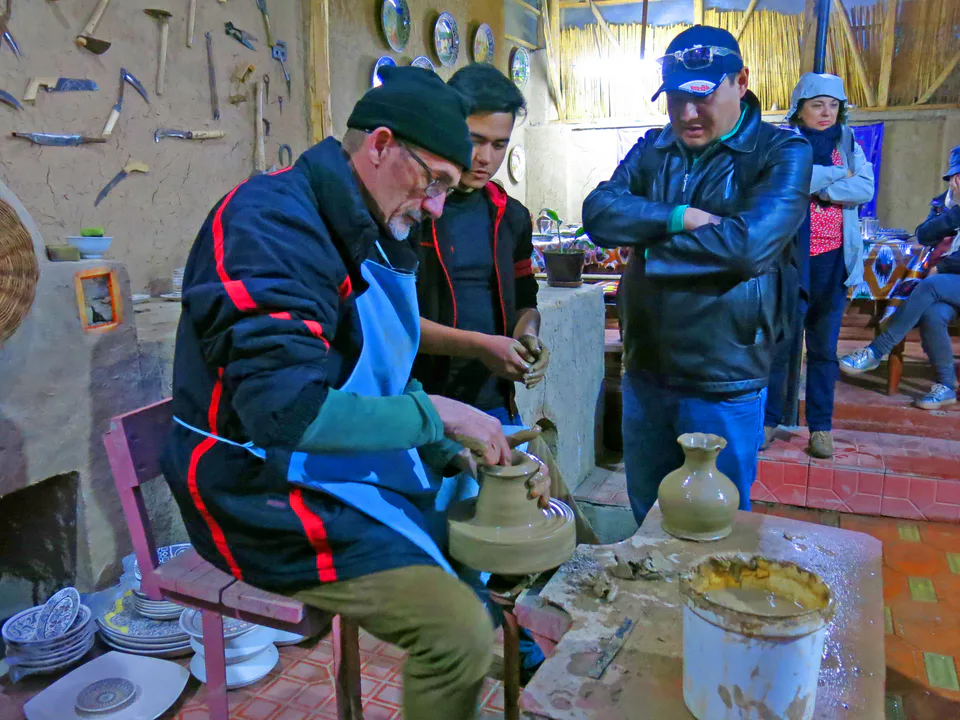
Culture & arts · Rishtan District
An open museum of Rishtan pottery