Pilgrimage site · Buvayda District
Podsho Pirim Complex
The shrine of Fergana's 'supreme patron'
Mausoleum · Buvayda District
A plain yet imposing 15th–16th-century mausoleum, said to have been built for the mother and wife of Shah Jalil; Buvayda District takes its name from it.
The mausoleum is dated to the 15th–16th centuries and is thought to have been built by Shah Jalil — a religious figure and legendary commander — in memory of his mother, Bibi Khuvaydo, and his wife. Buvayda District itself is named after Bibi Ubayda (Bibi Buvayda). The building consists of a pilgrims' hall and two tomb chambers on a rectangular plan of 18 by 8.5 metres. Slender towers flank the portal, and the hall and tomb chambers are domed. On the east side a small room was added over the grave of Bibi Buvayda's granddaughter. The mausoleum is undecorated, plastered inside with ganch, with a door carved in geometric patterns; it is built of 25 × 25 × 5 cm fired bricks. It is a component of the 'Silk Roads: Fergana–Syrdarya Corridor' nomination.
Pilgrimage site · Buvayda District
The shrine of Fergana's 'supreme patron'
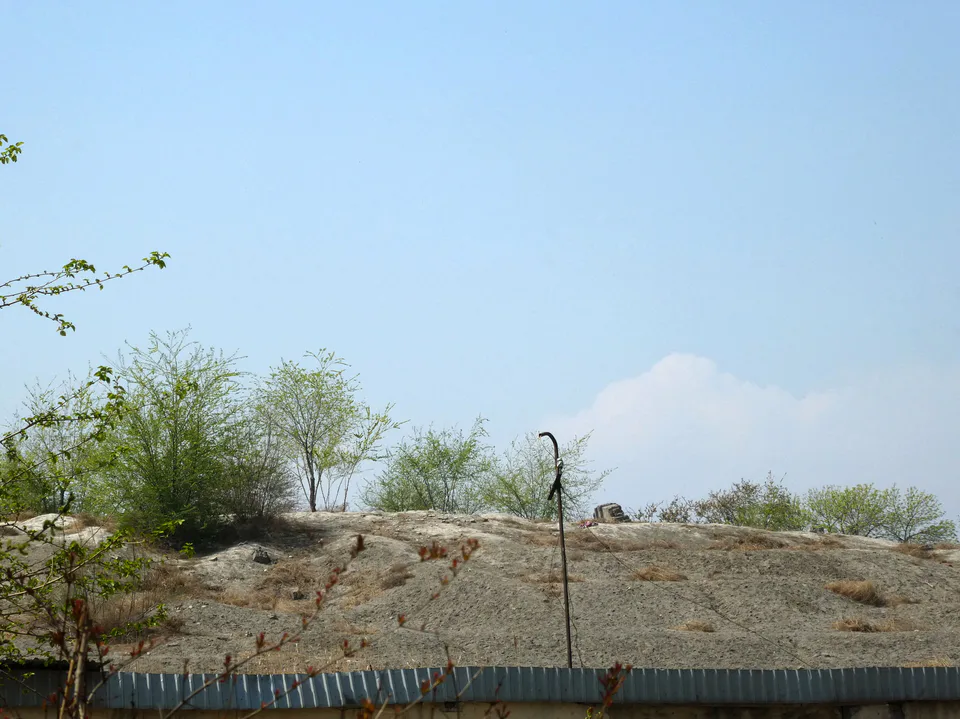
Archaeology · Kokand
Kokand's two-thousand-year-old mound
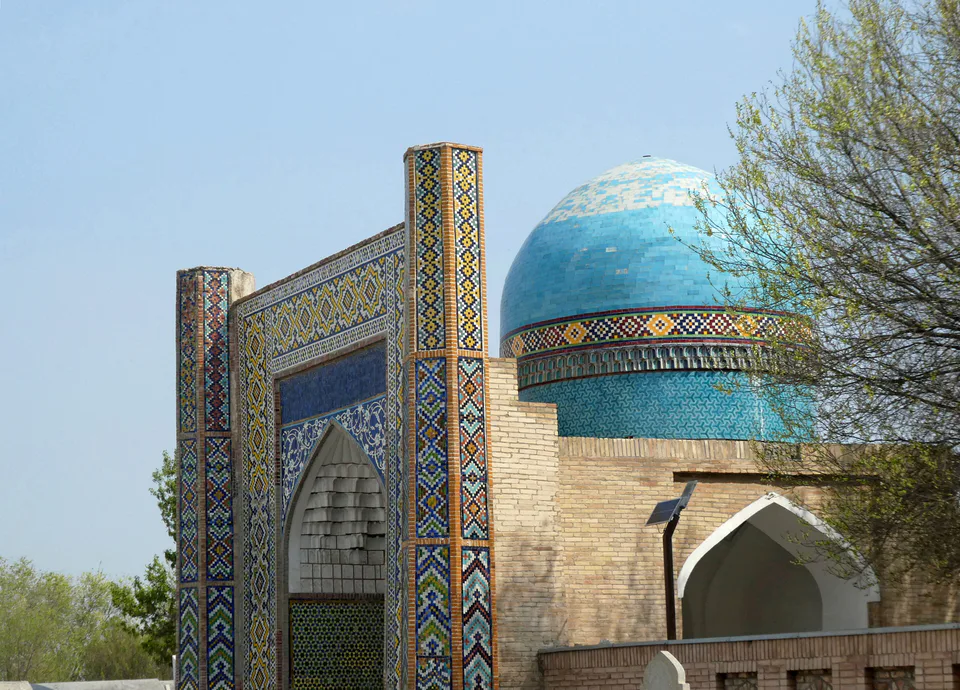
Mausoleum · Kokand
A tomb built for the khan's mother
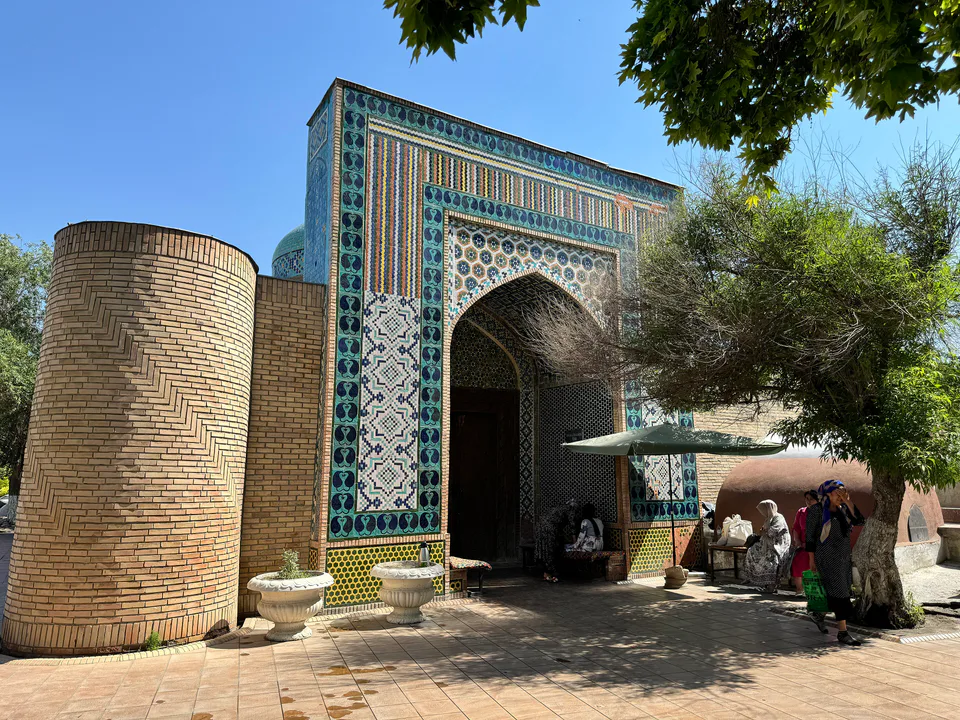
Mausoleum · Kokand
Burial place of the khans of Kokand
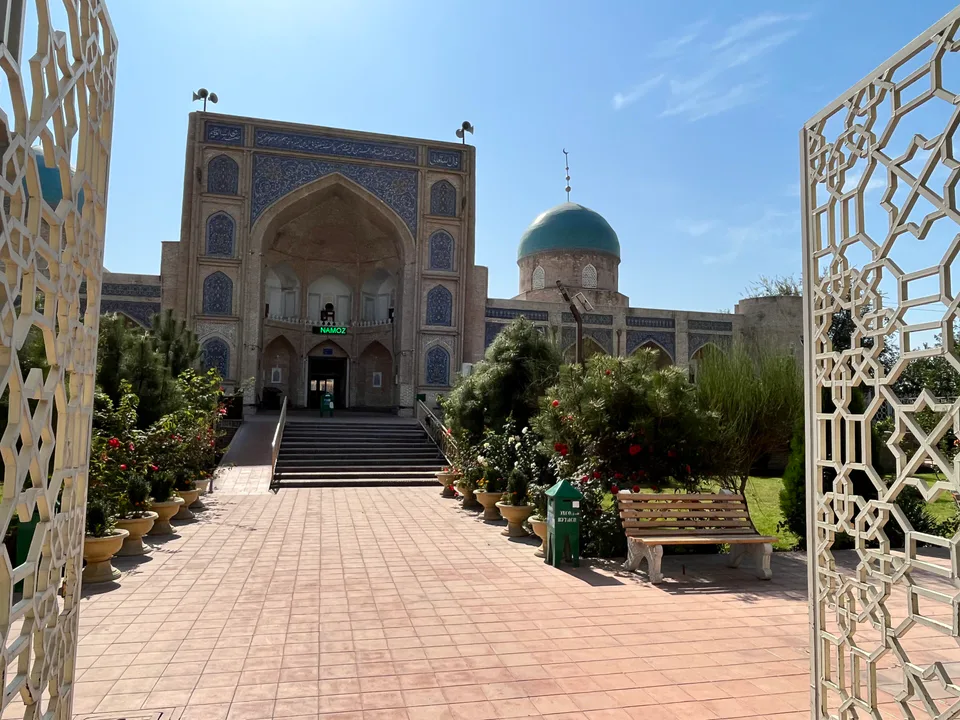
Madrasa · Kokand
Kokand's oldest surviving building
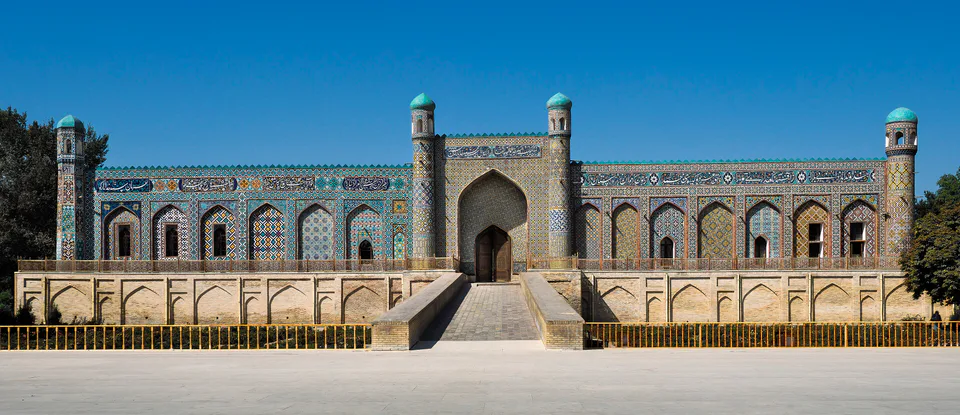
Ensemble · Kokand
The last palace of the khans of Kokand
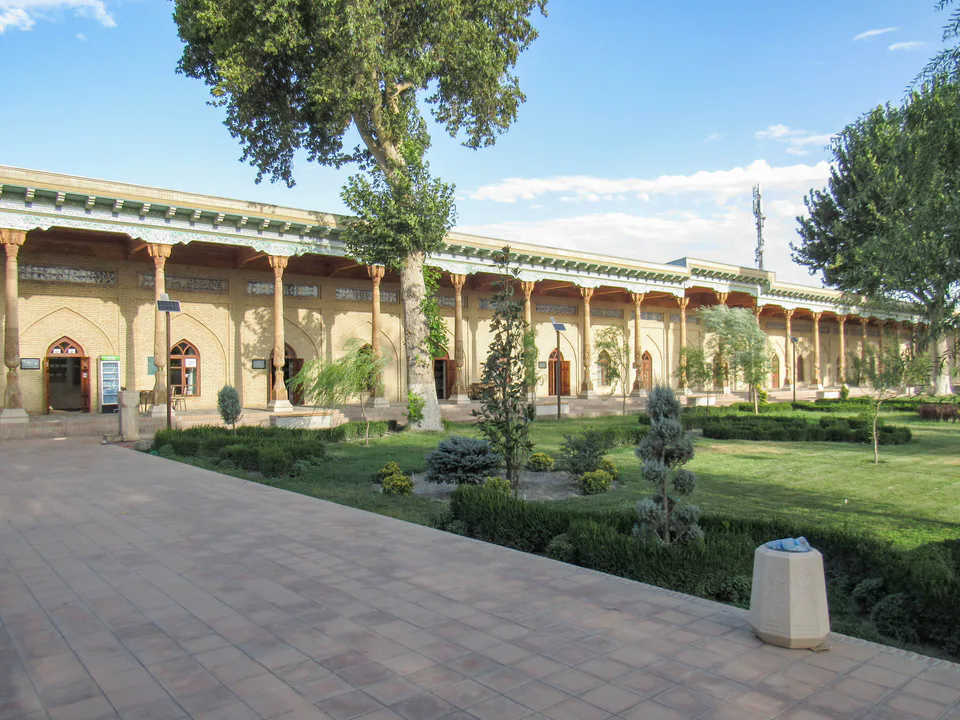
Mosque · Kokand
A 98-column iwan and the Chorsu minaret
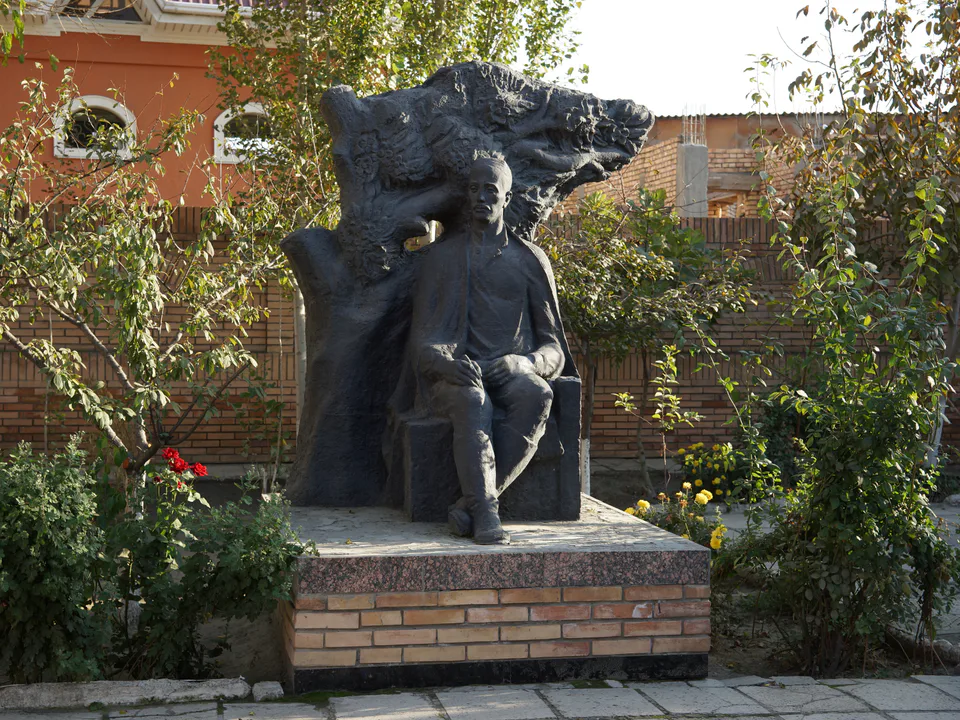
Museum · Kokand
In memory of the poet and playwright Hamza
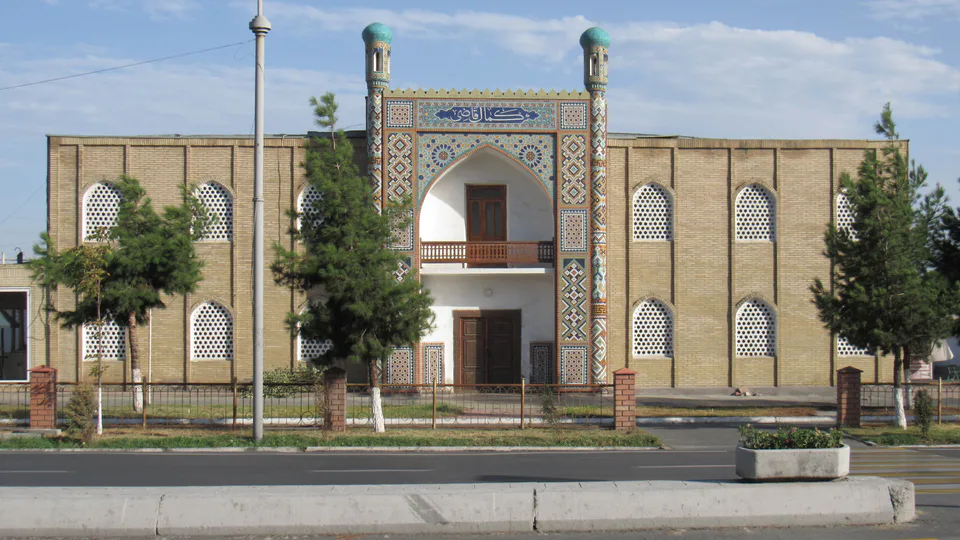
Madrasa · Kokand
A compact madrasa built by Judge Kamol