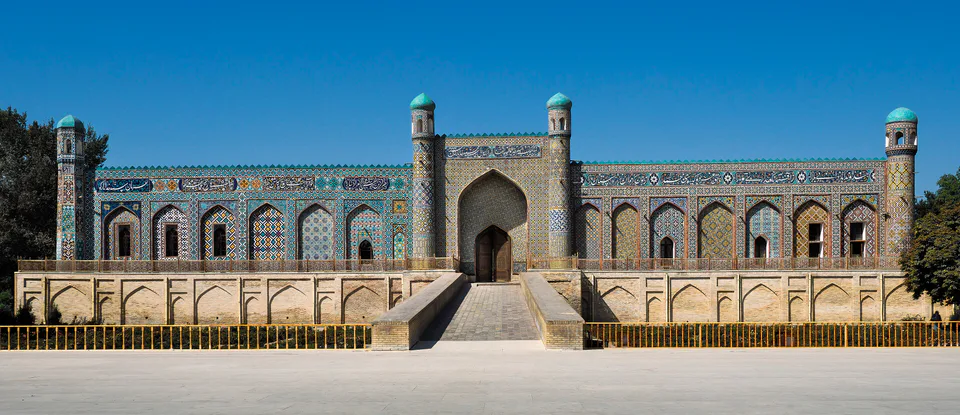
Ensemble · Kokand
Palace of Khudayar Khan
The last palace of the khans of Kokand
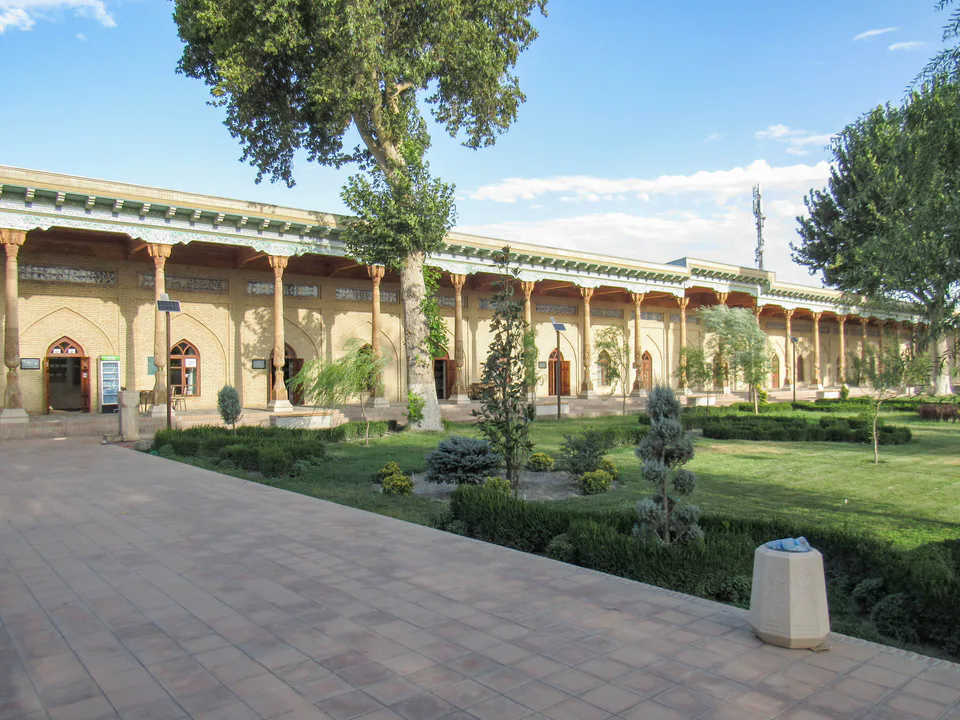
Mosque · Kokand
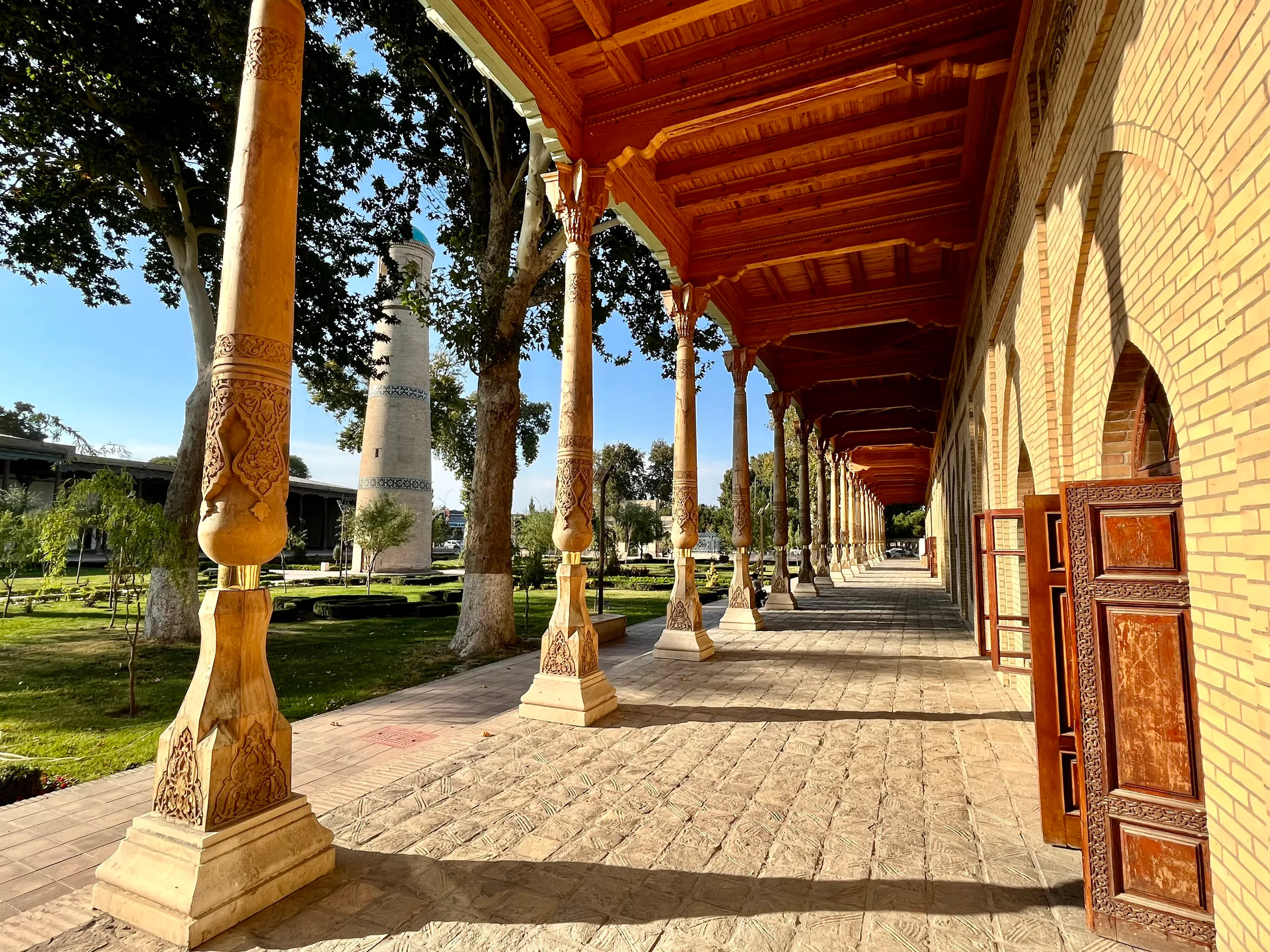
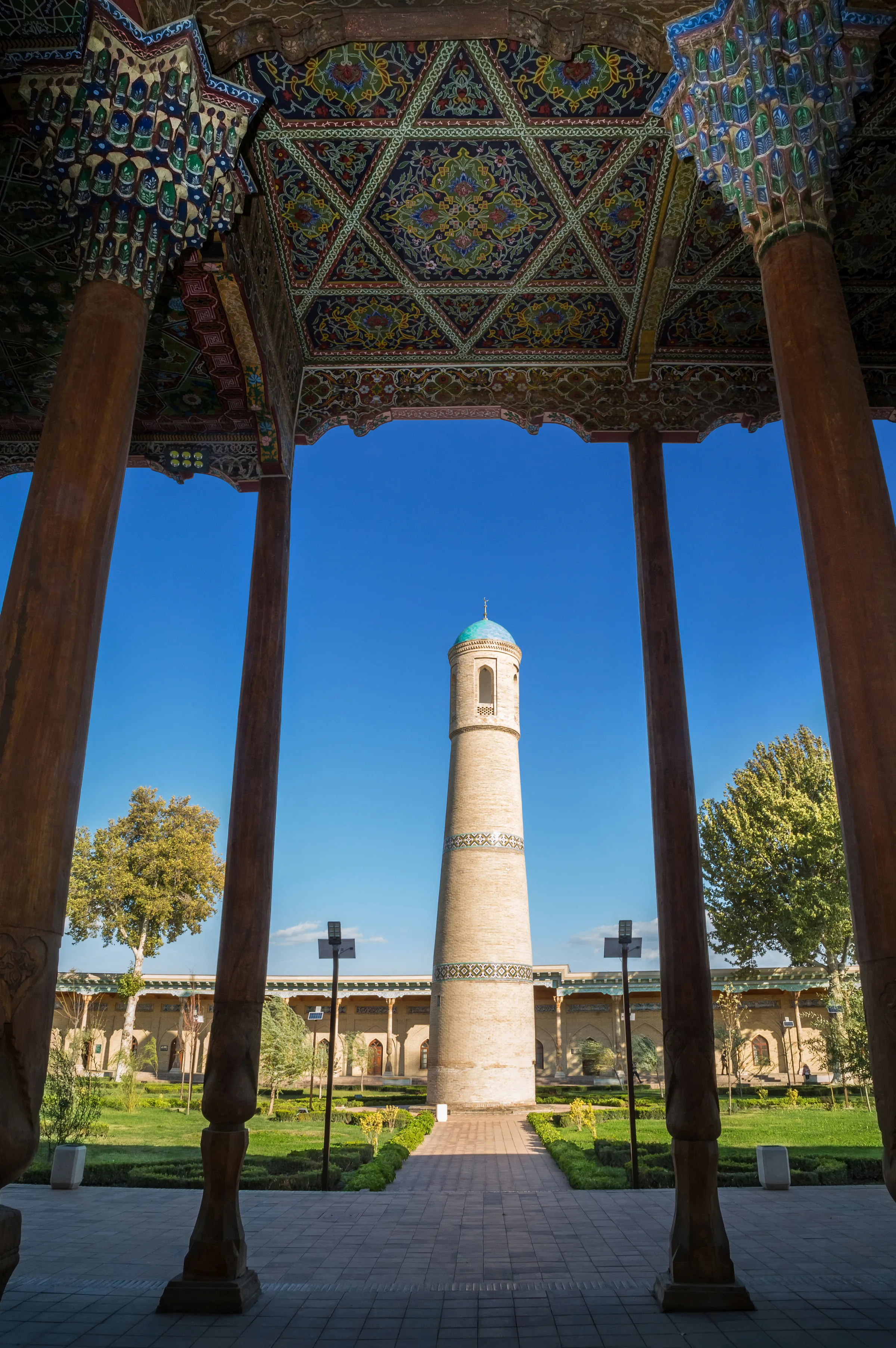
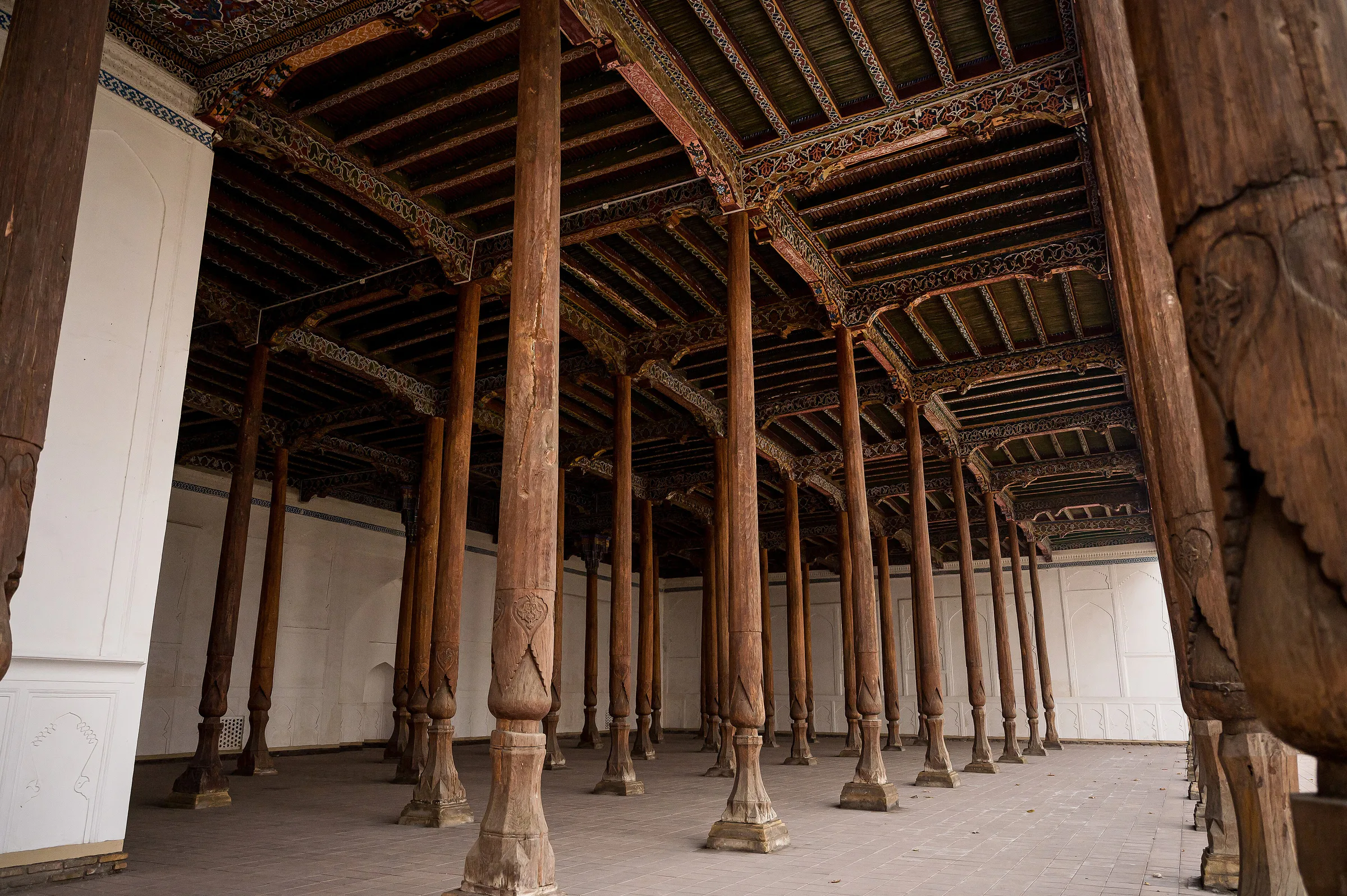
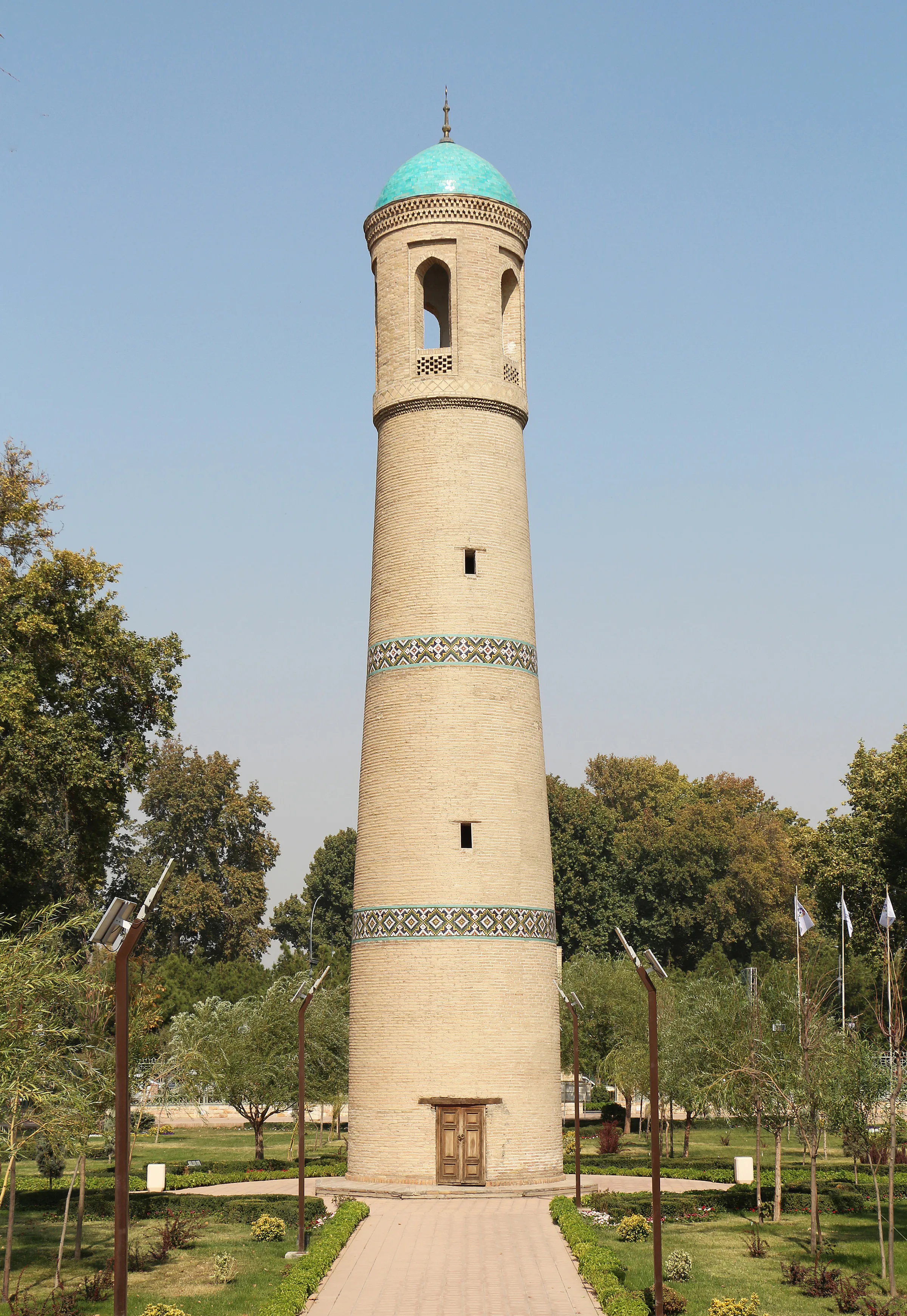
The city's great Friday mosque, completed under Umar Khan: an iwan nearly a hundred metres long, 98 painted wooden columns and a plain 22.5-metre brick minaret.
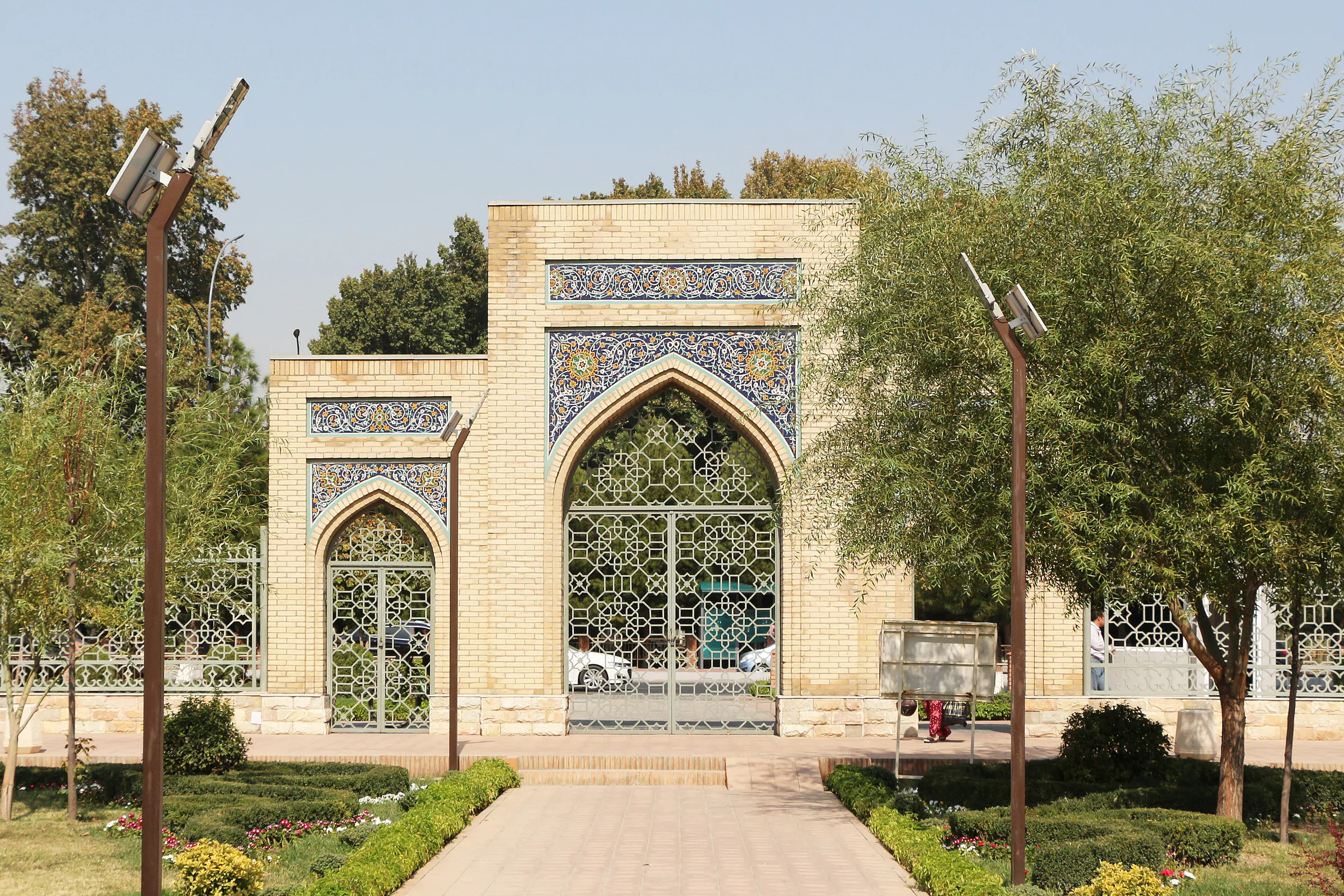
Kokand's Friday mosque stands on Chorsu Square, the heart of the city's trading life. Alim Khan began building it in 1805, but work stopped; Umar Khan resumed construction in 1819 and completed it by 1822. The work was directed by a renowned architect from Ura-Tyube, who led a team of some two hundred builders. Some sources date the mosque to 1809–1812 instead.
The complex comprised a mosque, a madrasa, a prayer hall, a minaret and a khanqah. A madrasa operated in the cells around the courtyard until 1918 and the mosque until 1930, when the Soviet authorities closed it. Today it is a cultural heritage site of national importance and houses the applied-art section of the Kokand State Museum-Reserve.
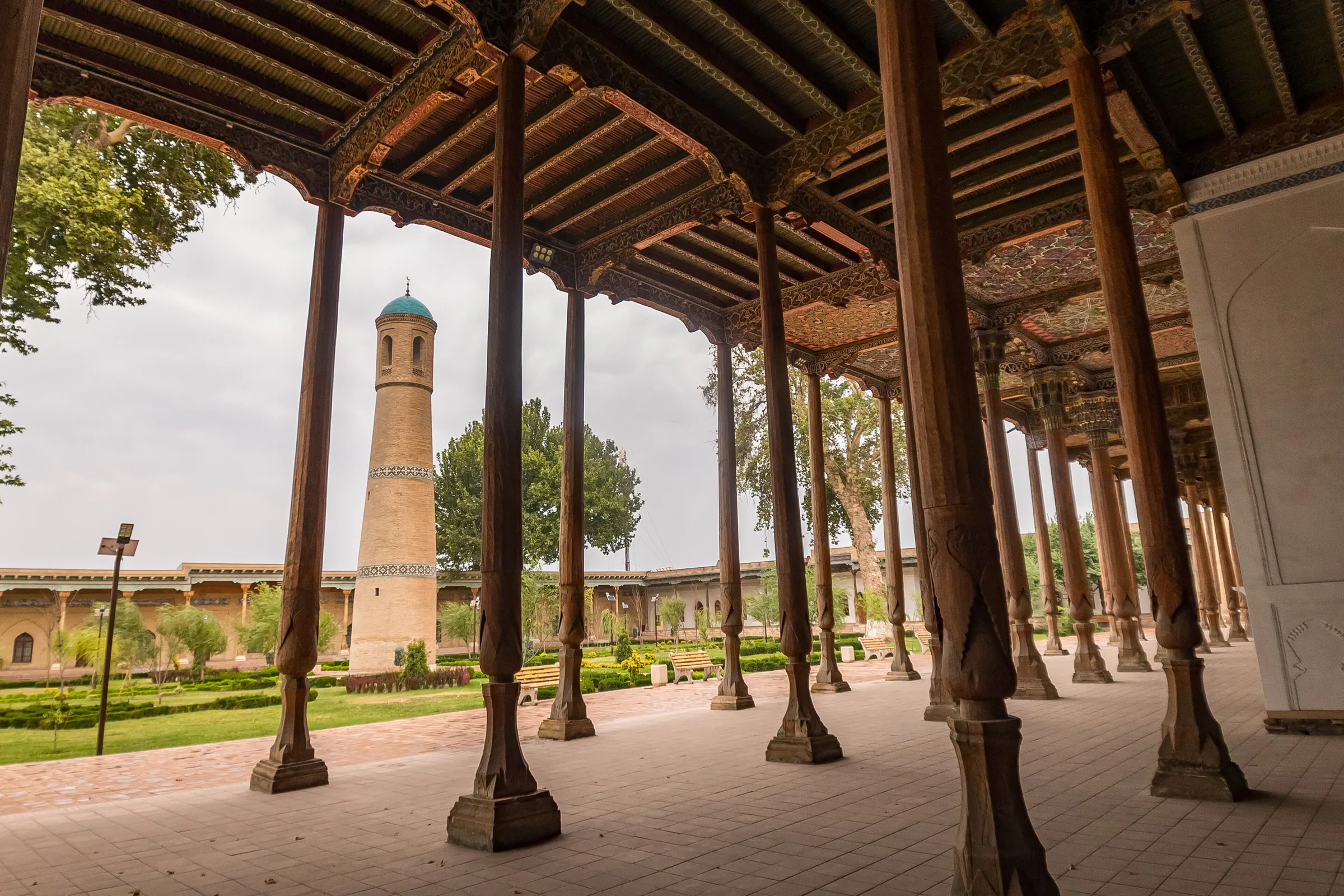
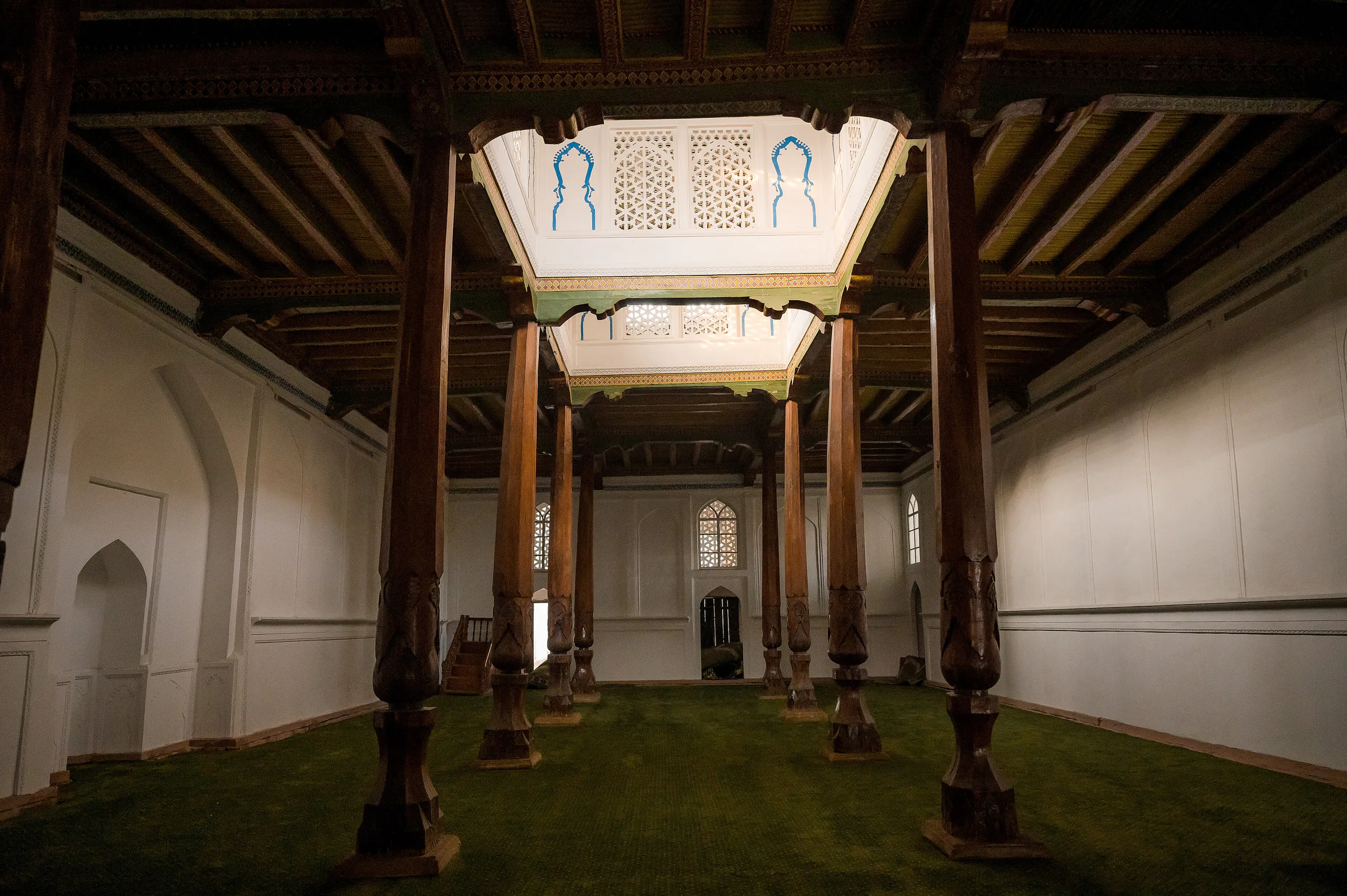
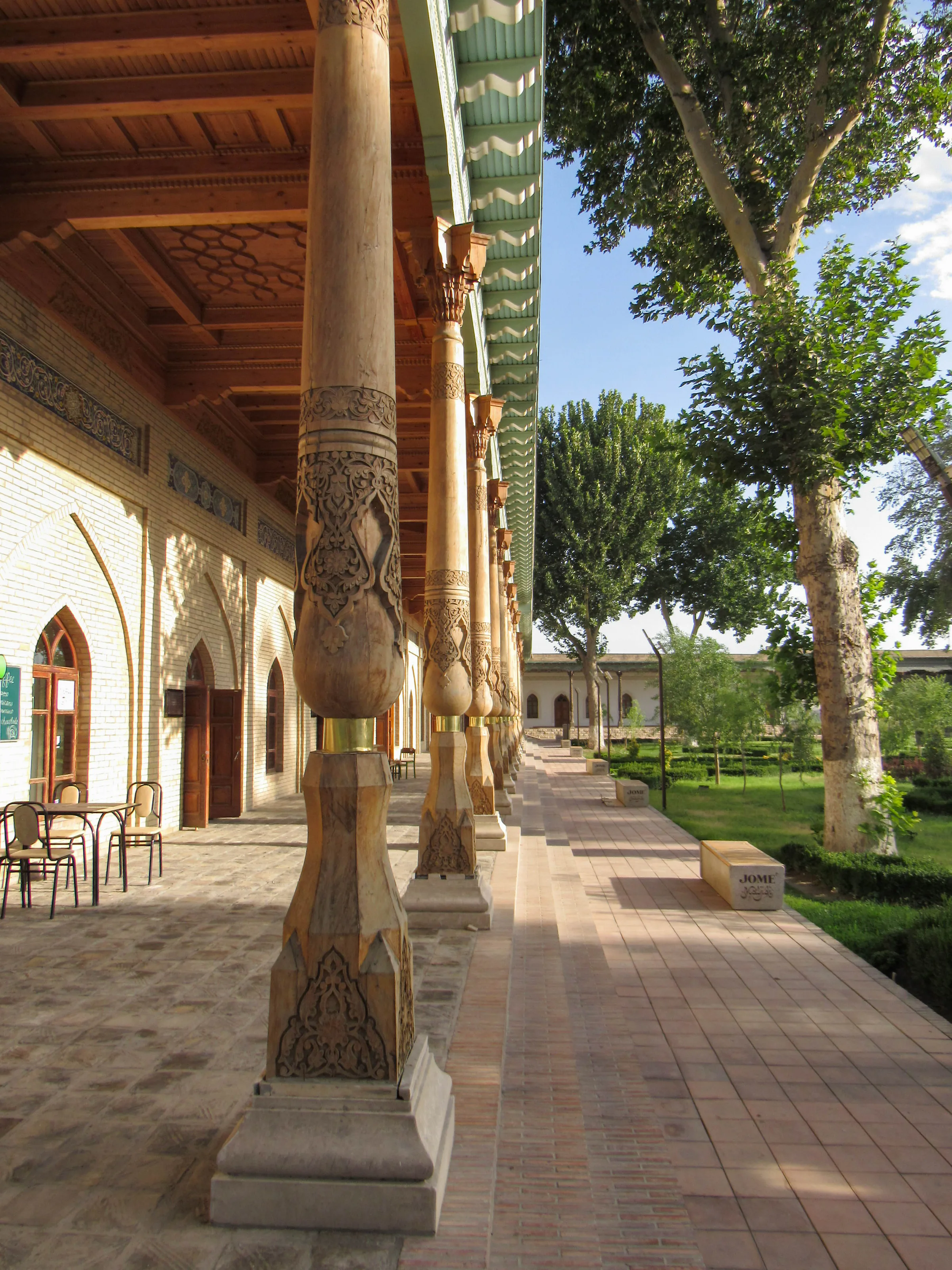
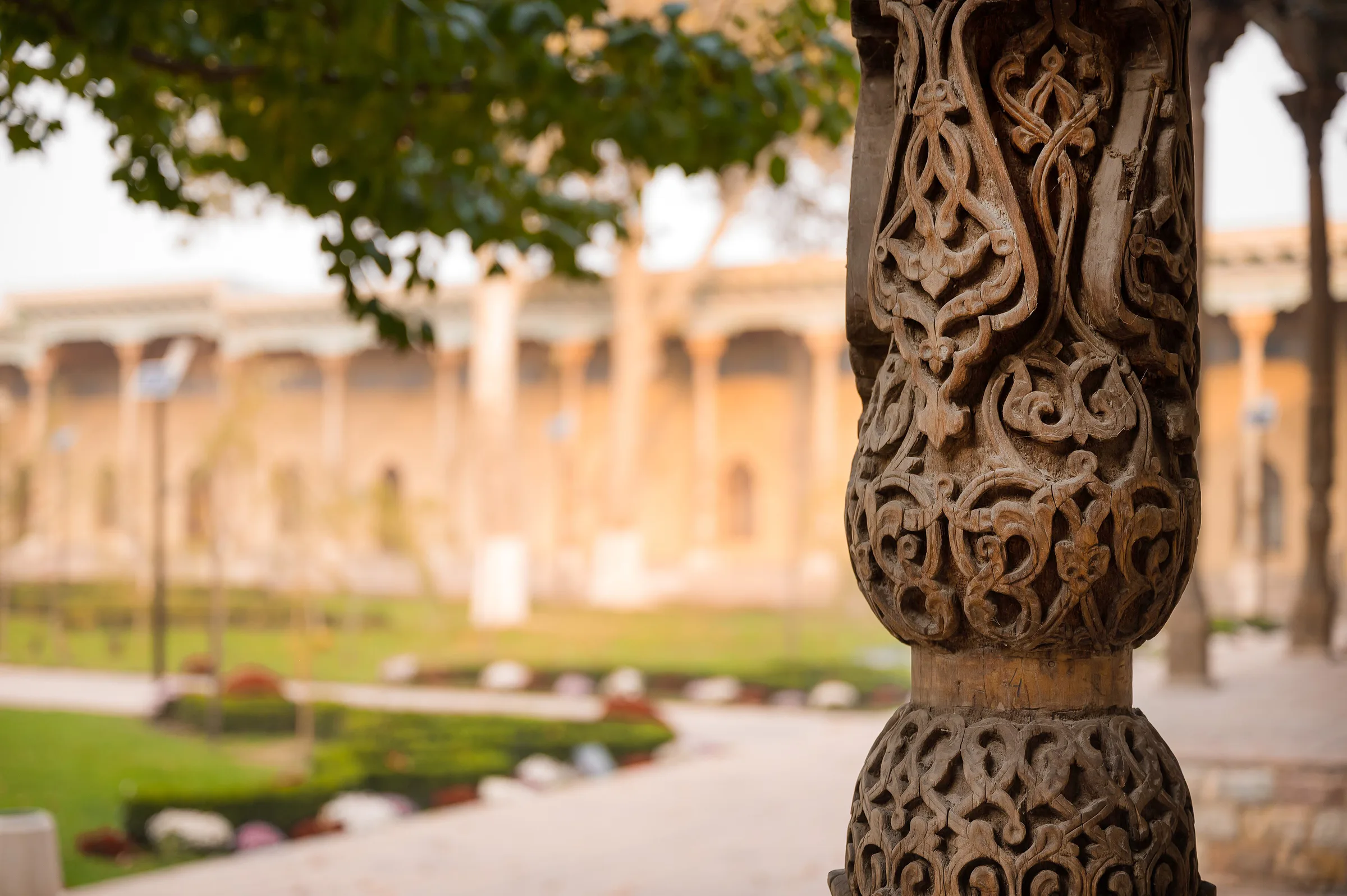
The mosque's centrepiece is the vast iwan on the west side of the courtyard, 97.5 by 25.5 metres, its roof carried on 98 wooden columns. The columns are delicately painted, with gold mixed into the pigments; their capitals carry stalactite carving and their bases are marble. The ceiling beams repeat islimi floral motifs and girih geometry. The khanqah, wrapped by the iwan on three sides, has a tall painted ceiling, and the walls preserve carved ganch typical of the Fergana Valley.
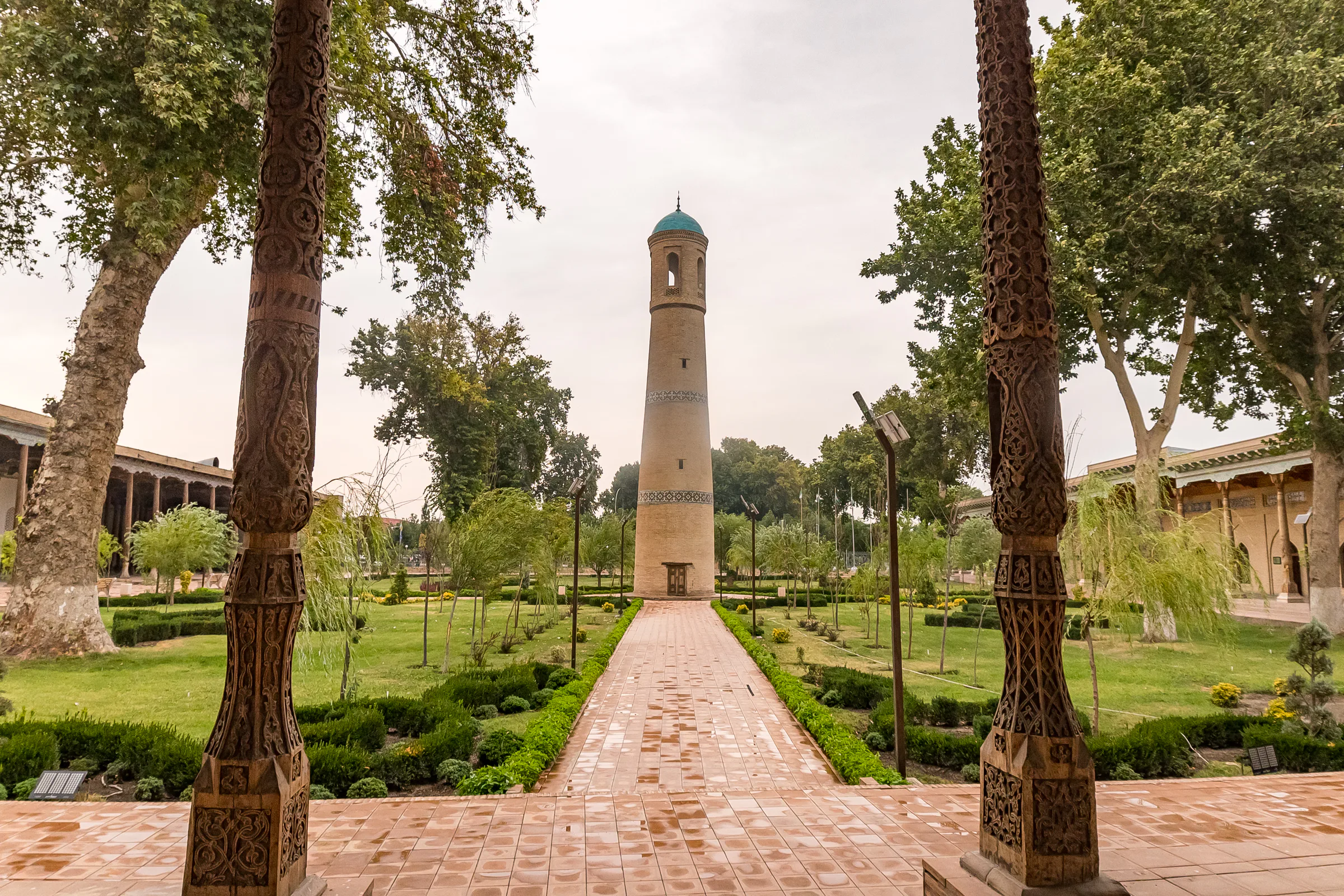
In the middle of the courtyard rises a 22.5-metre minaret of fired brick laid in smooth rings, without ornament, topped by a six-arched lantern and a faceted cupola; a spiral staircase climbs inside. The contrast between the austere minaret and the richly painted iwan is the ensemble's signature.
Walking the length of the colonnade — almost a hundred metres — you can compare how differently Kokand's carpenters finished each capital. The applied-art display gathers Fergana chased copper, woodcarving and ceramics.
The applied-art display introduces Kokand's renowned school of copper chasing, which took shape in the 18th–19th centuries. Its engraving is shallow but crisp, with floral and geometric patterns broken into fine detail. From the later 19th century raised and punched decoration became more common and backgrounds were coloured, and by the end of the century craftsmen were depicting buildings — Khudayar Khan's palace among them — along with fabulous beasts and people. Trays, jugs and bowls were set with turquoise and coral. Well-known masters of the school include Otaulla Muhammad Rajab, Mulla Kholiq, Fozil Otaullayev and Lutfulla Fozilov.
Ensemble · Kokand
The last palace of the khans of Kokand
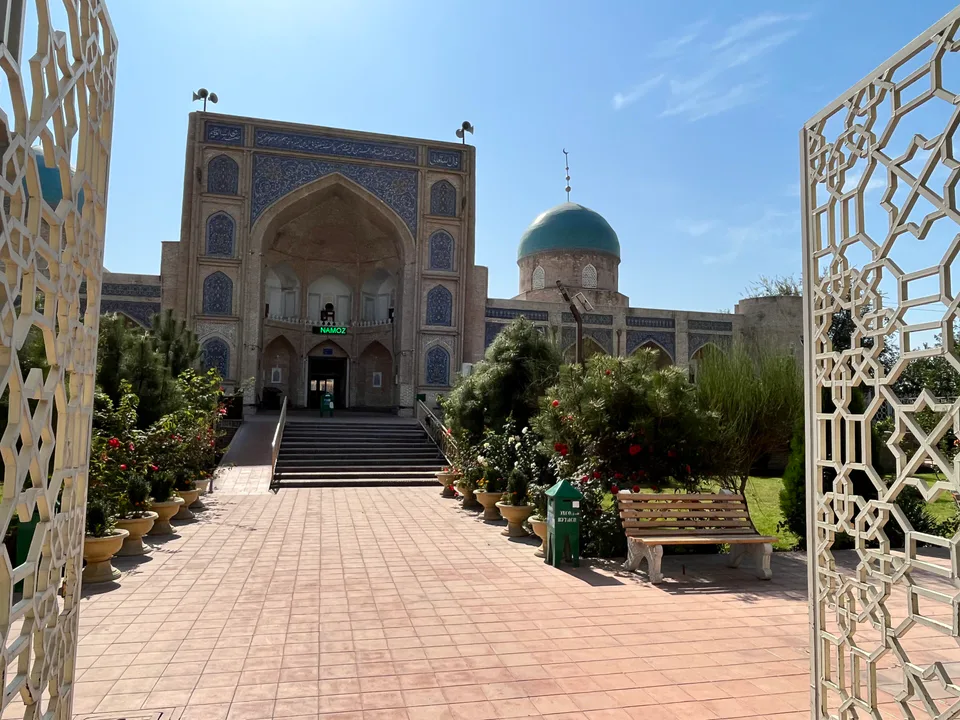
Madrasa · Kokand
Kokand's oldest surviving building
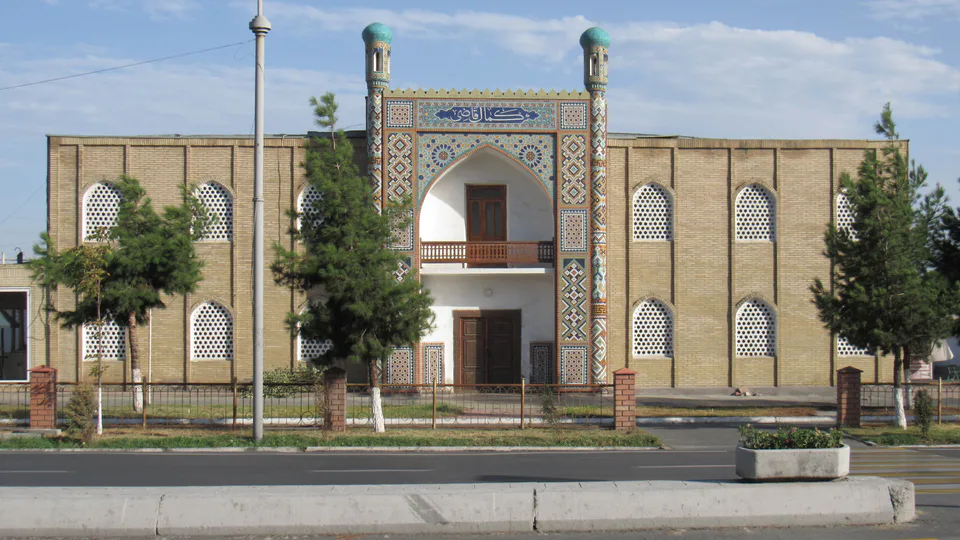
Madrasa · Kokand
A compact madrasa built by Judge Kamol
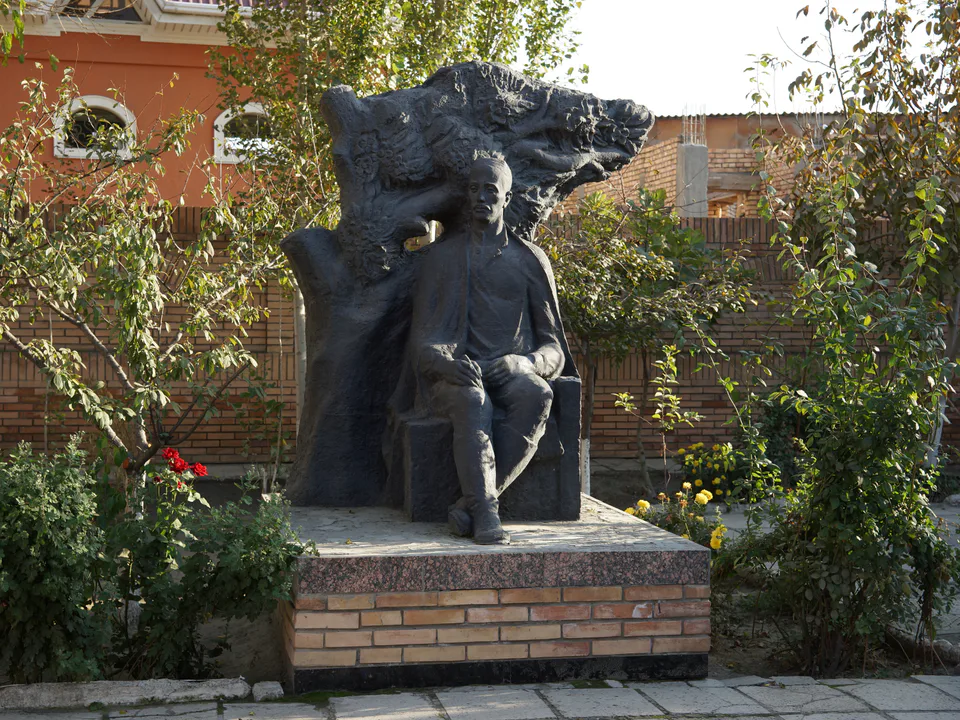
Museum · Kokand
In memory of the poet and playwright Hamza
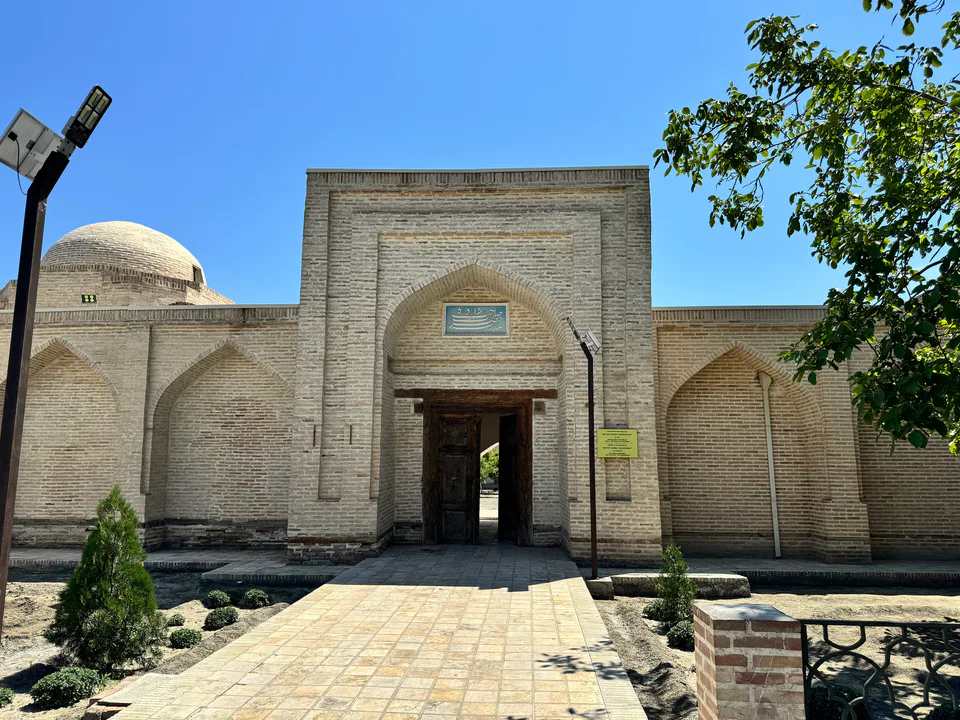
Madrasa · Kokand
The cell where the poet Mukimi lived
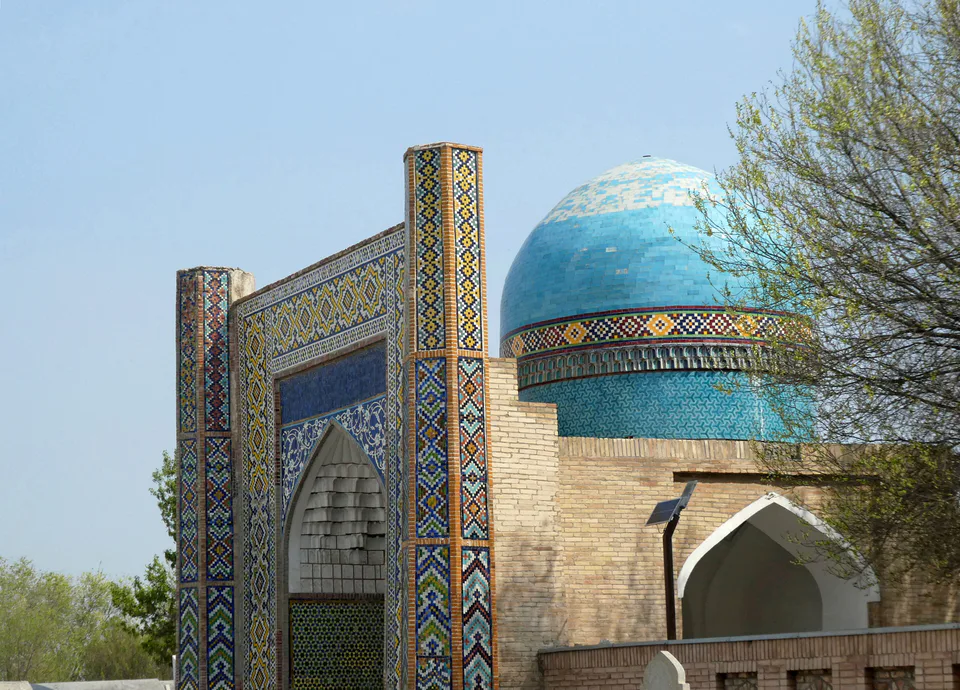
Mausoleum · Kokand
A tomb built for the khan's mother
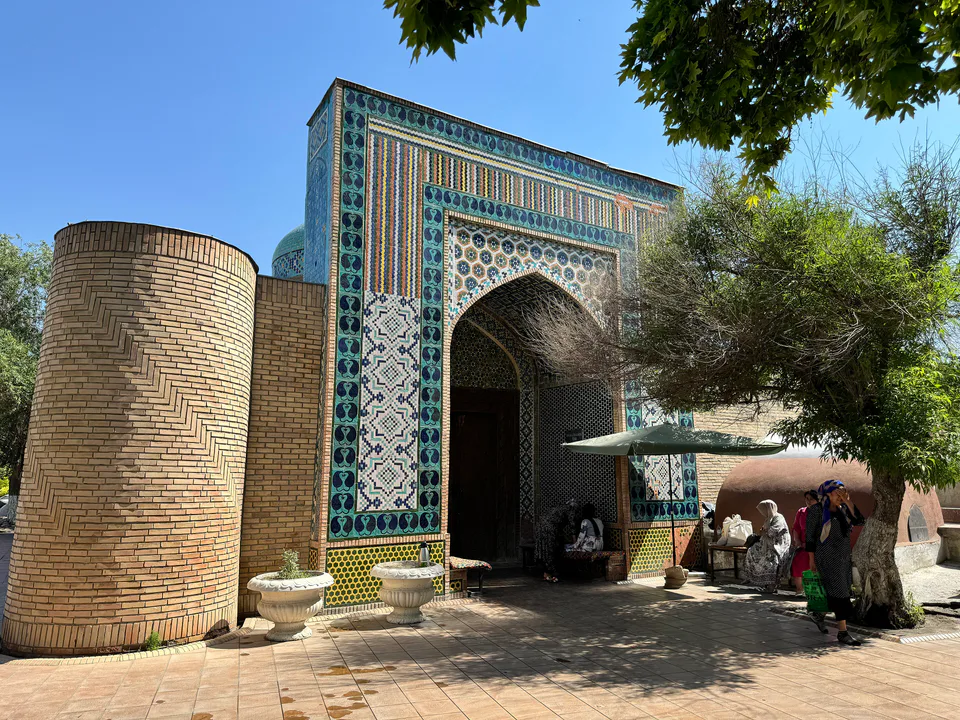
Mausoleum · Kokand
Burial place of the khans of Kokand
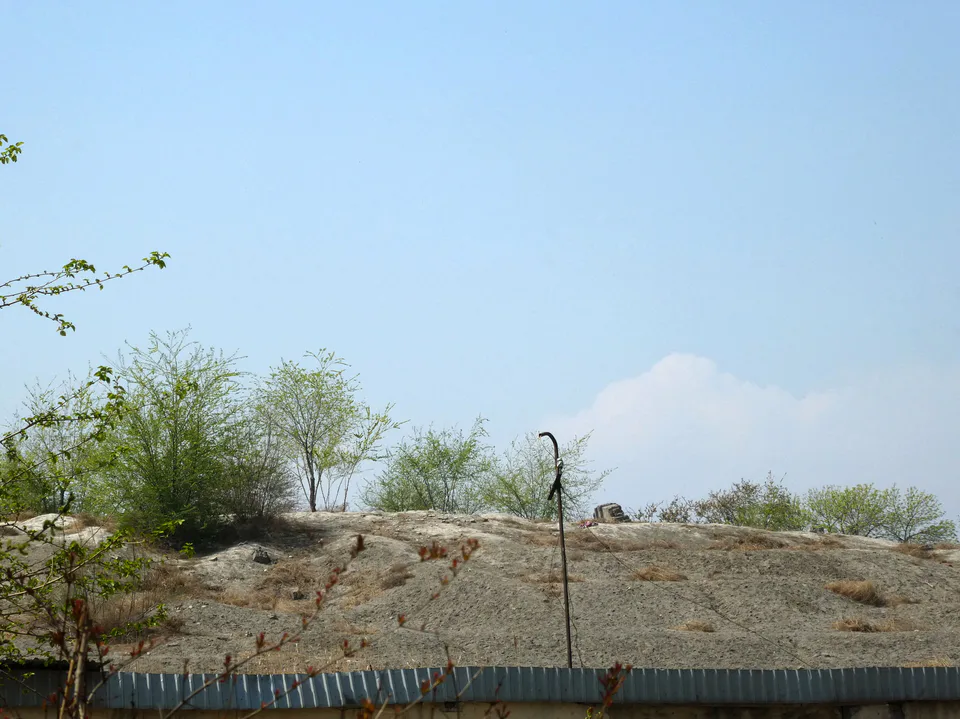
Archaeology · Kokand
Kokand's two-thousand-year-old mound
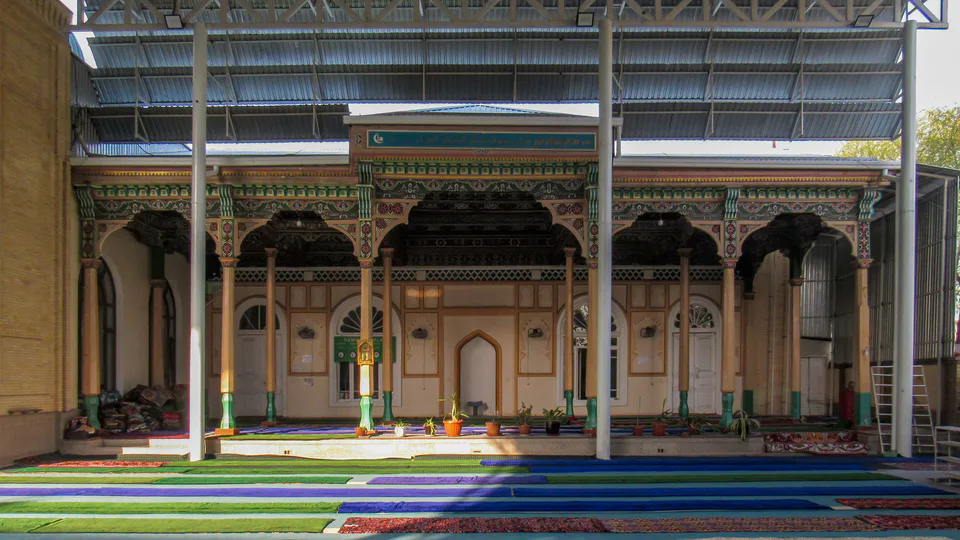
Mosque · Kokand
Kokand's brick neighbourhood mosque
Mausoleum · Buvayda District
The shrine that named a district