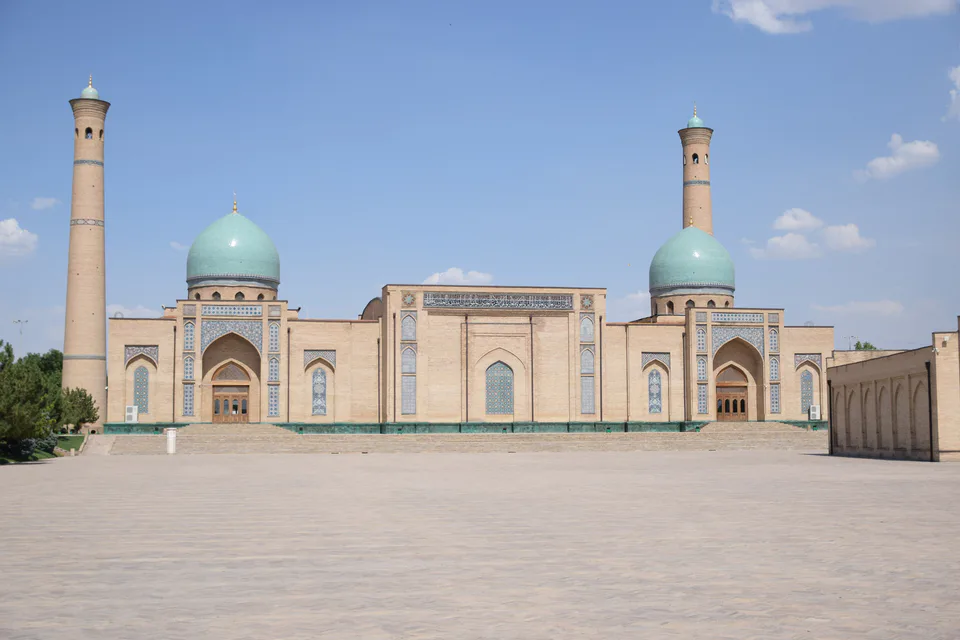
Ensemble · Almazar District
Hazrati Imam (Khast Imam) Complex
The spiritual heart of old Tashkent
Itineraries · Pilgrimage
The shrines of scholars and Sufi masters revered across the Islamic world: Imam al-Bukhari, Imam al-Tirmidhi, Imam al-Maturidi and the Seven Pirs of Bukhara.
Best time to go
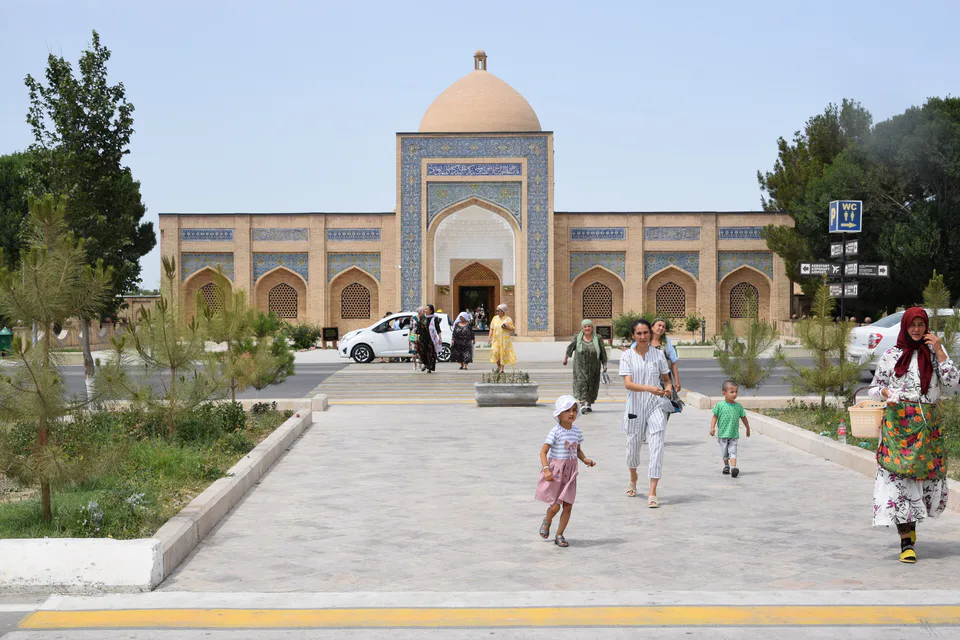
8 days
Tashkent: the Hazrati Imam complex, with the Kaffal Shashi Mausoleum and the Uthman Quran, and the Sheikh Hovendi at-Tahur complex.
The Zangi Ata Mausoleum on the edge of the city, one of the most revered shrines of the Tashkent oasis.
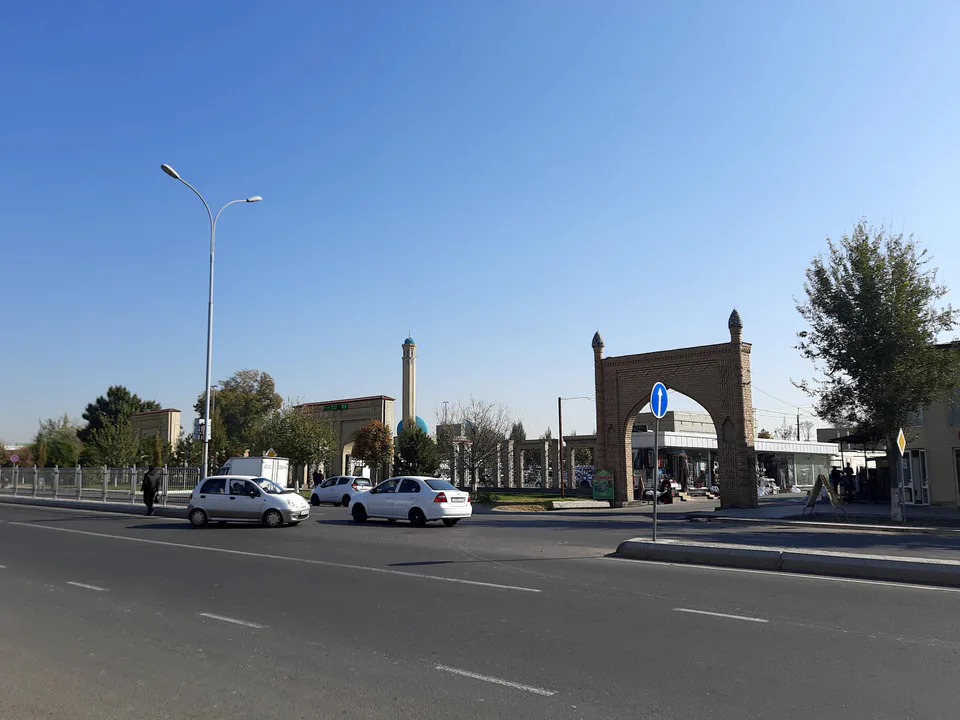
Morning flight to Termez: the Al-Hakim al-Tirmidhi complex, Sultan Saodat — the ensemble of the Termez sayyids — and Kyrk Kyz.
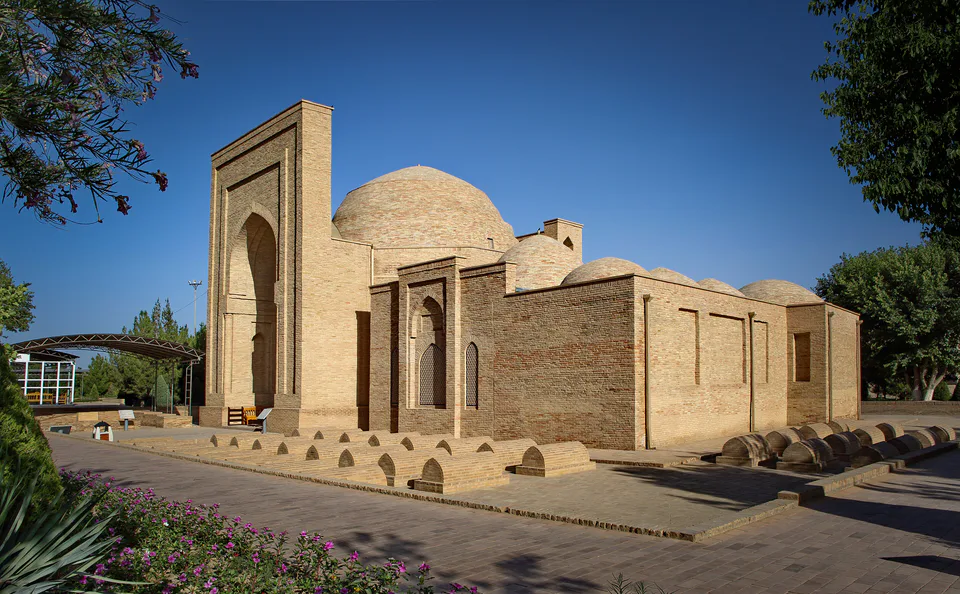
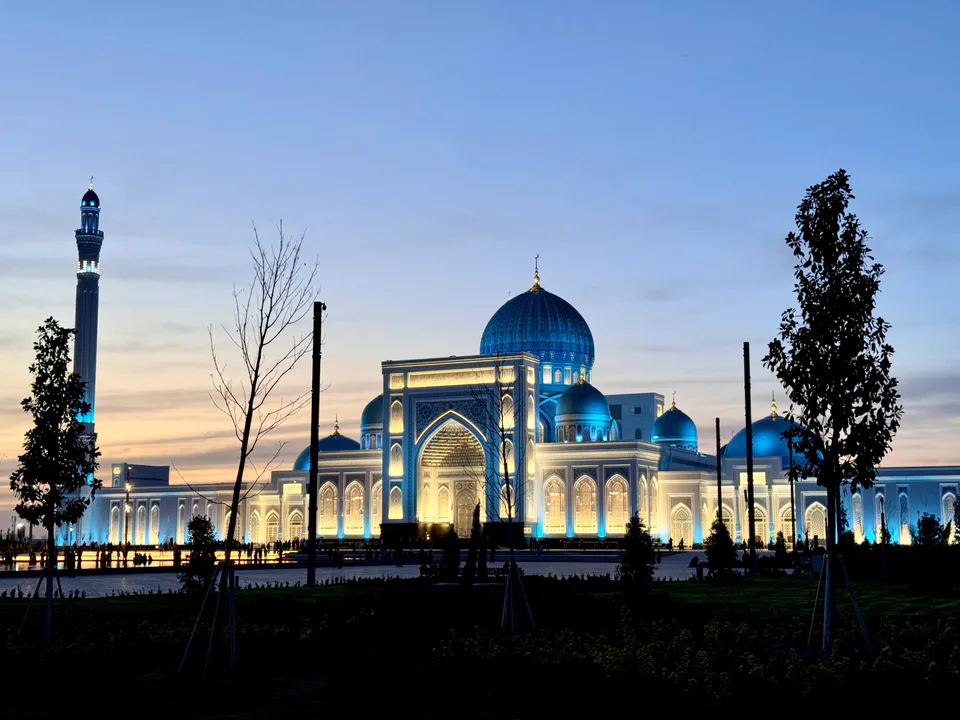
The Imam al-Tirmidhi Mausoleum in Sherobod district, resting place of the great hadith scholar Abu Isa al-Tirmidhi; evening flight to Tashkent.
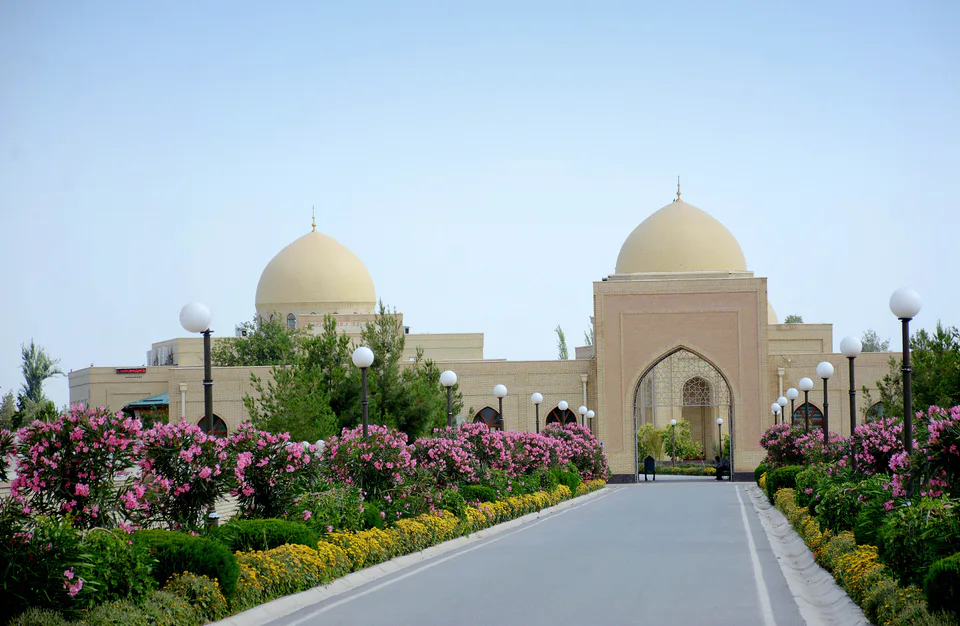
Afrosiyob to Samarkand: the Imam al-Bukhari memorial complex outside the city and the Imam al-Maturidi Mausoleum.
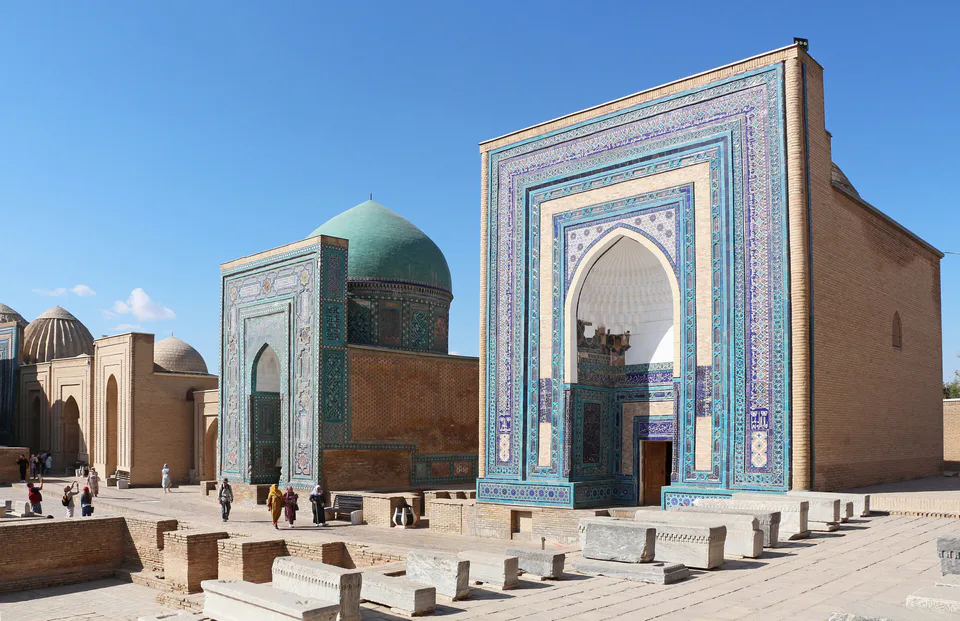
Shah-i-Zinda (by tradition the grave of Qusam ibn Abbas), the Khoja Daniyar Mausoleum and the Khoja Ahrar Vali complex; evening train to Bukhara.
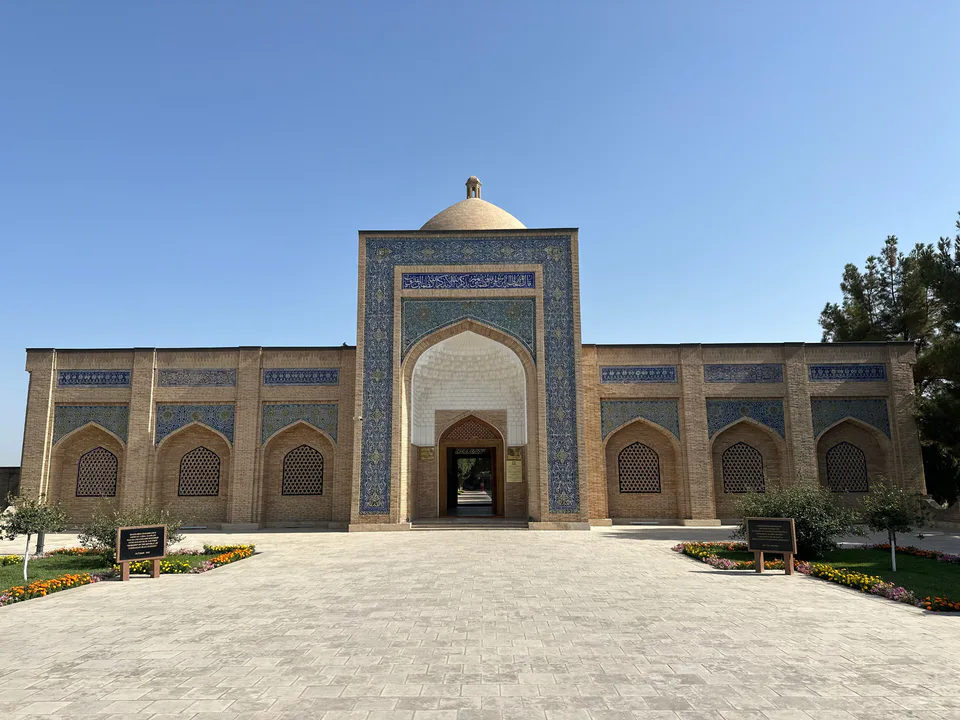
The Seven Pirs pilgrimage, traditionally made in a single day and in strict order: Abdulkhaliq Gijduvani, Khoja Orif Revgari, Khoja Mahmud Anjir Fagnavi, Khoja Ali Romitani, Khoja Muhammad Bobo Samosi, Sayyid Amir Kulol and finally Bahauddin Naqshband.
Bukhara: the Chor-Bakr necropolis, the Poi Kalyan ensemble with the working Mir-i-Arab Madrasa (from outside), and Bolo Hauz Mosque.
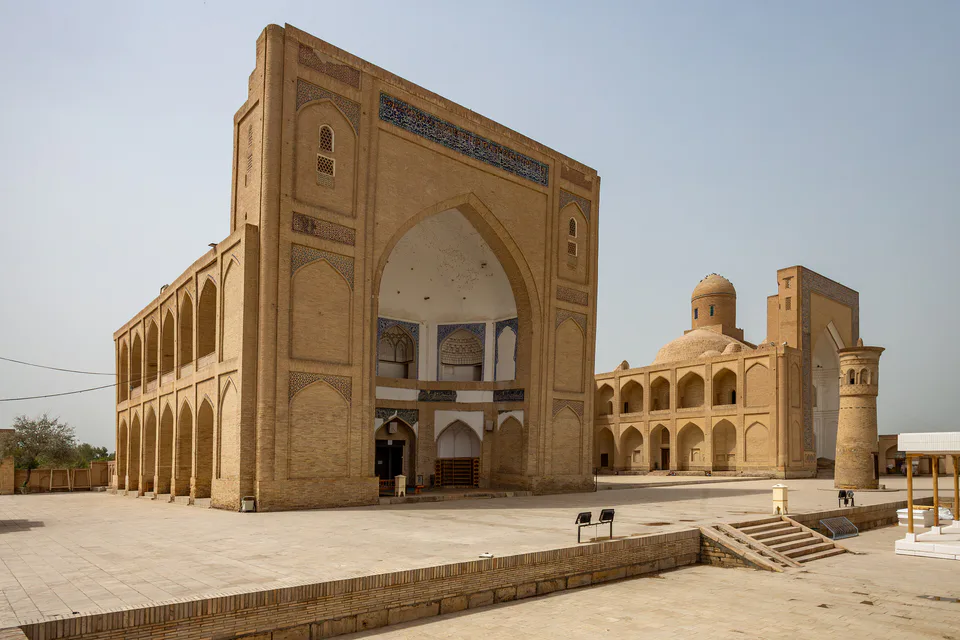
A morning walk through Bukhara's old quarters, then back to Tashkent by Afrosiyob or plane.
Transoxiana was one of the great centres of Islamic learning: two of the most authoritative hadith collections — the works of Imam al-Bukhari and Imam al-Tirmidhi — were born here, and the Naqshbandi Sufi order spread from Bukhara across the world.
The Seven Pirs are shrines scattered across several districts of Bukhara Region, forming seven successive links in the Naqshbandi chain of masters. By tradition they are visited in a single day and in order, from Abdulkhaliq Gijduvani to Bahauddin Naqshband; before Bahauddin's own grave, pilgrims visit that of his mother.
Tashkent–Termez–Tashkent by air; Tashkent–Samarkand–Bukhara by Afrosiyob; for the Seven Pirs, a car with driver, as the circuit covers several districts around Bukhara and takes a full day.
Modest dress is required at shrines, with headscarves for women. Keep prayer times in mind and don't enter mosques as a sightseer during Friday midday prayers.
Ask the imam or caretaker before taking photographs. Shrines are especially busy during Ramadan and the Eid holidays.
A pilgrimage route: Tashkent, Termez, Samarkand and Bukhara in 8 days
Ensemble · Almazar District
The spiritual heart of old Tashkent
Ensemble · Zangiota District
A shrine built by Timur
Pilgrimage site · Termez District
The shrine of “Termiz Ota”, the city’s patron saint
Pilgrimage site · Sherobod District
Resting place of the compiler of Jami al-Tirmidhi
Pilgrimage site · Payariq District
Resting place of Islam's foremost hadith scholar
Ensemble · Samarkand
The avenue of mausoleums
Pilgrimage site · Kogon District
Shrine of the founder of the Naqshbandi order
Ensemble · Bukhara District
The 'City of the Dead' of the Juybari sheikhs
8days
Classic
Tashkent (city)SamarkandBukharaKhorezm
14days
Grand tour
Tashkent (city)FerganaSamarkandKashkadaryaNavoiyBukharaKhorezmKarakalpakstan
6days
Food
Tashkent (city)SamarkandBukhara